South Africa's World Cup Journey: Heartbreak and Hope
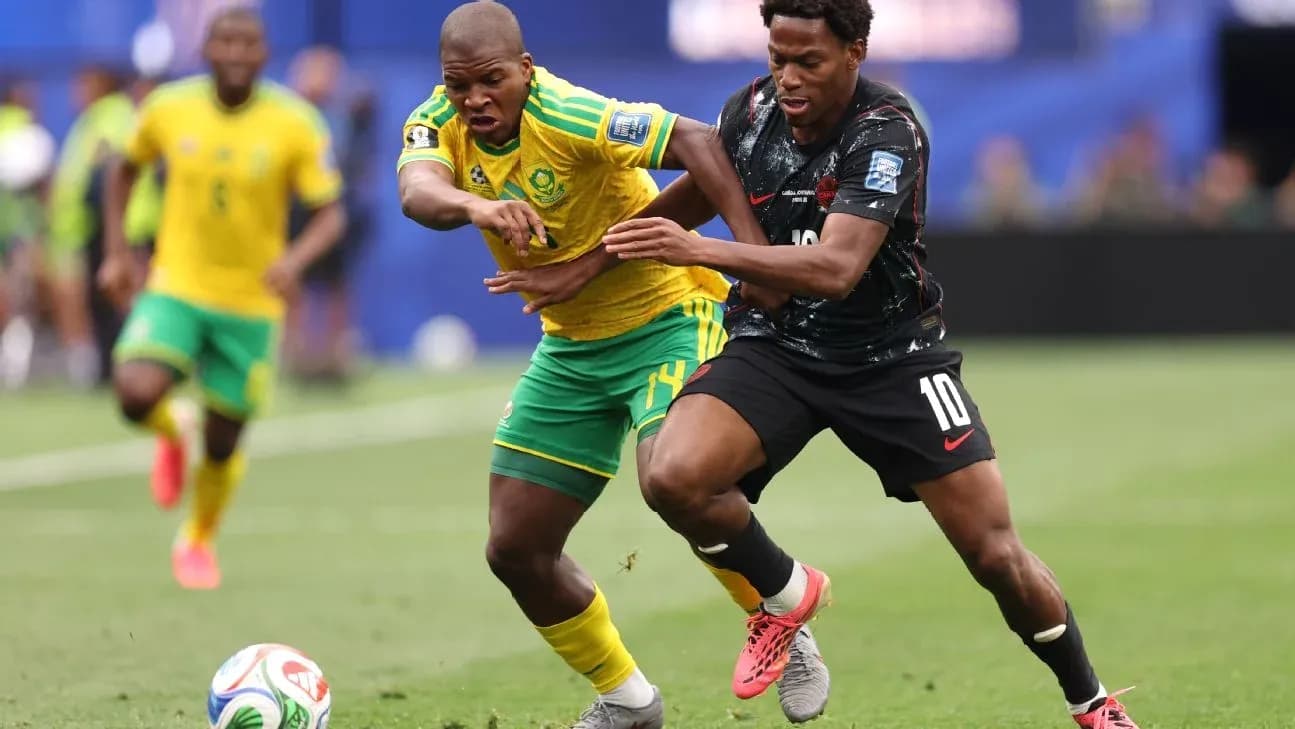
South Africa walked out of the World Cup on the wrong side of a 1-0 scoreline to Canada in the round of 32, but this was no meek exit. After 16 years away from the tournament, Bafana Bafana came back, punched their way into the knockouts for the first time in their history and left the pitch with something they have not always been able to claim: a clear sense of where they are going.
The hurt will linger. So will the hope.
Centre-backs for a generation
If there is one area where South Africa can sleep easily, it is at the heart of their defence.
Mbokazi and Okon did not just start at a World Cup; they owned the stage. Both embraced the pressure, but Mbokazi in particular emerged as one of the standout centre-backs of the entire tournament, reading danger early, stepping in aggressively, and playing with the authority of a veteran rather than a man at the start of his international journey.
Whoever sits in Hugo Broos’ chair for the next cycle – whether it is Broos himself or a successor – will inherit a position that looks stocked for years. Behind Mbokazi and Okon, a line of young defenders is already forming: Olwethu Makhanya, Khulumani Ndamane, Tylon Smith, Malibongwe Khoza, Aden McCarthy and others are pushing up from beneath, ready to step in if either of the first-choice pairing is ever absent or moves on.
For once, South Africa do not have to ask where their next centre-back is coming from. They already know.
Mofokeng, the talent waiting to explode
Relebohile Mofokeng’s World Cup was as much about what might have been as what was.
Plenty of Bafana supporters arrived at the tournament wondering why Broos did not seem to share their unshakeable faith in the Orlando Pirates playmaker. Minutes were limited. Influence, at times, felt restricted.
Then came South Korea.
In the 1-0 win that changed South Africa’s tournament, Mofokeng delivered the kind of performance that hinted at a different future. Sharp on the half-turn, brave on the ball, unfazed by the stage, he looked like a player who belonged among the world’s elite rather than a youngster still trying to convince his own national coach.
He is only 21. By 2030, he could be the face of the team.
A move to Belgium’s Royale Union Saint-Gilloise is widely reported to be close. If it goes through, it offers exactly what he needs: a serious European platform, a league that rewards technical craft and tactical intelligence, and a chance to sharpen his game against a higher tempo every week. If he gets anywhere near his ceiling, the next Bafana manager will not just have a useful option. He will have a genuine trump card.
Homegrown, and good enough for the world
This World Cup also carried a message that goes beyond one generation: you can stay in South Africa and still be good enough to compete with the best.
Teboho Mokoena bossed midfields for Mamelodi Sundowns long before he did it on the global stage, and he transferred that authority seamlessly to the World Cup. Thalente Mbatha, Orlando Pirates’ midfield engine, looked entirely at home. On the flanks, Sundowns fullbacks Khuliso Mudau and Aubrey Modiba provided the kind of energy and intelligence that any top national side would welcome.
Behind them all stood Ronwen Williams, captain and last line of defence, making the kind of decisive interventions that justify his global reputation despite having spent his entire club career with SuperSport United and Mamelodi Sundowns.
Their performances said as much about the South African Premiership as they did about the individuals. The domestic league is producing players who can walk into a World Cup and compete, not just participate.
Of course, some of the country’s brightest young talents will need to test themselves abroad. That remains an important step for development and for broadening the national pool. But this tournament underlined a crucial point: leaving home is a pathway, not a prerequisite. A South African kid can dream of a full career, a full life in the game, without seeing Europe as the only route to legitimacy.
Maseko, from the brink to the breakthrough
If the tournament offered tactical lessons and structural hope, it also delivered a deeply human story in Thapelo Maseko.
At 20, he had already scored for Bafana at the 2023 Africa Cup of Nations, delayed into early 2024, and Hugo Broos had made no secret of his admiration for the winger. The trajectory looked clear.
Then it stalled.
After his move from SuperSport United to Mamelodi Sundowns, Maseko slipped out of favour. Under new head coach Miguel Cardoso, appointed in December 2024, he drifted to the margins, often sent to the reserves and watching the first team from a distance. In January 2026, just five months after publicly admitting on social media that he was losing his love for the sport, he left on loan for AEL Limassol in Cyprus.
That could have been the start of a slow fade. Instead, it was the reset.
By March, he was back in the Bafana squad. This month, he wrote himself into South African football history. His goal against South Korea did more than win a match; it propelled Bafana into the World Cup knockout rounds for the first time ever and lit up a country that had grown used to disappointment on the biggest stage.
Maseko’s journey from disillusionment to redemption gave supporters something beyond tactics and systems. It gave them a reminder that careers can be rescued, that belief can return, that a player written off in December can become a national hero by June.
Money, survival and the chance to plan
Off the pitch, the stakes were just as high.
SAFA walked into this World Cup under a cloud. Late payments to players after the previous year’s African Nations Championship, operating expenses outstripping revenue, a constant sense of firefighting rather than forward planning. The question was not just how Bafana would perform, but what would be left of the game’s structures if the team failed.
The answer, for now, is relief.
Simply reaching the group stage guaranteed SAFA at least $9 million in performance-based payouts, not including the preparation fee. By punching through to the round of 32, Bafana added another $2 million, banking $11 million in total from the tournament.
That money does not magically erase years of mismanagement. It does, however, give South African football something it has lacked: a safety net. The association can breathe. Salaries, operations, and basic functions no longer sit quite so close to the edge.
Sponsors will have watched this World Cup with interest. A team that qualifies, competes, and makes history is an easier sell than one that watches from home. Negotiating new deals, or improving existing ones, suddenly looks far more realistic.
The real test starts now. SAFA must drag itself out of survival mode and into strategy. This cash injection cannot become another sticking plaster. It has to be the foundation for better planning, better development, and a structure worthy of the talent currently breaking through.
South Africa leave this World Cup with a scar, a story, and a set of possibilities. The question is no longer whether the country can produce players good enough for the global stage.
The question is whether its football leaders are ready to build a future bold enough to match them.