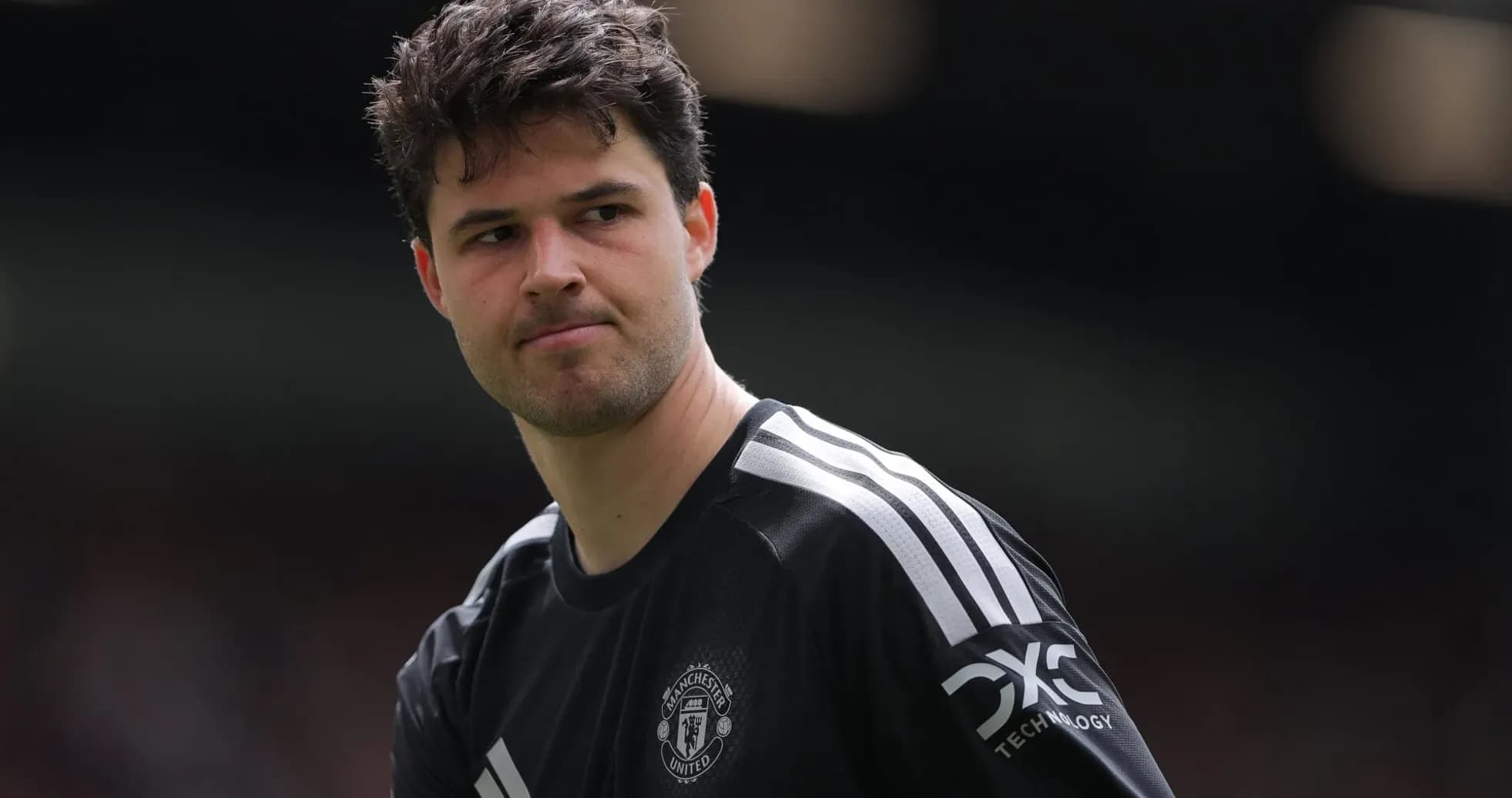
Senne Lammens: Manchester United's £18m Goalkeeping Success
Manchester United will look back on the 2025/26 season and see a turning point. Not just in results, but in resolve. A campaign that finally steadied a position that had haunted them for years came down to one man: Senne Lammens.
He did not arrive with fanfare. He did not arrive with headlines. He arrived as a data-led signing, an £18 million punt championed internally by Tony Coton while Ruben Amorim pushed for the proven chaos and charisma of Emi Martinez. United chose the quieter option.
They chose right.
From under the radar to signing of the season
Lammens walked into a club still nursing scars from the Andre Onana and Altay Bayindir experiments. The goalkeeping department had become a rotating problem, a symbol of uncertainty in a team trying to rediscover its identity.
By week eight, that changed.
Once handed the gloves, the 23-year-old seized the role with a calm authority Old Trafford had been craving. He did not just fill the shirt; he owned the penalty area. Commanding, decisive, and unflustered, he turned a weak point into a foundation.
Fans saw it. Analysts saw it. So did some of the biggest goalkeeping names in United’s history. Across the season, Lammens drew praise from Edwin van der Sar and Peter Schmeichel, a rare double endorsement that underlined just how quickly he had altered the conversation around United’s last line of defence.
By the end of his debut campaign, supporters had voted him Signing of the Season. Not bad for a player who slipped into Manchester almost unnoticed.
A £27.5m rise and a new valuation
The numbers now tell the story of that impact.
According to CIES, Lammens’ estimated transfer value has exploded to £45.5 million, just 10 months after United paid £18 million to bring him in. That is a rise of £27.5 million – a 150% surge that turns a smart deal into an outright coup.
That valuation does more than flatter his accountants. It places him in rare company.
Lammens now sits as the third most valuable goalkeeper in world football, trailing only Gianluigi Donnarumma and Joan Garcia. He has moved, in less than a season, from a “who?” signing to the elite bracket of assets in his position.
And here’s the striking part: he did it in a season he did not even start from day one.
Eight clean sheets, countless interventions
Lammens only took over the No.1 spot from week eight, and he finished the league campaign with eight clean sheets. On paper, that number does not scream dominance. On the pitch, the story felt very different.
He conceded 39 goals, but many were unstoppable – struck from distance, hit with precision, or arriving at the end of defensive lapses he had no right to fix. By most measures, he ranked among the best in the league for goals prevented, a metric that reflects how often a goalkeeper outperforms the quality of chances faced.
Only one goal, by the club’s own internal assessment, was laid at his door: a poor pass against Liverpool that invited trouble. It stood out precisely because such errors were so rare.
The bigger picture? United finally had a goalkeeper who saved them points, not one who cost them.
Chasing the Premier League’s standard
The global valuation tables tell one story. The Premier League’s weekly grind tells another.
On the world stage, Lammens is already in the top three for estimated value. In the English game, he is entering the conversation just behind the very best. The CIES list did not include David Raya, whose age at 30 likely explains his absence from the model, but in pure performance terms, the Arsenal goalkeeper remains the current benchmark.
Raya’s 19 clean sheets last season were remarkable, even if they came in a system built on control and risk management. That total shows the level Lammens must hit if he wants to be mentioned in the same breath as the Spaniard when it comes to week-to-week reliability.
Right now, the Belgian sits in that “best of the rest” bracket. Next season, he will aim to rip that label off.
The ceiling is still rising
At 23, Lammens is only just starting. Goalkeepers typically mature later; they grow with scars, with mistakes, with the weight of expectation. He has already carried a season in which his performances altered the mood around an entire defence, yet his game still has layers to add.
If eight clean sheets and a top-tier goals-prevented record can catapult him into the global elite, what happens if he pushes that tally to 15 in the league? What does his value look like then? What does United’s season look like with that kind of platform behind them?
For now, the facts are blunt. Manchester United paid £18 million for a goalkeeper whose value now sits at £45.5 million. They resisted the urge to chase the louder name and backed their data, their scouts, and their conviction.
They did not just find a solution. They may have found the cornerstone of their next era.