Senegal's 2026 World Cup Journey: Stars and Strategy
Senegal arrive at the 2026 World Cup with the swagger of African champions and the scars to prove it. The Lions of Teranga built their AFCON triumph on a granite back line, conceding just two goals on their way to the title. Now comes a harsher examination: a World Cup group that throws them up against two of the hottest strikers on the planet.
This is no place for a defence living off reputation.
Koulibaly’s last stand
At the heart of it all, still, stands Kalidou Koulibaly. The captain remains the emotional and tactical anchor of this team, but at 34 the miles are starting to show. His AFCON campaign carried warning signs: a suspension and injury kept him out of the final, and a red card in the group stages against Benin underlined that the timing is not always what it was.
Senegal will still build around him, because they must. His reading of the game, his authority, his presence in both boxes – those are not easily replaced. But this World Cup feels like a final major tournament at the very top level, and the margin for error against elite forwards will be brutal.
Around Koulibaly, the cast is changing and deepening. Ligue 1 will be heavily represented. Moussa Niakhate, now at Lyon, looks the natural partner in central defence, a more mobile foil who can cover space and step into midfield. On the flanks, Krepin Diatta of Monaco and El Hadji Malick Diouf of West Ham United are expected to patrol the full-back roles, giving Aliou Cissé – or Thiaw, as referenced – a blend of energy and top-level experience in wide areas.
Chelsea’s Mamadou Sarr adds another Premier League body to the defensive pool, while Nice’s Antoine Mendy and Abdoulaye Seck of Maccabi Haifa offer depth. Rayo Vallecano’s Nobel Mendy has forced his way into the conversation after earning a first call-up for March’s friendlies against Peru and Gambia. He is pushing hard for a World Cup seat, and that internal competition is exactly what a team with knockout ambitions needs.
Behind them all, there is no debate. Edouard Mendy will start in goal. Now 34 and a two-time AFCON winner, he brings calm, stature and a bank of big-game experience that reassures everyone in front of him.
Midfield muscle and Premier League polish
If the defence provides the platform, the midfield gives Senegal their edge. The engine room is loaded with players who know the tempo and intensity of Europe’s major leagues.
Pape Matar Sarr and Habib Diarra are both set to return from injury in time for the tournament, a major boost after they missed the AFCON triumph. Their inclusion reshapes the options for Thiaw. Sarr, from Tottenham, offers drive and range; Diarra, now at Sunderland, brings legs, aggression and the ability to break lines.
They will not be alone. Idrissa Gueye, the Everton veteran, remains a cornerstone. His reading of danger, his work off the ball and his willingness to do the unglamorous work make him invaluable in a three-man set-up. Alongside him, Villarreal’s Pape Gueye provides balance – strong in the tackle, comfortable in possession, and used to the tactical demands of La Liga.
La Liga experience runs deeper still. Pathe Ciss of Rayo Vallecano adds another physically imposing, tactically disciplined option. Lamine Camara at Monaco is pushing from behind, part of a younger wave nudging at the door.
The structure looks clear: a functional, hard-running trio – likely Diarra, Idrissa Gueye and Pape Gueye – tasked with screening the defence and feeding a front line built to hurt teams in transition. It is not a midfield designed for show; it is built to win duels and give the stars ahead of them the freedom to decide matches.
Ndiaye’s rise and a point to prove
One of those stars in waiting is Iliman Ndiaye. At Everton, he has embraced the Premier League stage, turning in the kind of performances that inevitably draw attention. Talk of interest from Manchester United has followed, and with good reason.
Ndiaye is a rare blend: joyous on the ball, slippery between the lines, yet ferocious in the press. He works as hard without the ball as he does with it, and he has an eye for goal. A strong World Cup could turn murmurs about a big-money move into something far more concrete.
Nicolas Jackson, now on loan at Bayern Munich from Chelsea, arrives in a different mood. He has struggled at times to impose himself in Bavaria, forced to play second fiddle to headline names such as Harry Kane and Luis Diaz. The World Cup offers him something he has not always enjoyed at club level this season: the chance to be a focal point.
At his best, Jackson is a ruthless, vertical striker. He runs channels, stretches defences and finishes with conviction. In this Senegal side, he is expected to lead the line, flanked by creators and scorers of real pedigree.
Mane’s last dance
And then there is Sadio Mane.
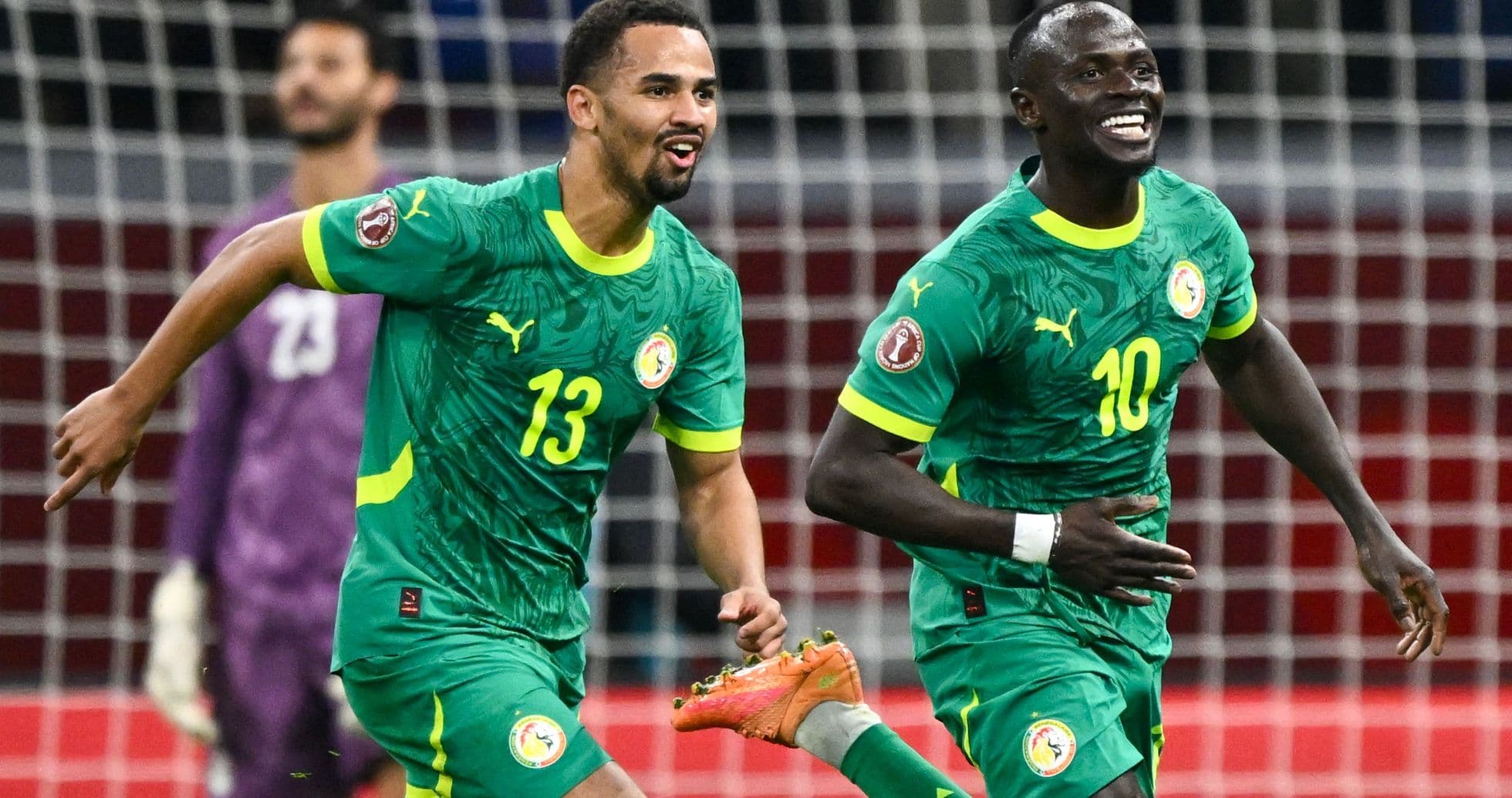
The Al-Nassr forward is more than Senegal’s all-time leading goalscorer, with 51 goals. He is the defining figure of this golden era, a player whose CV – Premier League and Champions League titles with Liverpool – has carried the national team into a different conversation globally.
Mane drove Senegal to their AFCON triumph. He remains the man opponents fear most, the one who can turn a tight, tactical game with a single surge or a precise finish. At this World Cup, he is expected to take up his usual berth on the left of a front three, drifting inside, linking with Jackson and Ndiaye, and dictating the rhythm of Senegal’s attacks.
This tournament carries an extra weight for him. Mane has already confirmed he will retire from international football after the World Cup. Every minute he plays in the famous green shirt now comes with a sense of finality. He would like nothing more than to walk away on a high, having pushed Senegal further than they have ever gone on the global stage.
Around him, the attacking depth is striking. Ibrahim Mbaye of PSG offers youthful unpredictability off the bench. Cherif Ndiaye at Samsunspor, Boulaye Dia of Lazio and Habib Diallo at Metz are all jostling for roles, each bringing a different profile in the final third. Mamadou Diakhon, of Club Brugge, is the dark horse after his first call-up in March.
And then there is Bamba Dieng. The Lorient centre-forward has forced his way back into the fold after a strong Ligue 1 campaign, a surprise return that underlines how unforgiving and fluid the selection picture has become. Assane Diao at Como adds yet another name to a crowded attacking queue.
Senegal will not lack firepower. The challenge lies in choosing the right blend for each occasion.
How Senegal could line up
Strip away the noise and a likely XI emerges, one that leans on experience at the back and star quality up front.
In a 4-3-3, the predicted starting side for World Cup 2026 reads:
Mendy; Diatta, Koulibaly, Niakhate, Diouf; Diarra, Idrissa Gueye, Pape Gueye; Ndiaye, Jackson, Mane.
It is a team built on a hardened spine – Mendy, Koulibaly, Gueye, Mane – and surrounded by players at major clubs across Europe’s top leagues. It is also a side that will be asked to stand up to some of the sharpest attacking talents in the world from the very first whistle of the group stage.
Senegal have already proved they can conquer Africa. The question now is whether this blend of battle-worn leaders and ambitious climbers can carry them deeper into a World Cup than ever before, and give Sadio Mane the farewell his career deserves.