Rodri's Transfer from Manchester City to Barcelona: A Football-First Decision
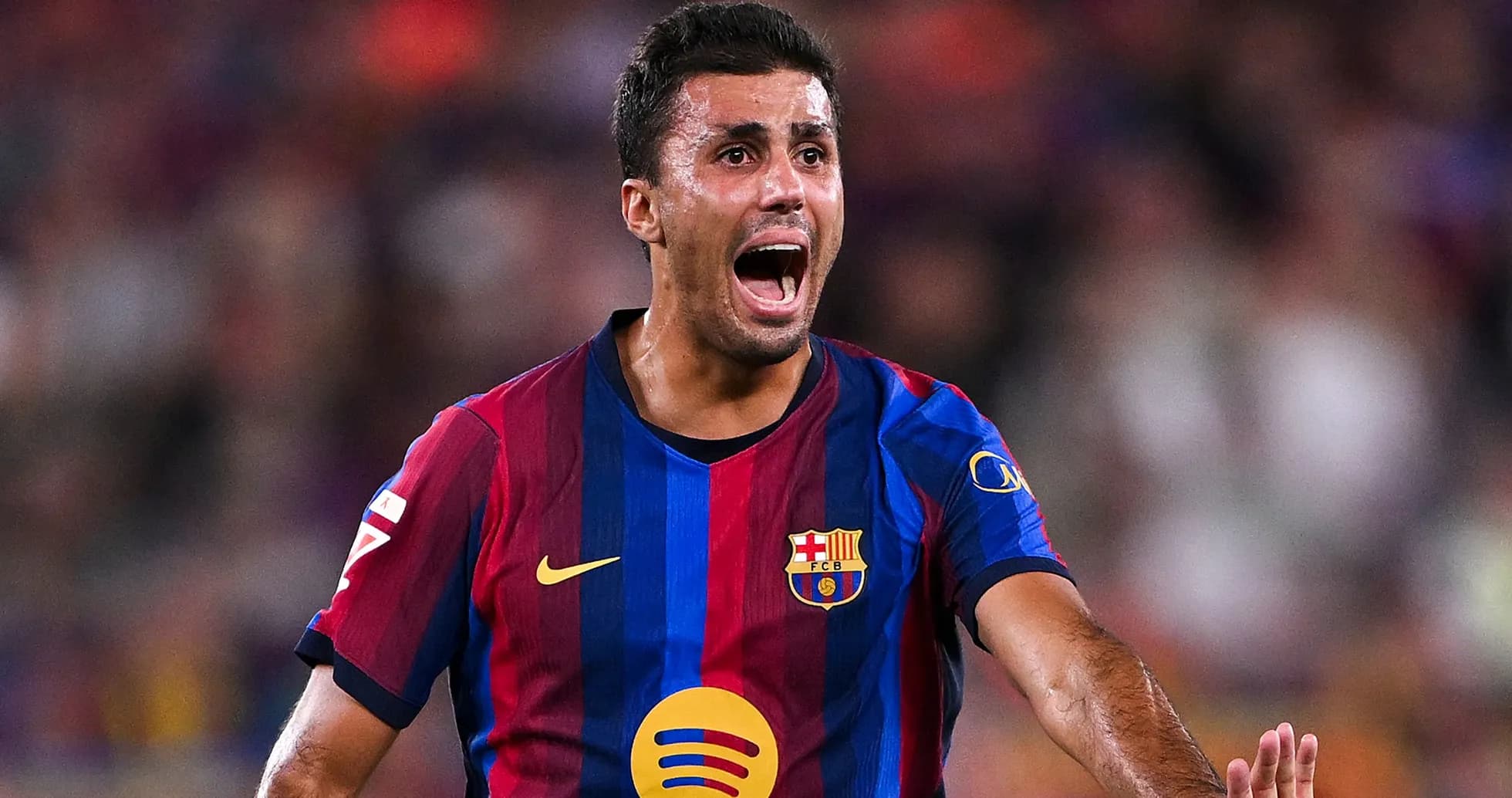
Rodri’s move from Manchester to Catalonia was the transfer that wouldn’t go away this summer. The 30-year-old who defined an era at Man City walked out as a freshly crowned 2024 Ballon d’Or winner and chose Barcelona – while Real Madrid watched a long-coveted target slip into the arms of their greatest rivals.
This wasn’t a late twist or a dramatic U-turn, Rodri insists. It was a slow burn.
A process, rather than a decision
Speaking to Mundo Deportivo, the midfielder described how his City chapter wound down before Barcelona ever picked up the phone.
“It’s been a process, rather than a decision,” he said. “First, you have to realise that your time there has come to an end and that you might want a new challenge. From there, the moment the opportunity at Barcelona arose, I realised it was the best thing for me for many reasons.”
That word – “process” – matters. Rodri did not dress this up as a shock exit or a money move. He framed it as a natural evolution for a player who had won everything in England and wanted something different, not necessarily easier.
He walked away from the Premier League at his peak, with Madrid pushing hard. Barcelona, though, had something else.
Flick, Deco and a football-first pitch
Rodri has been clear: this was about football, not finance. He talked about the “tactical project” being built by Hansi Flick and sporting director Deco, and how that vision cut through the noise.
“I’ve always based my decisions on sporting considerations – where I believe I’ll be able to win, be happy and, above all, develop as a player,” he said. “And that’s why I’ve chosen Barca – also because of the generation of players they have and what Hansi is building there. Ultimately, Deco and Hansi, at the top of the organisation, convinced me.”
Barcelona sold him a role, a dressing room and a future. A squad stacked with emerging talent. A coach whose ideas intrigued him. A sporting structure that, in his eyes, placed football at the centre.
For Madrid, that will sting. They chased him hard. They treated him “exceptionally well”, in his own words. Yet he still walked the other way.
Saying no to Madrid
Few players in Spain will ever face a choice as stark: Real Madrid or Barcelona, with both clubs fully committed. Rodri did – and he admits the weight of it.
“I had to weigh up a lot of things and make such an important decision between two of the best clubs in the world,” he said. “In the end, I made my decision based on sporting considerations – on what sparked a bit more enthusiasm in me and on understanding where I could win and develop the most as a player. It wasn’t an easy decision at all; saying no to Madrid wasn’t easy, especially as they treated me exceptionally well.”
That last line will not soften the blow in the Spanish capital. The Ballon d’Or winner, a Spanish international, at the peak of his powers, chose the Camp Nou project over the Bernabéu machine. Not for a bigger contract. Not for a quieter life. For what he believes is a better footballing fit.
A “family club” pitch that landed
What tipped it? The way Barcelona handled the pursuit clearly left a mark. Rodri spoke of a club that did not suffocate him with pressure, but drew him in with something more personal.
He described Barca as “very homely, like a family club”.
“At no point did they put any pressure on me whatsoever; everyone expressed their desire to have me on board, to work together, and to see what I could bring to the team,” he said. “It was more about the football itself – what they understood I could bring both on and off the pitch, and I really liked that.”
No ultimatums. No public courting. A calm, targeted approach that aligned with how he sees his career. For a player who has always come across as measured and meticulous, that mattered.
Ballon d’Or storm left to one side
His move came on the back of Real Madrid’s highly publicised boycott of the Ballon d’Or gala, a night where Rodri beat Vinicius to the award. The optics were impossible to ignore: Madrid absent from the ceremony, Barcelona-bound Rodri on stage with the trophy.
He rejects any suggestion that this backdrop influenced his decision.
“Anyone who knows me knows that I try to distance myself from that sort of thing, like the media hype,” he said. “I focus on football. In that sense, I’m very English, aren’t I? The Premier League is football and little else.”
That line cuts to the heart of his identity. A Spaniard who spent his prime years in England, shaped by a league he views as stripped back and football-obsessed. Now he steps into the glare of La Liga’s most intense rivalry, at a club where politics and pressure never truly sleep.
He has chosen the noise. He insists he’ll still live above it. The question now is simple: in a Barcelona built by Flick and Deco, and with Madrid still smarting, how far can Rodri’s football-first gamble take them?