Rodri Chooses Barcelona: A Transfer That Stings Madrid
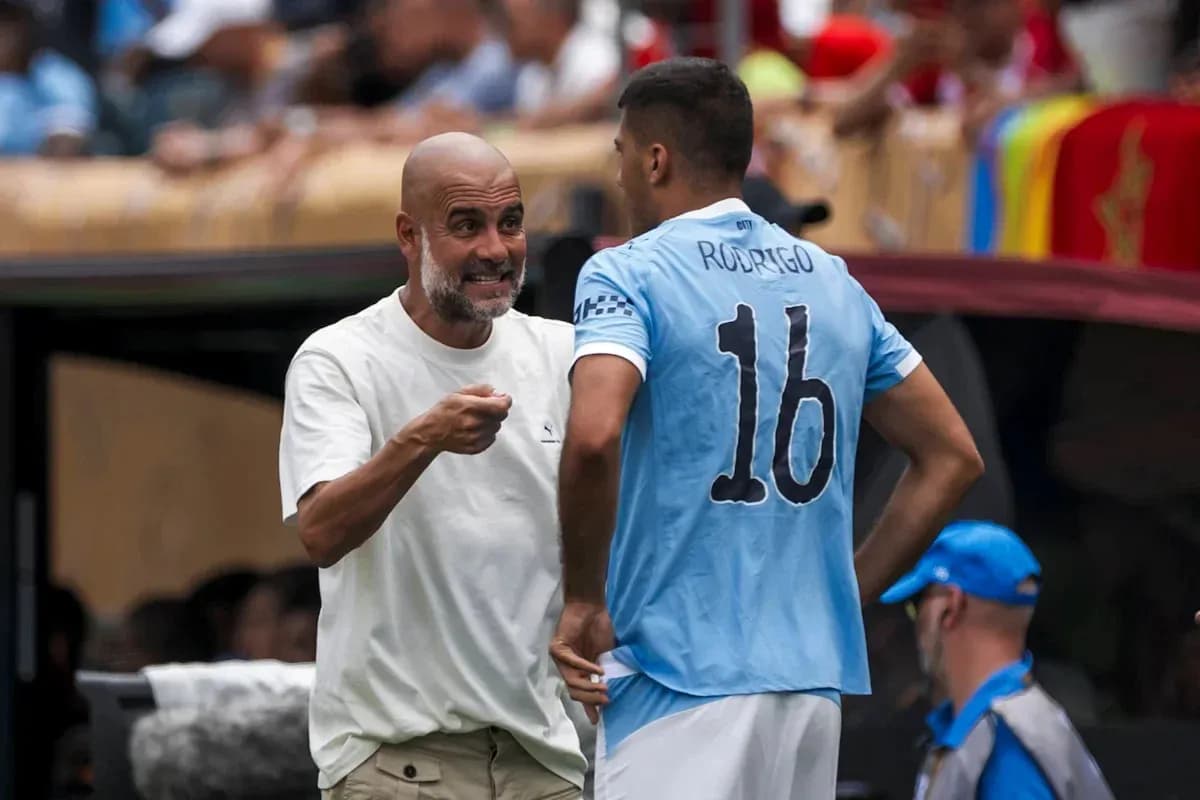
Rodri to Barcelona already feels bigger than a simple change of shirt. It is a move with weight, with politics, with a sharp edge that cuts straight into the old fault line between Catalonia and the capital. As reported by MUNDO DEPORTIVO, the Spain midfielder listened to both Barcelona and Real Madrid, measured what each could offer, and then walked towards Camp Nou with his eyes wide open.
This was not nostalgia. It was not a late-night impulse.
Rodri spoke of needing time, of a summer that was anything but calm as two of the game’s superclubs tried to pull him away from Manchester City. He studied the whole landscape: the football, the role, the pathway. In the end, he chose what he believed was the strongest sporting project, the place that stirred a little more excitement inside him and where he felt he could both win and grow.
In a market often drowned by talk of wages, branding and social media noise, that matters. His logic was football first.
Deco and Hansi Flick were central to that. Barcelona’s hierarchy convinced him with a clear plan, detailed conversations and a firm vision of how he would anchor their midfield. These are the small margins where the biggest transfers are won: not just in numbers on a contract, but in the clarity of the pitch board and the conviction in a coach’s voice.
Respect for Madrid, but a different choice
Rodri did not slam the door on Real Madrid. Far from it. He spoke with obvious respect, stressing that rejecting them was anything but easy and highlighting the way the club handled the talks. That is a player who understands scale. Saying “no” to Madrid still echoes across Europe, and he did not try to downplay that.
His words about José Mourinho, who personally tried to lure him to the Bernabéu, added another dimension.
“Bueno, no creo que sea lo suyo desvelar una conversación privada, pero evidentemente expresó sus ganas de que fuera y de lo que podía aportar al equipo. El trato fue muy bueno. Cuando tomé la decisión también le llamé para agradecer el interés y el trato. Me parece un grandísimo entrenador, ya lo ha demostrado allá donde ha ido en sus grandes etapas y el Real Madrid va a ser un duro rival para esta Liga.”
Diplomatic, but genuine. He praised the treatment, recognised the effort, and then, crucially, picked up the phone to thank Mourinho once his decision was made. In an industry that can chew through basic courtesy in a single news cycle, Rodri chose to close the loop with respect.
Barcelona win the argument, not just the race
The nuance of his explanation will delight Barcelona supporters. Rodri did not frame the move as an escape from City or as some emotional rejection of Madrid. He presented it as a positive choice in favour of Barça.
That distinction is powerful. It suggests Barcelona did not simply profit from timing or turmoil elsewhere. They won the debate in his mind. They sold him on their football, their structure, their future.
He also refused to get dragged into the swirl of off-field theories and side stories around Madrid’s interest. No feeding the theatre. He kept the focus on football, his national team, his own trajectory. It sounded like the voice of a player who has lived at the top long enough to know when to step away from the circus.
His observation that in England football is largely kept to football was telling too. It hinted at someone forged by the relentless tempo of the Premier League, but perhaps now drawn to a different kind of pressure, a different noise, a different kind of spotlight in Spain.
A new twist in the old rivalry
If Rodri performs in Barcelona’s midfield as he has in Manchester, this is a transfer that can bend seasons. He brings control, intelligence and an iron calm in the most frantic moments. Barcelona have not only added one of the game’s premier midfield organisers; they have done it by beating Real Madrid to his signature.
That carries symbolic force. It speaks to pulling power, to planning, to the enduring magnetism of the Barcelona name at a time when many questioned it.
Madrid, for their part, will feel the frustration. They moved with intent, made a serious pitch, and were treated with courtesy. There is no humiliation here, only the sting of losing a strategic battle for a player they clearly valued.
For Barcelona, the satisfaction runs deeper. They have secured a midfielder who knew exactly what the alternative looked like, heard Madrid’s best arguments, and still chose to wear their colours.
The Manchester City void
Viewed from Manchester, the story lands differently. For City supporters, Rodri’s name being fought over by Barcelona and Real Madrid only underlines what they already knew: he has become the benchmark for the modern holding midfielder.
He has been the calm in chaos, the one who organises the storm around him, the metronome who makes great sides feel balanced and secure. He became that version of himself at City, in the Premier League, under the harshest floodlights and the heaviest expectations.
If his departure is confirmed, the emotion will be split. Pride in what he has become. Irritation at the sense that Europe’s traditional giants still treat City’s best as if they belong to some pre-ordained elite ecosystem.
But above all, a practical worry.
- Who now controls the rhythm for City?
- Who slows games down when they turn frantic, or accelerates them when they need a spark?
- Who gives that feeling of certainty when everything around starts to fray?
That is Rodri’s real legacy in Manchester. He leaves a hole in the centre of the pitch that tactics alone cannot easily fill, while in Spain, the balance of power in midfield just shifted in Barcelona’s favour.