Real Madrid Edges Espanyol with Late Winner in La Liga Opener
Real Madrid left it until the last breath of stoppage time to escape Barcelona with three points, edging Espanyol 2–1 on Saturday night to open their 2026–27 La Liga campaign. The scoreline flatters them. The performance does not.
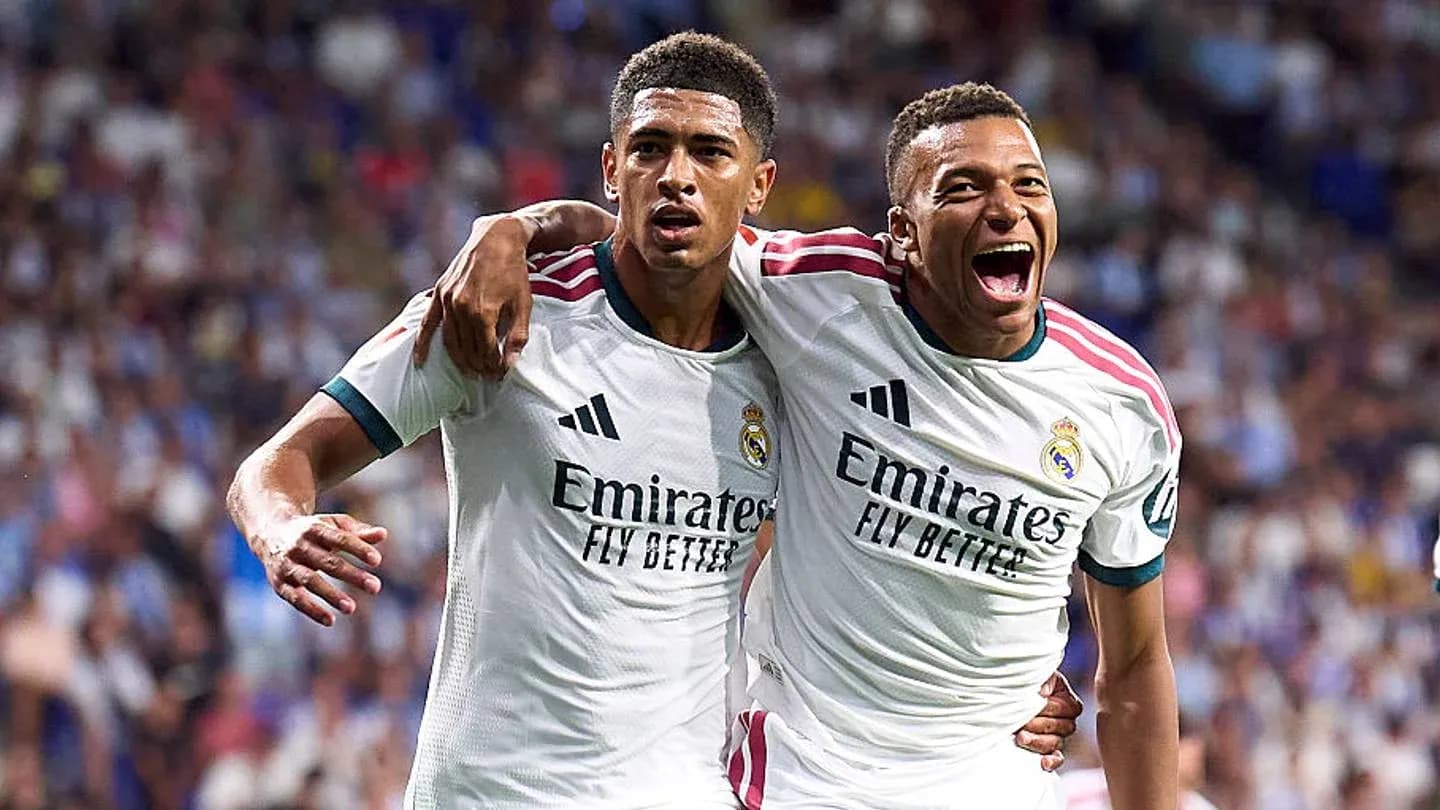
For José Mourinho’s second spell in charge, the script began perfectly. Nine minutes in, Arda Güler stood over a set piece and bent in the kind of delivery that makes defenders panic and strikers look unstoppable. Jude Bellingham attacked it, thundering a header past the goalkeeper to launch the new era with a goal that felt inevitable the moment the ball left Güler’s boot.
Madrid were in front. They were comfortable. For a while.
Then the grip loosened.
As the first half wore on, Espanyol settled and Madrid drifted. Passes slowed. The press softened. The visitors’ control seeped away almost unnoticed until Álex Calatrava punished them on the half-hour mark, slipping his finish beyond Thibaut Courtois after ghosting into the box untracked. Valverde, rooted and shouting instructions instead of moving with his man, watched the equalizer unfold.
The goal should have jolted Madrid. Instead, it exposed them.
Mourinho’s team talk at the break clearly lacked the shock value of his prime years. Madrid came back out with possession but without purpose, running into the same old wall that has frustrated them so often in Spain: a compact, organized low block from a team happy to suffer.
Vinícius Júnior spent the night wrestling with his marker and the referee, chopped down repeatedly, then going to ground too easily when he did wriggle free. His numbers told the story: no chances created, no shots on target, no real incision. On the other side, Kylian Mbappé, irritated and searching for involvement, abandoned the center-forward zone and drifted to the right wing just to feel the ball at his feet.
He got his big moment early in the second half and squandered it, guiding a free header wide of a gaping goal. It felt like the kind of miss that comes back to haunt you.
Behind them, the supposed control room malfunctioned. Federico Valverde and Bernardo Silva saw plenty of the ball but offered little to break Espanyol’s lines. Silva had tidy spells, dictating the tempo in patches, but he never truly bent the game to his will and won just two of his nine duels. Valverde’s night was worse: exposed on the equalizer, unable to stamp any authority on proceedings, another forgettable outing in the role that is meant to suit him best.
So Madrid fell back on an old habit: crosses. Endless, hopeful, largely aimless crosses. Fullbacks and midfielders alike hoisted balls into the box that Espanyol’s defenders swallowed up as the minutes bled away.
The Problem That Won’t Go Away
This is the concern. New coach, new faces, same issues.
For the third straight season, Madrid looked short of ideas against a deep, disciplined opponent they were expected to sweep aside. The reliance on individual brilliance from Mbappé or Vinícius to conjure something out of nothing felt as strong as ever, and on this night, the pair never quite synced. Their movements clashed, their understanding frayed, and Madrid’s attack looked disjointed whenever the ball reached the final third.
The exceptions were the two men who had combined for the opener. Arda Güler, with an 8.5 rating from FotMob, played like the most natural playmaker on the pitch. Every time he found space, he lifted his head and picked out runners, threading passes that actually asked questions of Espanyol’s back line. He didn’t deserve to be withdrawn just past the hour mark.
Bellingham, rated 8.3, carried his summer form with England straight into club duty. Beyond the goal, he surged forward time and again, slaloming through challenges, turning midfield skirmishes into attacking waves. His aggression without the ball and calm with it gave Madrid their only consistent threat between the lines.
Still, as the game crept into its final stages, the pattern was unmistakable: Madrid huffing, Espanyol holding, the visitors’ composure fraying.
Mourinho’s Choices Under the Microscope
Mourinho’s first major selection call of his second tenure was at right-back. He opted for Denzel Dumfries over Trent Alexander-Arnold, choosing defensive solidity over attacking flair. The irony was brutal.
Dumfries, rated 7.2, needed Ibrahima Konaté to bail him out more than once after venturing too high up the pitch. He was beaten down his flank in the build-up to Espanyol’s equalizer and, when Madrid needed width and quality from wide areas, his final ball rarely delivered. The trade-off Mourinho made — sacrificing Alexander-Arnold’s creativity for supposed defensive security — gave him neither.
Konaté himself impressed on debut. A 7.7 rating reflected a display built on raw power: bullying attackers off the ball, dominating in the air, and making timely clearances. At times he looked uncertain with his positioning inside the box, but as opening nights go, it was a strong one.
Alongside him, Dean Huijsen (7.1) showed why the staff trust his distribution, pinging five passes into the final third and throwing himself into challenges with enough commitment to leave blood on his shirt. On the left, Álvaro Carreras (7.4) kept things steady, avoiding the costly errors that marred last season and linking cleanly with the midfield before making way for Marc Cucurella.
Courtois, largely untested, walked away with a 6.7. Once again, he could only watch as those in front of him switched off for Espanyol’s goal.
The Bench Changes the Ending
Mourinho turned to his bench on 64 minutes, withdrawing Güler and Carreras for Yan Diomande and Cucurella. Diomande (6.4) flashed some quality with his delivery and played a part in the move that eventually led to the winner, though he sometimes smothered promising situations with too many touches inside the box. Cucurella (6.7), still shaking off World Cup fatigue, offered energy and bite, but his understanding with Vinícius clearly needs time.
With ten minutes of normal time left, Mourinho rolled the dice again. Trent Alexander-Arnold (6.3) replaced Dumfries, and Eduardo Camavinga (6.4) came on for Bernardo Silva. Camavinga didn’t misplace a pass, knitting things together simply, while Alexander-Arnold delivered a composed cameo without a standout moment.
The decisive change, though, came in attack. Carlos Espí, making his debut, entered for Bellingham on 80 minutes with a 7.5 rating awaiting him in hindsight.
For a while, it looked like nothing would change. Madrid continued to probe, Espanyol continued to repel, and the clock crept into the 90th minute with the champions-elect of Europe’s imagination staring at a flat opening-day draw.
Then Mbappé finally found the gap he’d been hunting all night.
Dropping into space, he carved open the defense with the kind of movement and touch that had been missing from his finishing earlier in the evening. The ball broke for Espí, who didn’t hesitate. One clean strike, low and true, and Madrid were in front again, the away end exploding as the debutant wheeled away in disbelief and delight.
It was harsh on Espanyol. It was harsh on the evidence of the 90 minutes. But it was exactly the sort of ruthless moment Madrid have built an era on.
What the Ratings Reveal
Strip away the late drama and the FotMob numbers tell a familiar story.
Madrid’s midfield, with Valverde and Bernardo Silva at its base, still looks vulnerable when asked to dictate rather than destroy. Valverde’s 8.1 rating owed as much to his overall contribution and a near-miss off the outside of the post as anything, but the lapse on Calatrava’s goal and his struggle to control the rhythm underline a recurring problem. Silva’s 7.1, tidy but too often on the periphery, fits the same theme.
On the flip side, Güler and Bellingham were the heartbeat of everything positive. Their chemistry — one dropping deep to create, the other surging beyond the forwards — offered Mourinho a blueprint. Their work off the ball, harrying and snapping into duels, will not go unnoticed by a manager who prizes that side of the game.
Up front, Mbappé’s 7.4 summed up a conflicted night. He drifted wide in frustration, missed a sitter that would have dominated headlines had Madrid not won, but ultimately carved out the chance that Espí buried. Vinícius, battered and blunted, finished with a 7.2 that felt generous given his lack of end product.
And then there is Espí, the late hero. One chance, one goal, three points. A debut that instantly shifts his status from squad option to genuine contender.
Madrid walk away from Catalonia with exactly what they came for: a win to launch Mourinho’s second act. But beneath the celebration, the alarm bells are loud. The struggle against a low block remains. The dependence on individual magic persists. The midfield questions are unanswered.
If this team is going to rip the title away from Barcelona, moments like Espí’s winner can’t be the plan. They have to be the bonus.