Rashford's Reunion: A New Era at Manchester United
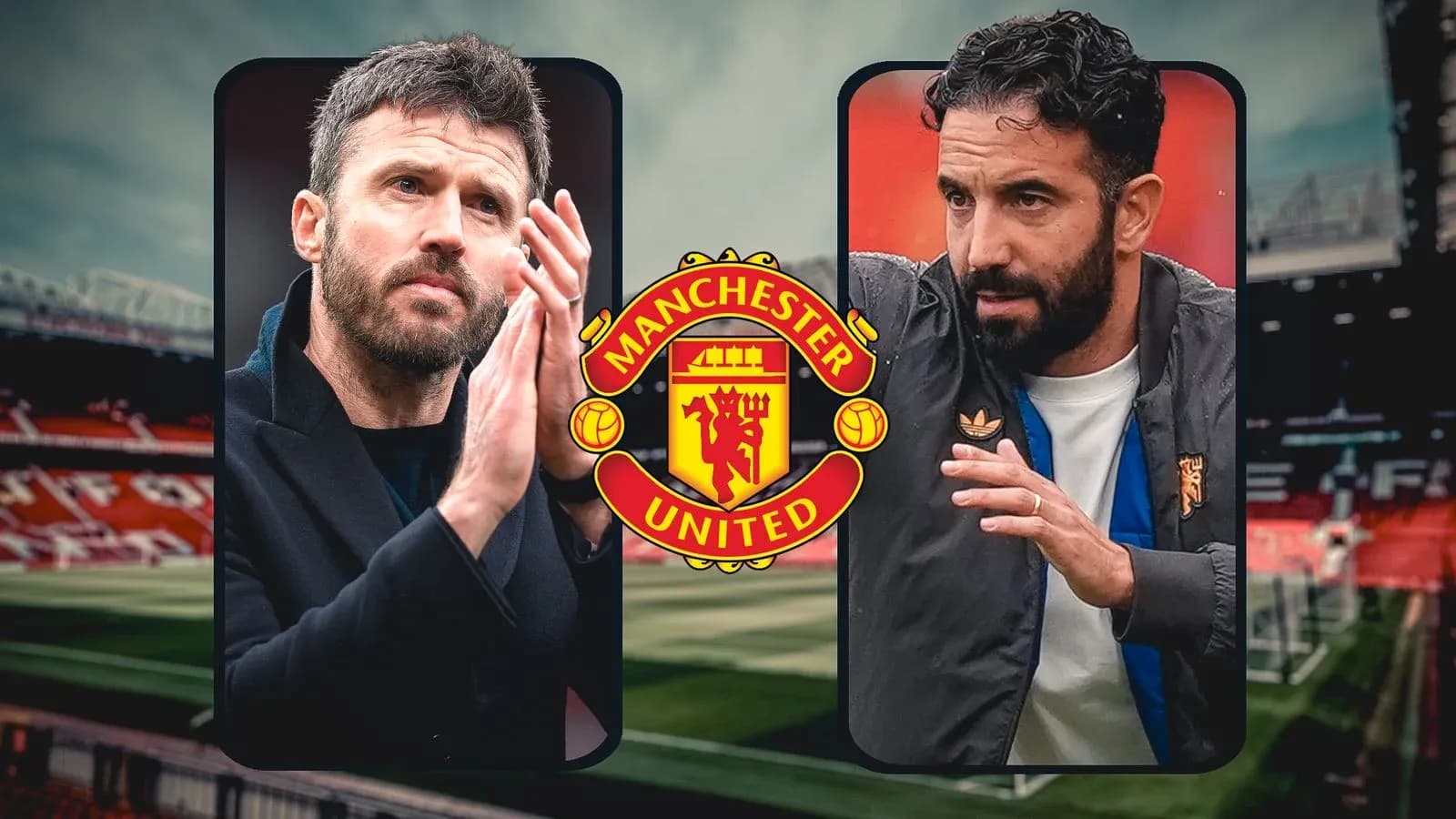
Ruben Amorim told Manchester United fans they would have to suffer for success. Michael Carrick has simply reminded them there is a United way to chase it.
Twelve months ago, Marcus Rashford was lighting up Barcelona, Carrick had just been sacked by Championship side Middlesbrough, and Amorim was preparing for his first full season at Old Trafford. Now all three walk back into the same arena with the roles flipped, the stakes altered and the storylines colliding.
Rashford, the prodigal forward, comes back to a club that looks new but feels familiar. The man greeting him is not a distant figurehead but a former team-mate and captain. Carrick, now United’s head coach, has opened the door and spread his arms, offering Rashford a chance to rewrite a narrative many thought was finished.
Amorim, by contrast, returns as the outsider. Sacked five months into last season, he has landed at AC Milan and arrives here desperate to end a winless pre-season against the club that dismissed him. His Old Trafford reign burned brightly, loudly, then abruptly. Carrick’s has grown in the opposite way – quiet, controlled, but increasingly convincing.
Rashford’s comeback adds sharp edge to an already charged reunion. Amorim publicly questioned the England international’s attitude more than once and eventually decided he had to go. Now the two meet again, one on the Milan bench, the other back in United colours, and this pre-season fixture suddenly looks less like a friendly and more like the latest episode in a long-running soap opera.
It also offers a clean vantage point to look back at United’s turbulent year: the mid-season reset, the tactical U-turn, the cultural shift. Three big changes stand out from the moment Amorim walked away and Carrick walked in.
From rigid dogma to tactical freedom
Amorim’s stubbornness defined his time at Old Trafford. Given the job of reversing United’s slide, he reached for what he knew best: his beloved 3-4-3.
Under pressure, he doubled down. He famously told reporters that not even the Pope could convince him to abandon that system. The line stuck. So did the formation. When the Africa Cup of Nations stripped his squad of key players, he still refused to bend, and results slipped away from him.
There were late hints of compromise, a tweak here, an adjustment there. When the heat rose, though, Amorim went back to type. That insistence, those internal battles over direction and identity, were widely seen as the core of the friction between him and the United hierarchy.
It also jarred with the stands. United did score goals under him, sometimes in bursts, but the three-at-the-back setup never felt like Old Trafford. It was functional, unfamiliar and, crucially, hard for supporters to imagine as the long-term future.
The same themes have followed him to Milan. Early reports from Italy talk of confusion and players being bent into uncomfortable roles to serve the system rather than the other way round.
Carrick walked in and ripped that up on day one. His first game was a Manchester derby and he turned it into a statement. United went front-foot, aggressive, recognisably themselves. They tore through Manchester City with direct, incisive attacks and a 2-0 scoreline that flattered the visitors. City escaped a heavier beating.
That approach has carried into pre-season. United move the ball forward quickly again. New signing Andrey Santos looks for vertical passes, happy to pierce lines instead of recycling possession for safety. Bryan Mbeumo has been pushed into a central role and has come alive, constantly darting in behind and dragging defences out of shape.
Bruno Fernandes has been the symbol of this reset. Shifted back into his favoured No 10 role, he went on a creative surge that ended with him setting a new Premier League assist record. Under Carrick, the debate over what United are trying to be has largely disappeared.
They look like Manchester United again – not in nostalgia, but in intent.
Belief restored
The transformation has not just been on the tactics board. It has been in the mood.
Amorim’s press conferences were must-watch, but they came at a cost. His talk of storms, suffering and struggle, his scathing assessment that this was the worst team in the club’s history – it all fed a sense of doom. United were close to the top four when he went, yet you would not have known it from his tone.
Carrick walked into that gloom and quietly pushed it aside. He took the same group, steadied them and dragged them over the line into the Champions League places – an achievement Amorim had publicly suggested they were not ready for.
The atmosphere around the club has shifted. There is noise again, but it is hopeful rather than hostile. New signings Leny Yoro and Mbeumo have both spoken openly about wanting to win the league. Carrick has not batted that away. He has leaned into it, backing his players’ ambition rather than dampening expectations.
He believes this squad can do something special. That conviction lands differently when you remember that, under the previous regime, United flirted with the wrong end of the table and looked closer to a relegation scrap than a title race.
The suffering talk has gone. In its place: belief.
Second chances instead of dead ends
Under Amorim, the line felt absolute. Cross him or drift out of favour and your United story was effectively over. For a club accused for years of indulging egos, there was a certain appeal in that ruthlessness.
Alejandro Garnacho felt it hardest. Kobbie Mainoo seemed on course to follow. Rashford, once the face of the club, ended up with two loan spells and an exit that felt permanent.
Amorim will point to Garnacho as vindication. The winger’s loan at Chelsea never really took off, and he now finds himself at Aston Villa trying to rebuild. That call looks understandable.
Mainoo is a different case. Under Carrick, the midfielder has become a cornerstone. He did not start a league game until January, but once he broke in he stayed there, his performances earning him a nomination for PFA Young Player of the Year. What looked like a lost cause under one manager has become a success story under another.
Rashford sits somewhere between those two extremes. His quality has never been in doubt. Amorim’s issue lay with his conduct and consistency. Since then, Rashford has flashed his talent again, at Villa and then in a LaLiga-winning campaign with Barcelona. Now he returns to a United dressing room with a new culture and a higher bar.
The question is no longer whether he is good enough. It is whether he is willing to live up to what Carrick demands.
Carrick, for his part, has chosen the path of redemption. He has reopened a door that looked bolted shut. Rashford has the chance to step through it and reshape his United legacy.
Whether he does so will say as much about the new era at Old Trafford as any summer signing or tactical tweak.