Raphinha's Season Reset: Belief and Brazil's Sixth Star
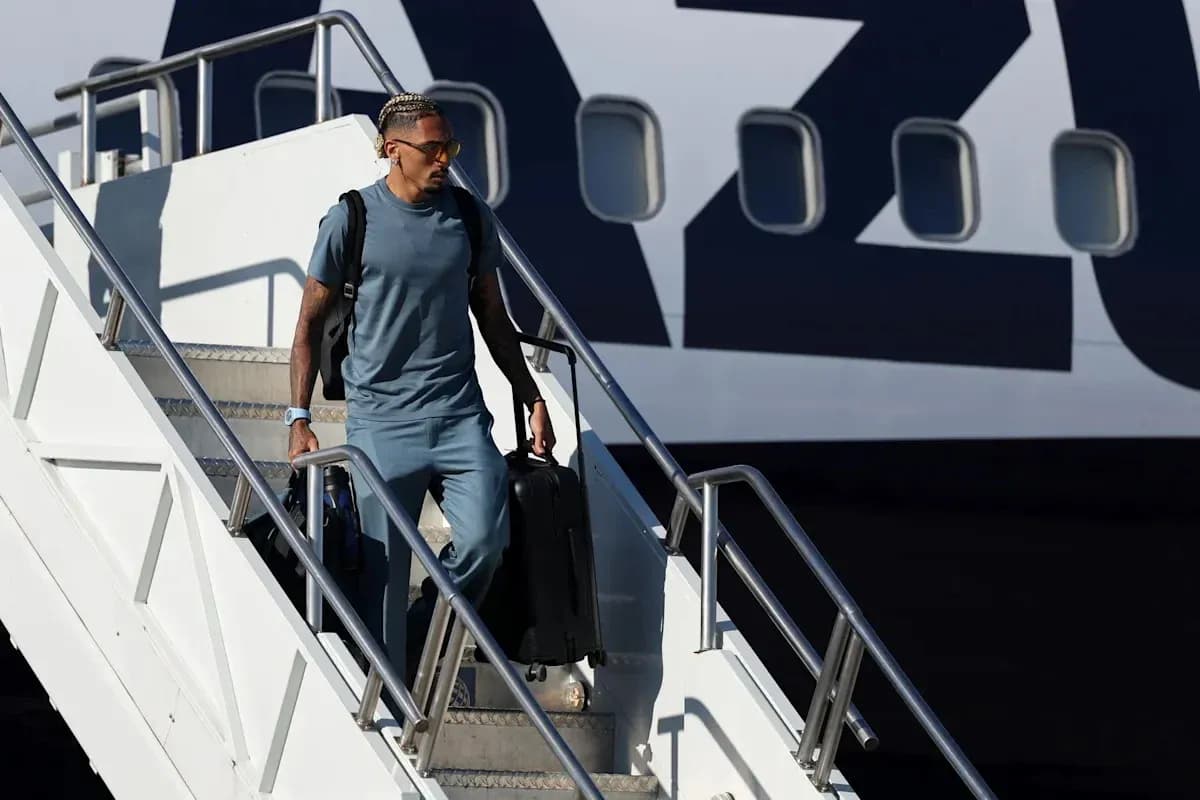
The club season never really let him breathe. Muscular problems, stop-start rhythm, questions over form. Yet as Brazil lock in on the 2026 FIFA World Cup, Raphinha cuts the figure of a man who has parked all that at the door.
At Barcelona, the 29-year-old’s year was jagged and frustrating. When he was fit, though, he remained one of Xavi’s most incisive weapons: direct, aggressive, always willing to take responsibility in the final third. That version of Raphinha is the one Brazil are banking on.
Now the stakes rise. Now it’s about a sixth world title.
Backing Vinicius – and himself
Inside the Brazil camp, the talk is not about fear of the stage, but about who can own it. Raphinha doesn’t hesitate when the conversation turns to Vinicius Jr.
“Vini is young, but given his experience and achievements, he can decide a World Cup match and bring home the sixth title,” he says, the admiration obvious.
It is not blind praise. Vinicius arrives as a Real Madrid star accustomed to finals, pressure, and hostile environments. For Brazil, he is no longer the apprentice; he is one of the faces of the project.
Then Raphinha adds the line that tells you where his own head is.
“I include myself in that group.”
No caveats. No shrinking into the background. He sees himself among those capable of tilting a World Cup game, of delivering the moment that lives forever. For a player whose club season was chopped up by injuries, that is a bold stance — and exactly the mentality Brazil demand from their senior forwards.
Leaders, margins and a “short and treacherous” tournament
Raphinha knows the World Cup doesn’t forgive hesitation. He talks like someone who has felt how quickly a tournament can turn.
“We’ve arrived very well prepared. We have to work hard on our defence. If we defend well, our chances of winning are very high.”
It’s a simple equation, but a revealing one. This is not just a winger obsessing over dribbles and goals; it is a senior player framing Brazil’s challenge in collective terms. The flair will always be there. The question is whether the structure behind it holds.
He calls the World Cup “short and treacherous” — a phrase that hangs in the air because every Brazilian generation knows the truth of it. One bad half. One lapse in concentration. One mistake in a knockout tie, and four years of planning are gone.
“There’s little time to get organised. We’re trying to adapt and be as ready as possible so we don’t make mistakes,” he explains.
That is where leadership comes in. Raphinha stresses that the experienced core must guide the younger faces through the chaos of a tournament where every minute feels loaded. The message is clear: Brazil cannot rely only on talent. They need voices, presence, and players willing to take the hit when the pressure spikes.
Ancelotti’s trust and unfinished business
For all the frustration of his recent injury spells, Raphinha arrives as one of Brazil’s most trusted attacking options. The coaching staff know he can change the tempo of a game, stretch a defence, or decide a tight contest with one clean strike or cross.
He also carries the backing of a manager whose opinion carries enormous weight in world football: Carlo Ancelotti.
“Ancelotti is very happy with what I’ve been bringing to training and matches, but I know I can do much more and I’m still searching for my best form,” Raphinha admits.
There is a tension in that statement: reassurance from a coach who believes in him, and a personal restlessness that refuses to settle. It is the mindset of a player who feels his ceiling is still higher than anything he has shown.
The relationship with Ancelotti did not start in a national-team dressing room. It was forged in Spain, on opposite sides of the clásico divide.
“Even though we were rivals (in Spain), we had a good relationship,” he says.
Barcelona winger. Former Real Madrid manager. Now united in Brazil’s most pressurised job. It is an unlikely alliance, but a powerful one if both continue to pull in the same direction.
Raphinha enters this World Cup cycle with scars from a difficult season, but also with clarity. He believes in Vinicius. He believes in Brazil’s defensive discipline as the foundation. Most of all, he believes he belongs among the players who can drag a nation to its sixth star.
The only question left is whether the World Cup, in all its treachery and brilliance, will give him the stage to prove it.