Premier League Insights: Hull's Strong Start and Chelsea's Chaos
The Premier League is already splitting into the sharp and the shabby. A couple of games in, the patterns are there if you want to see them: clubs who know exactly what they are, and giants trying to spend their way out of problems that run far deeper than any deadline‑day unveiling.
Some have cracked it. Some very much haven’t.
Hull: Structure over stardust
Hull were supposed to be this season’s punchline. Another promoted side thrown into a weekly comparison with Derby 2007/08, expected to dodge that infamous points total but still sink with barely a ripple.
Instead, they’ve walked straight into the history books.
Hull are only the fourth promoted club ever to win their first two Premier League games. Two of the previous three stayed up. The catch? The one that went down was Hull themselves in 2016/17, which does take some shine off the omen.
Still, this is a far better start than almost anyone bothered to predict. They’re more than halfway to Derby’s entire points haul with 36 games left, and they’ve done it with a plan that looks almost old‑fashioned in its clarity.
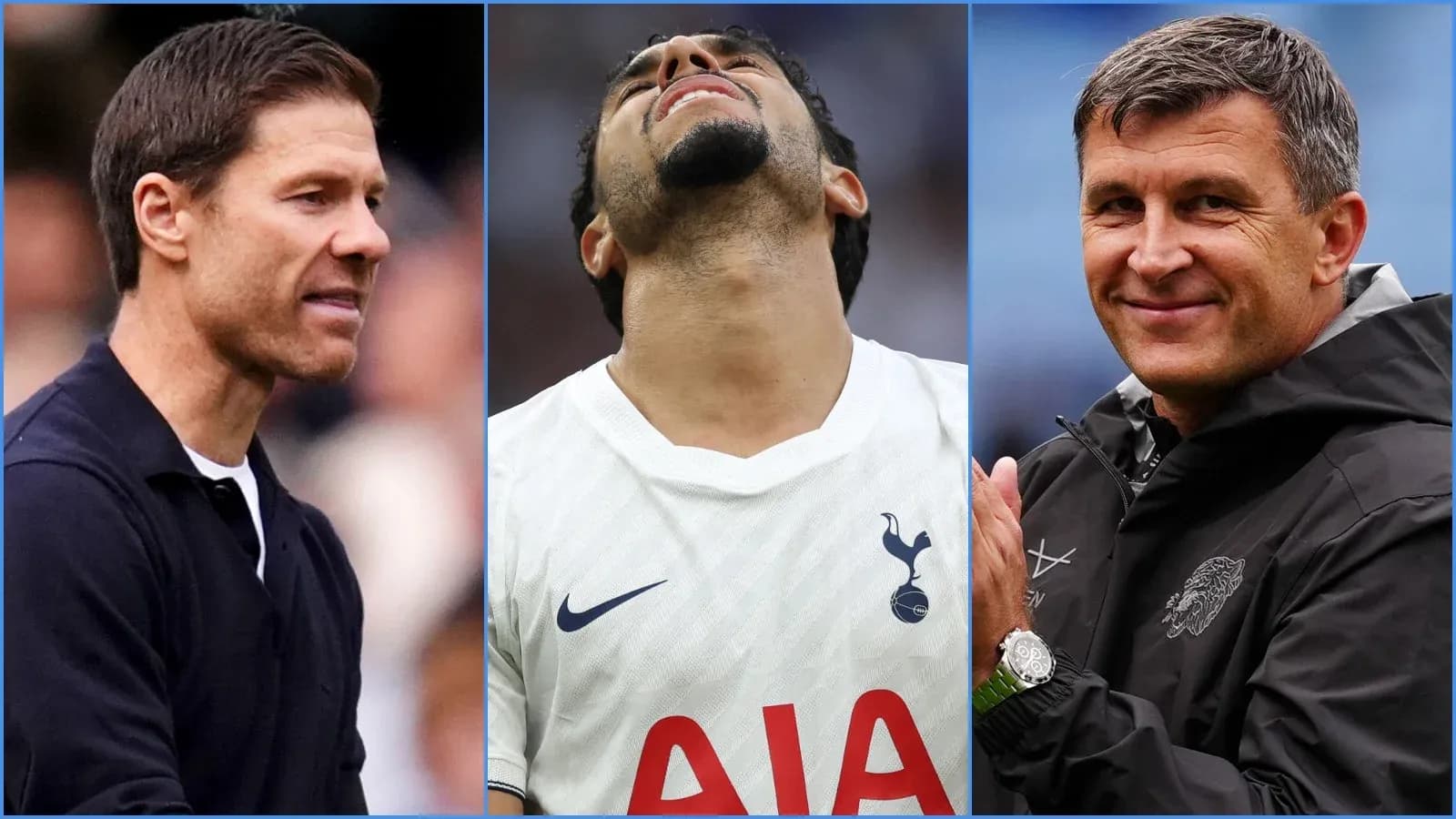
Sergej Jakirovic has gone back to basics and doubled down: a solid goalkeeper, three big, uncompromising centre‑halves in a back five, a midfield that refuses to budge, genuine width, and the promise of more attacking help before the window shuts. Hull aren’t pretending to be something they’re not. They’re organised, drilled, and happy to lean on repetition.
Stay in games. Stay competitive. Then pounce – on the break, at set pieces, in those scruffy, decisive moments. Keep doing that and the “Derby comparison” will be dead by Christmas.
Chelsea: Chaos, goals and a familiar feeling
Xabi Alonso has turned Chelsea into something Kevin Keegan might recognise more than Rafael Benitez or Jose Mourinho ever would. The Spaniard’s brief on‑pitch encounter with Keegan – 90 minutes in a 3-0 Liverpool win over Newcastle back in 2008 – seems to have left more of a mark than years under more pragmatic managers.
Chelsea’s early weeks under Alonso have been wild. Last season they managed to win just one league game in which they conceded two or more. This season, they’ve already done it twice: 3-2 and 4-3, each time flirting with a spectacular collapse before finally remembering how to manage a game.
The attack is the show. Fluid, rotating, unpredictable. It looks like it will produce goals most weeks. The question is whether the defence can catch up.
Some of that should come with time. Emi Martinez needs to bed in with a new back line. Romeo Lavia needs to grow into a role where he isn’t the senior man in a midfield pivot. Those are teething problems, not terminal ones.
Right now Chelsea feel – very tentatively – like Arsenal did four years ago, somewhere in the middle of a rebuild, brilliant in flashes and brittle in others. A trip to the Emirates next week will tell us more than any wild win over Fulham or Brighton ever could. There’s no shortage of recent examples of Chelsea being anointed as title contenders after one big result against Mikel Arteta’s side, only to implode shortly after.
The real unknown? How this team reacts when it actually goes behind. Against Fulham and Brighton they played with a cushion. That won’t always be there.
Rising stocks: Yalcouye, Rashford, Cherki, McAtee
Malick Yalcouye is the latest reminder that when Brighton sign an obscure midfielder, the rest of the division should probably just hijack the deal on principle. The pattern is getting ridiculous.
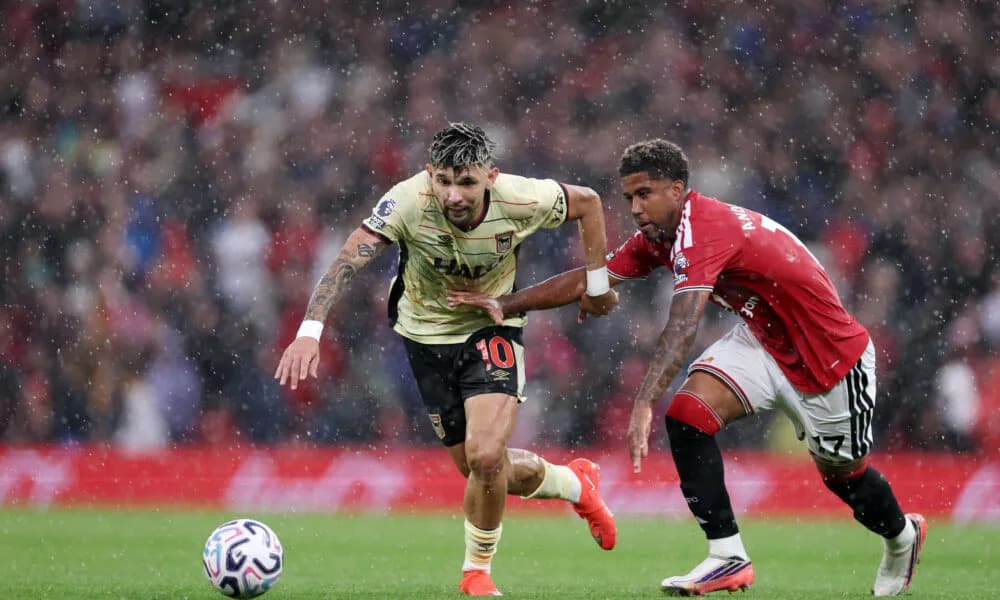
At Manchester United, Marcus Rashford is living another loop of the club’s endless redemption cycle. Harry Maguire summed it up bluntly:
“Marcus has been part of a rough ride for Manchester United, and when that happens and the team doesn’t deliver, players get dug out and he was one of them at that stage.
“I’ve been through it. Everyone’s been through it at this club.”
Maguire knows the terrain. He’s been the former captain everyone tried to move on from, only to watch him keep crawling back into the starting XI. He’s seen Luke Shaw, Kobbie Mainoo and even Bruno Fernandes ride out storms that felt terminal at the time.
Rashford’s break with his boyhood club under Ruben Amorim looked even more severe. The connection felt snapped. Yet sometimes the road back starts with something as small as a committed track-back and a tackle that says: I’m still here.
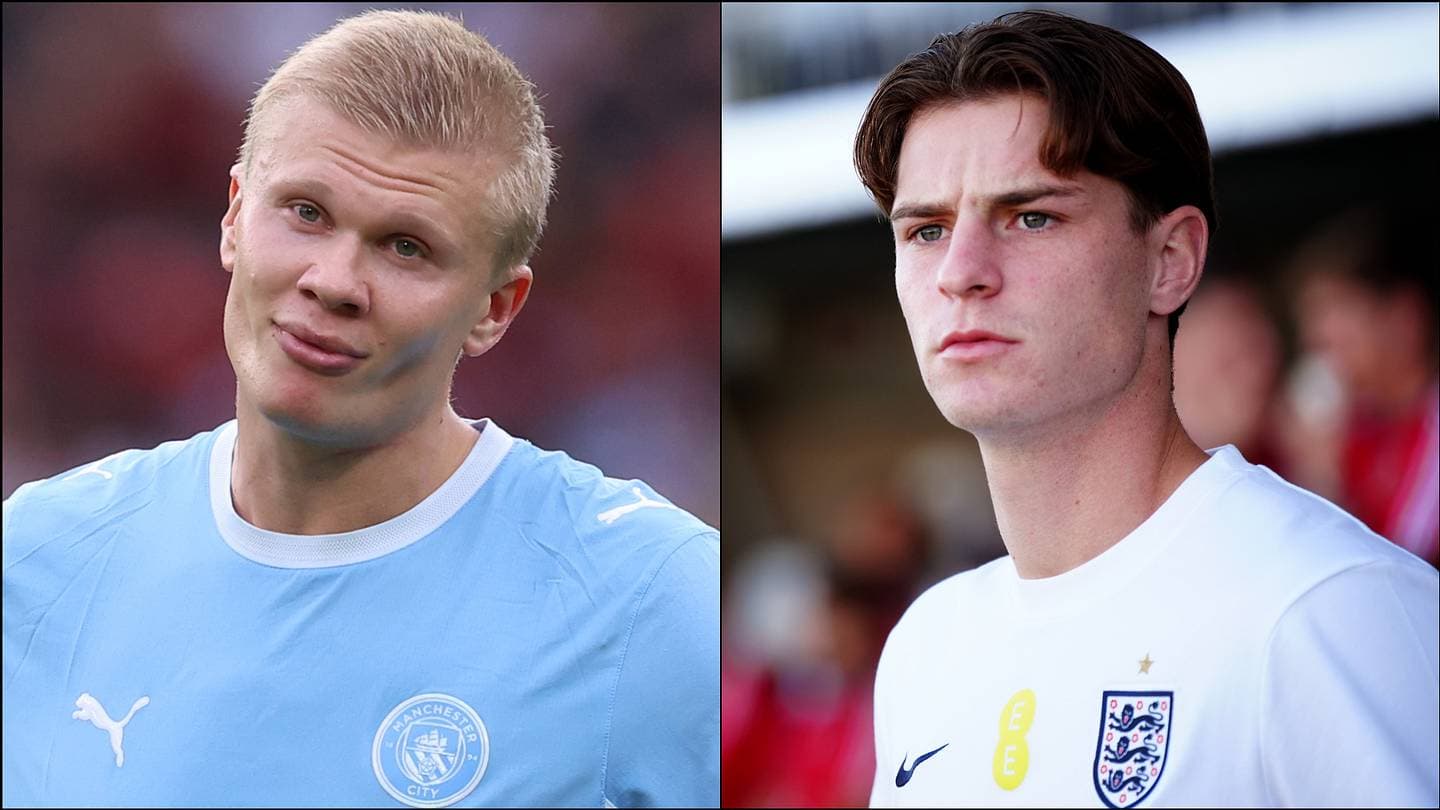
Rayan Cherki is busy making his own noise. Manchester City paid less for him than Premier League clubs have shelled out in the past year for Savio, Yoane Wissa, Jamie Gittens, Anthony Elanga, Brennan Johnson, Kevin, Emile Smith Rowe, Dan Ndoye or Dilane Bakwa. Cherki already has more combined goals and assists in 109 minutes this season than any of those players managed in the whole of 2025/26.
He’s “chaotic”, and he doesn’t always obey Enzo Maresca’s safe zones. City might need exactly that kind of disruption.
Then there’s James McAtee at Nottingham Forest, quietly stepping into a much bigger role. Initially signed to help replace Anthony Elanga and, before his pay-off from Evangelos Marinakis, Morgan Gibbs-White, he now looks like part of the club’s succession plan for a £116m midfielder a year later.
Oliver Glasner decided he didn’t need a like-for-like external replacement for Elliot Anderson, saying it was “not target No. 1” and hinting that the answer might already be in the squad. McAtee, signed from Manchester City in 2025, just had to wait for Anderson to make the reverse trip in 2026 for his path to clear.
Two games into his second season at the City Ground, Glasner has already given him 164 Premier League minutes – more than any of his previous four Forest managers combined, and almost as many as under Nuno Espirito Santo (50), Ange Postecoglou (77) and Sean Dyche (43) put together.
Play an Etihad academy graduate deeper, give him more of the ball, and something interesting happens. At Anfield, if you squinted, McAtee had shades of an Adam Wharton type, minus the acrobatics.
Everton, Brentford, Leeds, Le Bris: Different ways to be relevant
At Everton, the uneasy truce is over. The club’s stakeholders have gone back to their default setting of mutual loathing. That brief spell when everyone seemed aligned has been sacrificed at the £40m altar of Harrison Armstrong.
They are suddenly one of the most watchable clubs off the pitch as the window closes. An attack that recently contained Kiernan Dewsbury-Hall, Iliman Ndiaye, Lewis Barry and George could, in theory, morph into Richarlison and Folarin Balogun with Jack Grealish floating in behind. That kind of volatility is hard to ignore.
On the pitch, David Moyes still does what David Moyes does. Even as Everton threaten to implode structurally, his team grind out results. Seeing them in the European places early in a season feels like one of the league’s longest-running traditions for a reason.
Brentford remain exactly what they’ve been for years: a bloody good team under a bloody good manager. No fanfare, no drama, just a club that knows its lane and drives it perfectly.
Leeds carry a different kind of quiet authority. One defeat in 11 games, and that was on the final day away to already‑relegated West Ham in a dead rubber. If you can’t win, don’t lose. They’ve taken that to heart.
Regis Le Bris has his own footnote in the record books already: the first manager this season to send on substitutes who combined for a goal – one assist, one finish – in the Premier League. A small thing, but it speaks to a coach who can change games from the bench.
Spurs: Money can’t buy a backbone
Roberto De Zerbi didn’t sugarcoat it.
“You can’t find the right mentality in the transfer market,” he said after Spurs wilted. For a club on course to challenge the record for the biggest single-window spend in history, that cuts deep.
“It’s the biggest problem, it’s the biggest challenge and the biggest target is to find the right mentality,” he added. “After the goal we conceded, I think we lost the confidence. The reaction was not good enough, not the reaction I want to see on the pitch… the difference is how you want to find the solution of these problems, and the solution is not to put down the head, but to react, because we had 20 minutes again to score one, two or maybe three goals.”
Harsh? Maybe. De Zerbi has had four months to tackle an issue he identified on day one. Spurs have spent enormous sums, and against Newcastle they started five new signings, including two Premier League title winners and a Serie A champion.
They still looked the least prepared side in the division. At home. Against a team they’d just taken a £92.5m midfielder from. Against a club that only appointed their manager less than a month ago.
That’s not a tactical problem. That’s a mentality problem. And De Zerbi knows you can’t fix that with a medical and a photoshoot.
Crystal Palace: Out of gas, out of rhythm
Crystal Palace’s new era has started with a worrying pattern. Pierre Sage admitted he was “frustrated” that his players “gave up a little” and couldn’t “do it for the duration of the game” against Everton.
He’d already said they “played well during the first half and it’s not normal that we played as we did in the second half” in his first match. At the weekend, they lasted about an hour before fading badly against Manchester City.
If that continues, Fulham are in for a 75‑minute test next week, and not much more.
This has been a brutal summer for Premier League preparation. Palace, heavily represented at the World Cup, hit by UEFA squad registration realities and coming to the end of a cycle marked by the departure of key players and their manager, have probably been hit harder than most.
Oliver Glasner has joked he’ll “have a pint of beer and celebrate the transfer window being closed”. His successor – and plenty of other managers – might join him.
Liverpool: A familiar problem, a tempting distraction
Liverpool’s 4-5 win at Norwich in January 2016 once raised a question: how do you fix glaring defensive issues when your attack is flying, and do you do it with a mid-season signing like Alex Teixeira?
They didn’t. They walked away from that deal, coached what they had, adapted gradually, and then built something far more solid in the summer.
The parallel isn’t perfect, but it’s there. Bradley Barcola is a better player and a more compelling market opportunity, especially if Cody Gakpo is heading out. Still, his arrival would not solve the issues that were exposed again this weekend.
Conceding from a goalkeeper’s long punt and then from a penalty given away off a quick throw-in, only to respond with slick, well-worked equalisers, told its own story. The performance made £123m worth of late incomings feel necessary – just not in the forward line, and not all on one player.
Andoni Iraola needs more tools across the pitch. One marquee attacker won’t plaster over the cracks.
Bournemouth, O’Neil, Coventry: Harsh lessons
Bournemouth have somehow managed to draw two of the worst possible pre-season clichés at once: “can’t defend set pieces” and “can’t hold onto a lead”.
They’ve taken just one point from two games despite leading in the 83rd and 90th minutes. All three goals they’ve conceded have gone to defenders, with both equalisers coming from corners. That’s not a quirk. That’s a problem.
Gary O’Neil, now at Ipswich, has his own unwanted statistic. His side’s defeat at Old Trafford was humbling enough, but he remains the only manager to lose a Premier League game to Frank Lampard since October 2022. Nineteen matches, one victim.
Coventry’s long-awaited return to the top flight has started with a thud. They look undercooked off the pitch and underprepared on it. The fixture list hasn’t helped: opening away to the champions, then straight into what should be their most winnable game of the season against the Championship play-off winners.
No team has had to swing between extremes of challenge quite like that in the first fortnight. Next up? Manchester City away. It may get uglier before they can even think about improving.
Lampard, for his part, has moved on from talking about “the basics” to “the details”. The worry for Coventry is that his players don’t yet seem to have a firm grip on either.
The season is barely underway, but the themes are already etched in. Hull and Chelsea have found conviction in opposite ways. Spurs and Liverpool are discovering that money and marquee names don’t fix mentality or structure. Somewhere in between, clubs like Brentford, Leeds and Forest are proving that clarity of plan still counts for more than any unveiling on deadline day.
Who adapts first – and who keeps repeating the same old mistakes – will decide far more than any final flurry of signings.