Premier League 2023/24: Champions, New Managers, and Chaos Ahead
The new Premier League season is almost here, and it feels less like a continuation and more like a hard reboot. Guardiola is gone. Klopp is gone. Nine clubs start under new head coaches. Five of the traditional “Big Six” are effectively ripping it up and starting again.
In the middle of all that turbulence sits something unfamiliar: a calm, established champion.
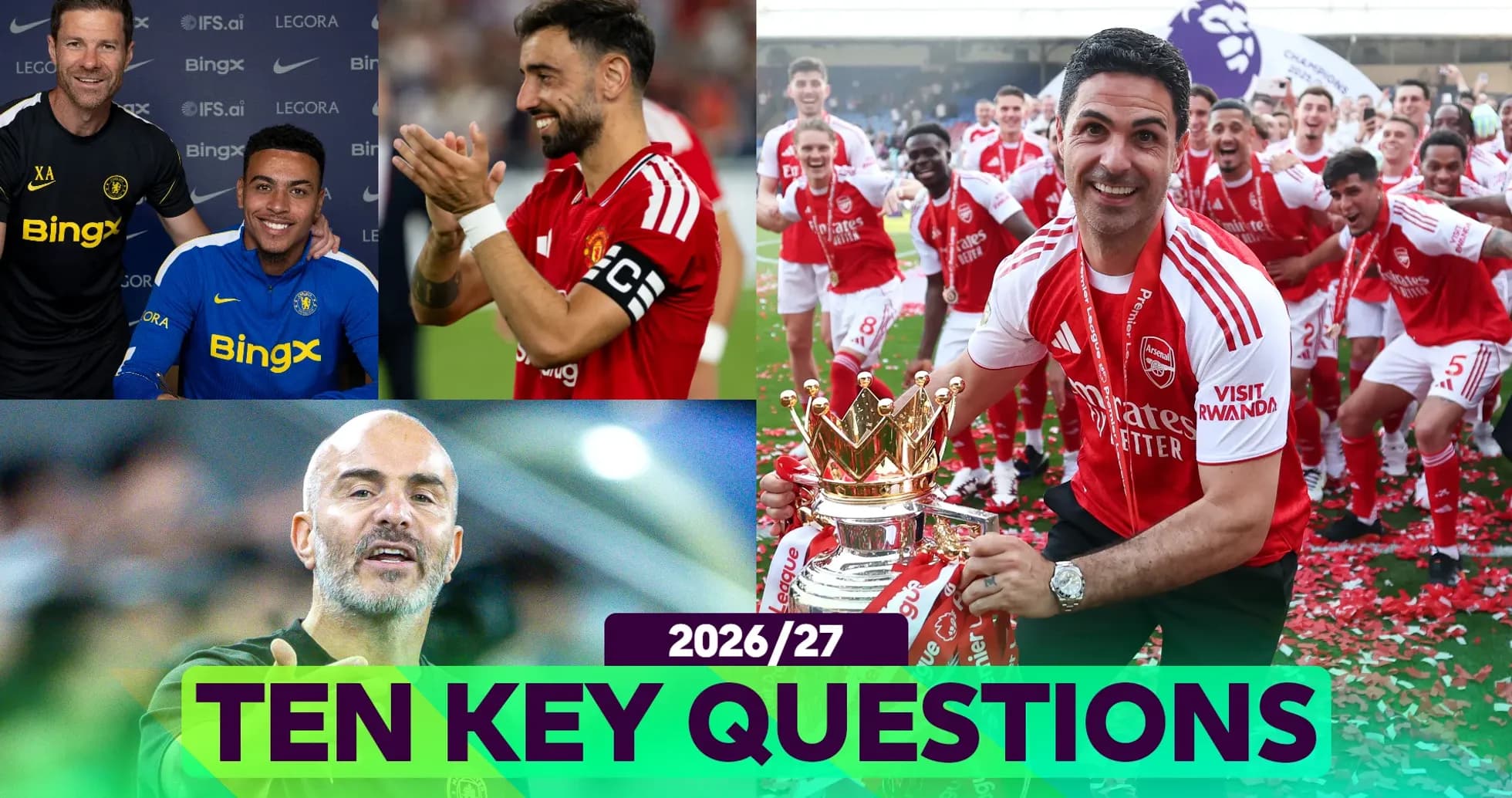
Arteta, the last title winner standing
Only three managers have ever retained the Premier League title: Pep Guardiola, Sir Alex Ferguson and Jose Mourinho. That’s the company Mikel Arteta is trying to join.
The odds are usually stacked against anyone trying to go back-to-back. The league is too deep, too rich, too chaotic. Yet Arteta might not get a better chance than this.
Arsenal arrive as a settled, battle-hardened group. The title that took five years to build is finally on the board. The anxiety, the “can they actually do it?” tension, has gone. The squad is stable, the tactical blueprint is clear, the hierarchy unshaken.
Around them? Upheaval.
Michael Carrick begins his first full campaign at Manchester United. Roberto De Zerbi does the same at Tottenham. Liverpool, Chelsea and Manchester City all start under brand new managers. Of the contenders, only Arsenal know exactly what they are from day one.
That matters most at City. Guardiola’s departure rips the spine out of a dynasty and leaves Arteta as the only Premier League title-winning coach in the division. For the first time in years, Arsenal look like the continuity project while everyone else scrambles to redefine themselves.
Life after Pep: Maresca steps into the void
Manchester City stand at a crossroads that will define their modern era.
Enzo Maresca inherits a club built in Guardiola’s image. Eight league titles, a style that dominated the ball and bent games to its will, a manager who turned control into a kind of inevitability. Replacing that is not a normal job.
History shows how fragile these transitions can be. Arne Slot has managed to make the post-Klopp shift at Liverpool look smooth so far. Unai Emery at Arsenal and David Moyes at Manchester United, in the immediate wake of Wenger and Ferguson, did not.
City’s hierarchy have chosen a different path to those clubs. Rather than break from the past, they’ve doubled down on it. Maresca is a Guardiola disciple, steeped in the same possession-heavy, structure-obsessed football. His ideas are tightly aligned with his former mentor’s.
That continuity could keep the machine running. Or the change in voice, the loss of dressing-room pillars like Bernardo Silva and John Stones, and the sheer weight of expectation could drag City into a quieter, more vulnerable period.
For the first time in years, their future is a genuine question, not a foregone conclusion.
Alonso at Chelsea: the next great Premier League coach?
Of all the new faces on Premier League touchlines, Xabi Alonso is the one that crackles with intrigue.
He arrives at Chelsea as one of the hottest young coaches in the world, the man who delivered an invincible Bundesliga season with Bayer Leverkusen in 2023/24. Now, with Klopp and Guardiola gone, he walks into a league searching for its next dominant figure.
The conditions for an explosive start are there. Chelsea have no European football, a luxury that helped Antonio Conte drill his ideas and storm to the title in 2016/17. Only six managers have ever won the Premier League in their debut season; three did it at Chelsea – Conte, Jose Mourinho and Carlo Ancelotti. Alonso has a realistic chance of joining that group.
The squad was already talented. This summer, it finally grew up a little. Danny Welbeck and Jordan Henderson became the first over-30 signings of the BlueCo era, a symbolic break from the all-or-nothing youth gamble and a nod towards balance and experience.
Those free midweeks will be spent on the training pitch with a coach who has already shown he can create complex, modern, attacking systems. If Chelsea click early, the Alonso era could accelerate fast.
The return of chaos football?
Last season, some supporters felt the league had drifted too far towards set-piece routines and defensive structures. The raw numbers don’t scream crisis – goals per game only dipped from 2.40 to 2.36 – but the open-play xG trend tells the story of a slowdown:
- 2021/22 – 733.1 open-play xG (1.93 per match)
- 2022/23 – 763.6 (2.01)
- 2023/24 – 865.8 (2.28)
- 2024/25 – 787.5 (2.07)
- 2025/26 – 692.1 (1.82)
The 2023/24 campaign is remembered as a peak of wild, end-to-end attacking football. The new wave of coaches suggests we might be heading back that way.
De Zerbi now has a full summer at Spurs to impose his high-pressing, high-risk, high-reward football that never quite took root late last season. Andoni Iraola returns to the league at Liverpool with the same “heavy-metal” style that made Bournemouth one of the most watchable sides around.
Alonso’s Leverkusen and Real Madrid teams scored freely. New Bournemouth boss Marco Rose comes from the RB Leipzig/Borussia Dortmund school of relentless, aggressive attacking. At Crystal Palace, Pierre Sage is another evangelist for fast breaks and hard pressing.
Taken together, this influx of ideologues could drag the Premier League back towards the chaos and attacking verve that many felt had faded.
Can Carrick turn a surge into a title challenge?
Manchester United’s hope is built on something simple: the table since Michael Carrick walked into the job.
Appointed caretaker on 14 January, he beat Man City 2-0 three days later and never really looked back. Over his 17 league games – almost half a season – United sat top of the form table:
- Man Utd: P17 W12 D3 L2 – 39 points
- Arsenal: P17 W11 D3 L3 – 36 points
- Man City: P17 W10 D5 L2 – 35 points
- Bournemouth: P17 W7 D10 L0 – 31 points
- Liverpool: P17 W7 D4 L6 – 25 points
Repeat that twice and United win their first Premier League title since 2013. Football rarely follows straight lines, but that run under Carrick is enough to justify renewed belief.
He doesn’t need to reinvent the club in a single summer. He just needs to prove that surge was the start of something sustainable, not a hot streak.
A season for comeback stars?
All these new managers don’t just reset clubs. They reset careers.
Players frozen out under previous regimes or derailed by injury suddenly find the door open again. That’s why this season carries the feel of a comeback year.
Phil Foden and Cole Palmer want to bounce back from flat campaigns and the disappointment of missing England’s World Cup squad. Marcus Rashford and Mason Mount are fighting to re-establish themselves at Manchester United.
Harvey Elliott, Omar Marmoush and Andy Robertson will all expect more minutes after frustrating seasons. Yoane Wissa will look for a fresh start under a new manager. From the treatment room, Levi Colwill and Alexander Isak stand out as high-ceiling players who slipped from the spotlight.
With so many new ideas and new hierarchies, reputations will be rebuilt quickly.
Villa and Newcastle: continuity gone, everything on the line
A year ago, Aston Villa and Newcastle United were tipped as Champions League gatecrashers precisely because so little had changed. That stability has vanished.
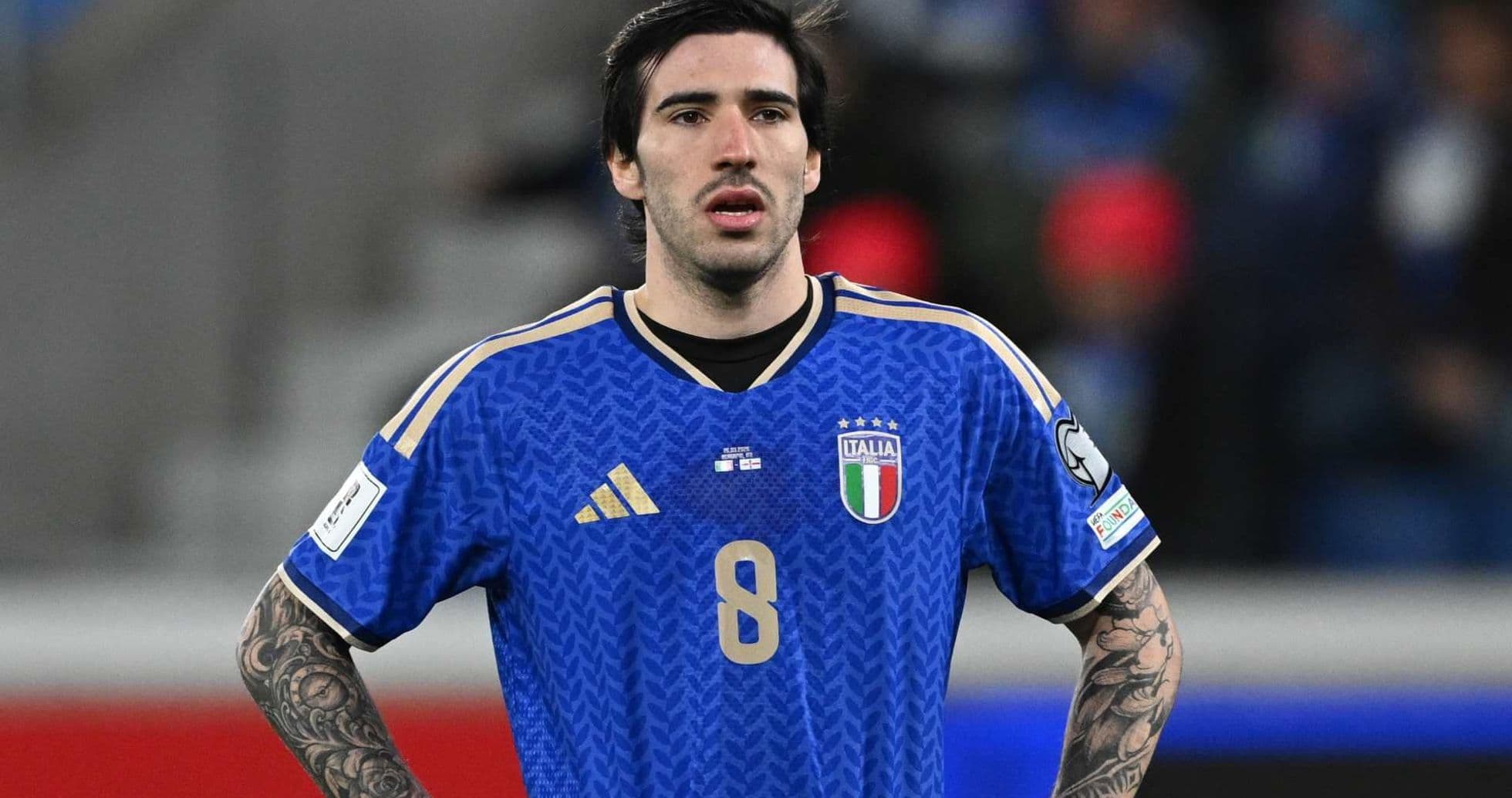
At Newcastle, the transformation is dramatic. Eddie Howe has resigned, Matthias Jaissle has come in, and the squad has lost three of its biggest stars: Bruno Guimaraes, Anthony Gordon and Sandro Tonali.
In their place arrive Lukas Hornicek, Bazoumana Toure, Aladji Bamba, Sean Steur and Ewen Jaouen – all expensive, all highly rated, none proven in this context. It’s a bold reset, bordering on a gamble.
Villa’s shift is subtler but still significant. Emery remains, yet the sense of an era turning is unmistakable. Youri Tielemans, Morgan Rogers and Lucas Digne have gone. Alejandro Garnacho, Johan Manzambi and Joao Gomes bring a new edge, a new profile, and a new set of expectations.
Both clubs spent last season edging towards the elite. This year, they have to prove those ambitions can survive major surgery.
Europe: springboard or trapdoor?
Nine Premier League clubs reached Europe last season. For those new to midweek football, the thrill of continental nights comes with a warning label.
Aston Villa offered the dream scenario: Europa League winners and a fourth-place finish. Crystal Palace finished 15th but traded that for a UEFA Conference League trophy most of their fans would not give back.
On the other side, Nottingham Forest, Spurs and Newcastle all slid into the bottom half while juggling heavy schedules.
This time, Brighton & Hove Albion enter the Conference League for the first time and only their second-ever European campaign. They’ll look at Palace’s run and see a roadmap. Palace themselves should be better equipped now for a Europa League campaign.
Bournemouth and Sunderland, both in the Europa League, face the usual question: can their squads handle the load? The answer will shape not just their seasons but the wider European race.
Because while some chase glory under the lights, others quietly plot in the shadows. Leeds United, with strong summer business, might fancy their chances of sneaking into the top nine precisely because so many rivals will be stretched on Thursday nights. Brentford, who narrowly missed out last year, again have clear weeks to absorb Keith Andrews’ meticulous work.
The middle class bulks up
Leeds and Brentford are far from alone in their ambition.
Fulham have turned to former Real Madrid coach Alvaro Arbeloa, who has already brought in two Real players with him. They finished just a point outside the European spots last season; that gap suddenly looks bridgeable.
Nottingham Forest now lean on Oliver Glasner, the man who delivered both a Conference League and FA Cup to Crystal Palace. Even after selling Elliot Anderson to Man City, Forest will target a season closer to their seventh-place finish of two years ago than last year’s struggles.
Everton, meanwhile, appear more settled. They should be comfortable in their new stadium at last, and they have something rare this year: managerial continuity. David Moyes remains in charge, and the arrivals of Hayden Hackney, Christian Norgaard and Brennan Johnson clearly lift the level.
Put it all together and the league feels unusually dense. From top to near-bottom, there are very few obvious weak links.
Can the promoted trio keep pace?
Coventry City, Ipswich Town and Hull City have wasted no time trying to bridge the gap.
Sunderland’s heavy spending last summer paid off as they not only stayed up but charged into Europe, joining Leeds in ending a two-year stretch where promoted clubs went straight back down. This year’s newcomers have taken note.
All three have gone hard in the market, with a clear tilt towards established internationals from mainland Europe rather than a raft of Premier League veterans. Ipswich have still added Issa Diop and Sasa Lukic; Hull have brought in Matt Targett and Jack Butland. But the broader strategy is bolder.
Predicting their fate is a fool’s game. Sunderland and Leeds were widely tipped for relegation in 2025/26 and both thrived.
Coventry, champions of the Championship by a distance, lean on the experience of Frank Lampard in the dugout. Ipswich have recent Premier League muscle memory and now Gary O’Neil, who has already shown he can keep Bournemouth and Wolverhampton Wanderers afloat.
Hull face the steepest climb. Opta’s “Expected Points” table had them 23rd out of 24 in the Championship last season, their xG for and against painting a far bleaker picture than their actual finish. On paper, they are favourites to finish bottom.
On emotion, it’s different. This is their first season back since 2017. Like everyone else, they begin with optimism.
And that might be the defining feature of this campaign. From champions to newcomers, from European regulars to mid-table climbers, almost every club can make a convincing case for progress.
The question is not whether the Premier League will be stronger, more competitive and more entertaining. It’s who survives a season where almost nobody is standing still.