Pochettino's Vision for US Soccer: Beyond 2030
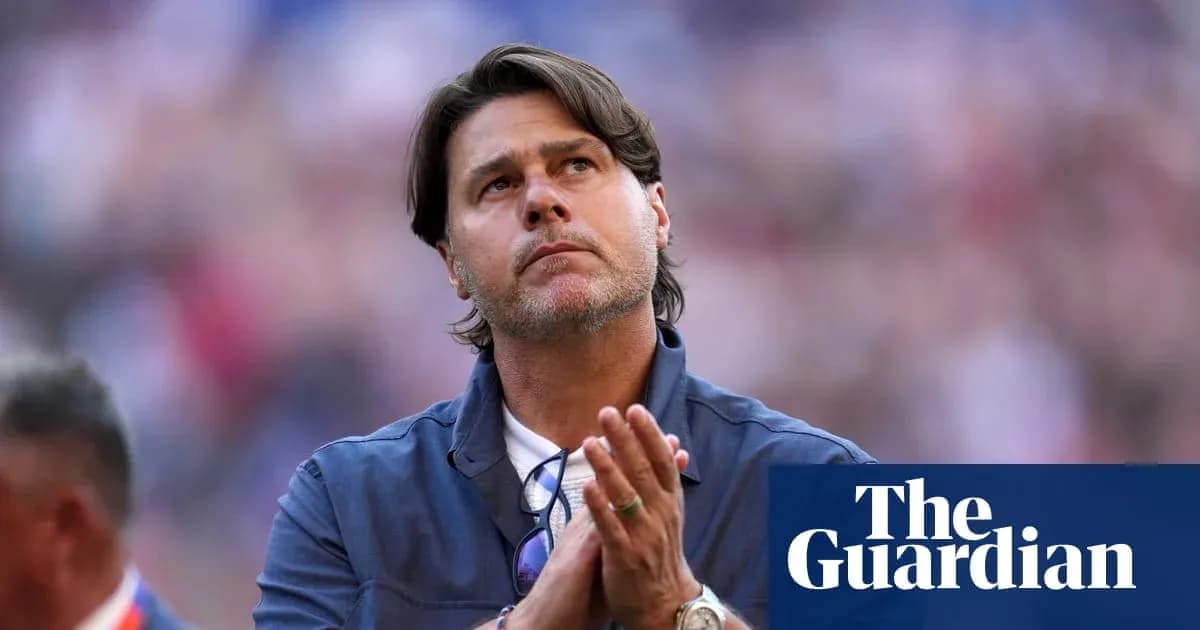
Mauricio Pochettino is back on the grass, but his job now stretches far beyond the touchline.
Two months after the US men’s national team tumbled out of the World Cup in bitterly disappointing fashion, the Argentinian coach has returned to camp with a new contract, a wider mandate and a clear message: this isn’t just about 2030. It’s about what US Soccer wants to become.
From short-term hire to architect
When Pochettino arrived in 2024, the brief was simple enough: squeeze everything possible out of a home World Cup, the first on US soil in more than 30 years. He was seen as a high-end, short-term solution. That changed quickly.
As the tournament unfolded and the relationship between coach and federation deepened, both sides started talking about staying together for another cycle. Those talks ended in August with a contract extension and a twist. Pochettino would not only lead the senior team; he would help shape the sport’s broader direction in the country.
He has spoken of using this second cycle as a chance to “have a lasting impact on the sport in the country that has welcomed us so warmly – and for that impact to extend beyond results on the field.” US Soccer backed that up in its announcement, handing him a more prominent role in youth development, coaching education and advising on collaboration with the professional leagues.
For the US, this is uncharted territory. National team coaches have always influenced the program, but none has been invited this far into the engine room. Pochettino will have a voice as the federation restructures and hires new directors to oversee the men’s and women’s senior and youth setups.
He’s made it clear he’s willing to help shape those appointments, but not control them. As he joked on Monday, it can’t “just” be his guy.
What he does want is scale.
“This is the future of the USA,” Pochettino said. “We want to try to perform in the World Cup and to create something special with the fans. And now it’s about being a part of the legacy that the federation wants to create – becoming one of the most powerful countries in soccer. That is a dream, no? It’s amazing. If we can be part of that, we are so excited and so happy.”
The ambition is clear. The route there is far more complicated.
Friendlies now, 2030 and 2028 on the horizon
The next steps on the field are modest by comparison. The US will face Peru, Chile, Mexico and Canada in a run of friendlies from late September into early October. Useful tests, yes, but a small chapter in a much larger story.
Pochettino’s obvious obligation is to steer the US through qualification for the 2030 World Cup. Yet the calendar offers other milestones. The US will compete at the Los Angeles Olympics in 2028, and reports suggest they may also feature in the Copa América that same summer, a rare chance to measure themselves against South America’s elite on home soil.
Those tournaments will demand depth, clarity of identity and a steady flow of talent from the youth ranks. Exactly the areas where Pochettino has been asked to extend his reach.
Balogun’s deadline-day blow
Not every storyline is grand and structural. Some are painfully personal.
Folarin Balogun entered this summer window as one of the USMNT’s most intriguing assets. A breakout World Cup, a goalscorer in his prime years, and a profile that attracts Premier League money. A move seemed almost inevitable.
It never came.
The Monaco forward appeared close to a transfer to Everton, only for the deal to collapse at the last moment. The Premier League club pointed to a potential fitness issue. Monaco, and Balogun himself, disputed that assessment. The clock ran out. The move died.
Pochettino has seen that kind of deadline-day whiplash before and knows how little control players often have in those final hours.
“Yes, it’s difficult because you cannot influence that decision,” he said. “You need to support what they are doing with the people making the decisions. In some special cases, like Flo’s, I will call in the next few days. I wanted to give him a little bit of space after that situation in Everton. I want to know from him what happened. But we are always offering our support, and that’s it. I think he’s an important player for us, he was an important player in the World Cup and I hope that he can find being in Monaco, or in another place, his best place to perform in the best way.”
For the US, Balogun’s club future is more than gossip. His rhythm, confidence and minutes will shape the attack for the next cycle. Pochettino knows that, which is why the phone call is coming.
The tug-of-war for dual nationals
If the World Cup exposed anything, it was the thin margin between a talented US side and the truly elite. One way to close that gap lies in convincing the right dual nationals at the right time.
Pochettino kept his cards close to his chest regarding the 26-man roster he’ll assemble later this month. One name is already off the list: Noahkai Banks.
The 19-year-old Augsburg center-back, eligible for both Germany and the US, is still weighing his international future and will not join the American camp this window. He has said he wants to decide by “the next international break, or at the latest by the international break after next.” In Germany, reports have gone as far as to say new national team coach Jürgen Klopp has scouted him in person.
The race is on, but Pochettino insists the approach must be human, not desperate.
“We are in contact with all the potential dual nationals,” he said. “I think it’s important for us, of course, because that is the human connection that is so important. Even if they, like in that case, Noki, didn’t change his mind and is waiting still, no decision, and of course we cannot consider him for the next camp … But the organization is working with all the dual nationals and players with the possibility to make a decision. That human connection is important because if one day they feel that they can defend and they want to fight and to be part of our national team … Of course, if they deserve it, and we consider that they deserve to be involved, of course we are going to call [them up].”
It’s a delicate balance: respect their process, but make sure they feel wanted. Lose too many of these battles and the dream of becoming “one of the most powerful countries in soccer” starts to look distant.
The friendlies are coming. The roster decisions will follow. Then the long march to 2030 and a home Olympics in 2028.
Pochettino has his contract, his vision and a federation ready to hand him the tools. Now comes the hard part: turning all that promise into a lasting American legacy.