Pochettino Defends USMNT After Turkiye Loss
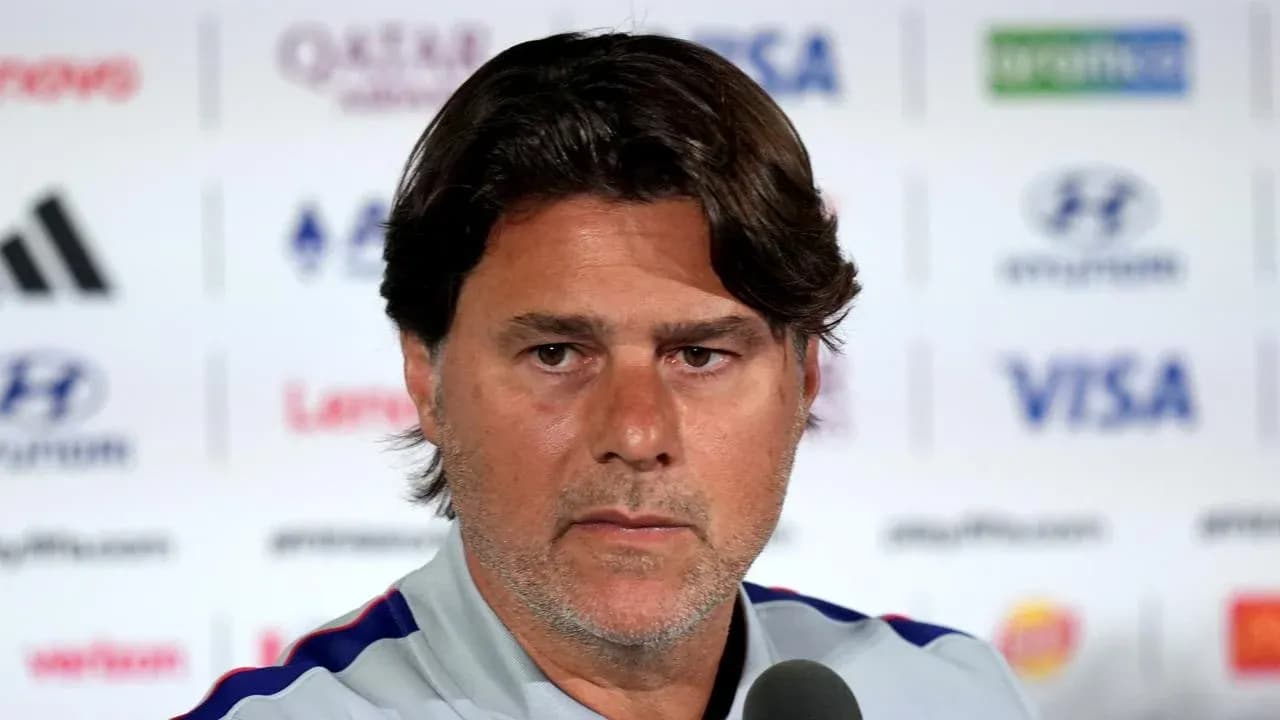
Mauricio Pochettino bristled as he sat down in front of the microphones. His team had just lost 3-2 to Turkiye, the performance was flat, the questions were all about momentum and warning signs – and he’d had enough.
Because in his mind, everyone in the room had missed the main point.
“The mood is like we [are going] home tonight and Turkey is staying,” the United States Men’s National Team coach snapped. “I need to [remind] you and everyone that we won the group. Sorry guys, we won.”
No congratulations. No recognition. Just a string of queries about whether the USMNT had stumbled at the worst possible time heading into the World Cup knockout rounds.
Pochettino wasn’t buying the narrative.
He had rotated heavily, making nine changes from the side that beat Australia. He’d spoken before the game about chasing another win, about standards and rhythm, but his team sheet told the real story: this was about managing a tournament, not chasing a footnote in the record books.
If the United States had found a way to win, they would have become the first team in program history to take all three group games at a World Cup. That statistic bounced around the build-up. It didn’t impress the coach.
“Making history is winning the World Cup,” Pochettino said. “It’s not winning three matches only within the World Cup. I don’t really understand. It’s a little bit petty if you will — you’re thinking a little too small. You’re telling me you could make history — what does it mean to win three matches if you lose the next one?”
The message was blunt: save the celebrations for something that matters.
He pointed to Germany’s defeat earlier in the day, a warning that even full-strength heavyweights can be tripped up by desperate opposition. Germany had started many of their regulars and still lost to Ecuador. For Pochettino, that was evidence that tournament football punishes those who chase perfection instead of pragmatism.
The defeat to Turkiye, in his eyes, sat in a different category. A setback on the night, yes. A crisis? No.
He took encouragement from how the squad handled the occasion, particularly the return of Christian Pulisic. The AC Milan forward, the team’s attacking reference point, had missed the win over Australia with a calf problem after being withdrawn at half-time in the victory over Paraguay. Getting him back on the pitch before the knockouts was a box the staff were desperate to tick. They did.
So while the outside noise circled around lost momentum and missed chances at “history”, Pochettino kept steering the conversation back to his bigger picture: group won, star player back, squad minutes spread, knockout stage secured.
The real judgment, he clearly believes, starts now.
Arnold’s Iraq project hits a brutal wall
On the other side of the tournament, Graham Arnold’s World Cup story with Iraq ended in a far harsher tone.
A 5-0 defeat to Senegal closed their campaign and cast immediate doubt over his future. Iraq’s hopes effectively evaporated after just 13 minutes, when Rebin Sulaka saw red with his side already trailing 1-0.
Arnold didn’t sugarcoat it.
He called it a “stupid red card” and admitted the moment changed the course of the game, even as he stressed that Senegal had already seized control. Against a team of that quality, he said, every error gets punished. Iraq made too many.
“I told the players after the match that we conceded 11 goals at this World Cup, and nine came from our own individual mistakes. We have to learn from that,” he said.
By the second half, Iraq were spent. Down a man, out of energy, out of ideas. Arnold began to rotate, handing minutes to more players simply so they could feel what it meant to represent Iraq on the World Cup stage. He accepted responsibility for those changes as the scoreline swelled.
Context matters, though. Group I – with France and Norway alongside Senegal – was always going to be unforgiving. Iraq were the last team to qualify, dragged through an intercontinental playoff by Arnold to reach a World Cup for the first time in 40 years.
“Everyone in Iraq should be proud of the fact that we made it here and we performed very well in two out of the three games,” he told reporters in Toronto.
Pride, however, sits alongside uncertainty. Arnold’s contract expires at the end of the tournament, and there is no clarity yet on whether he will stay on. The subplot is tantalising: a potential reunion with the Socceroos in the group stage of next year’s Asian Cup in Saudi Arabia.
“I’ve just asked them to leave it until after World Cup, then we can have a chat then,” he said.
Whether that conversation leads to a new chapter or a full stop will shape Iraq’s next cycle.
Panama’s flash of fire
Panama are already out. Two games, two 1-0 defeats to Ghana and Croatia in Group L, and another early exit from a World Cup. Yet on Friday, on a training pitch in New Jersey, the squad showed a different kind of life.
Cecilio Waterman and Jose Luis Rodriguez clashed in a training-ground confrontation on the eve of their final group game against England. For some coaches, that would ring alarm bells. For Thomas Christiansen, it was almost welcome.
“What happened today in training, this is a normal situation,” the Panama coach said. “I would’ve liked to see these situations more often, that means the team is alive. They are willing to do a good effort... to be in the first XI for the game.
“If this happens another time, it’s a good sign that they are alive.”
Panama have lost all five of their World Cup matches across two tournaments, including that 6-1 hammering by England in 2018. Now they face the same opponent again, with nothing tangible left to play for except pride and a first-ever point on this stage.
“Now we have the last game against England, a good way to finish a World Cup if it goes our way,” said Christiansen, who has been in charge since 2020 but is out of contract after the competition.
He believes Panama have evolved since that heavy defeat eight years ago. The proof, he knows, has to come under the lights, not on the training pitch.
“It will be a tough one but I’m thinking that the team will be able to compete and do a good game.”
If Panama finally leave a World Cup with something to show on the table, it will come from that same edge Christiansen saw in training – the kind that turns a spat into a statement.
France win big as Deschamps mourns
France cruised to a 4-1 win over Norway, but the most influential figure in the French camp was thousands of kilometres away.
Didier Deschamps missed the match to attend his mother’s funeral, leaving his staff to oversee a comfortable victory while the players tried to show their support from afar.
They wanted to wear black armbands in his honour. They asked. They were denied.
The French Football Federation confirmed to The Athletic that FIFA rejected the request. On top of that, confusion swirled around the pre-match tribute. It had been briefed that a minute’s silence would be held for Deschamps’s mother, only for the FFF to later clarify that it was actually in memory of the victims of the Venezuelan earthquake.
FIFA have been contacted for an explanation but have yet to respond.
On the pitch, France did what France so often do in group play: they won, and they won well. Off it, the day carried a different weight, one that no scoreline can really touch.
In a World Cup thick with tactical debates, rotation rows and contract questions, it was a reminder that even in the most controlled environments, football never fully escapes the human story.