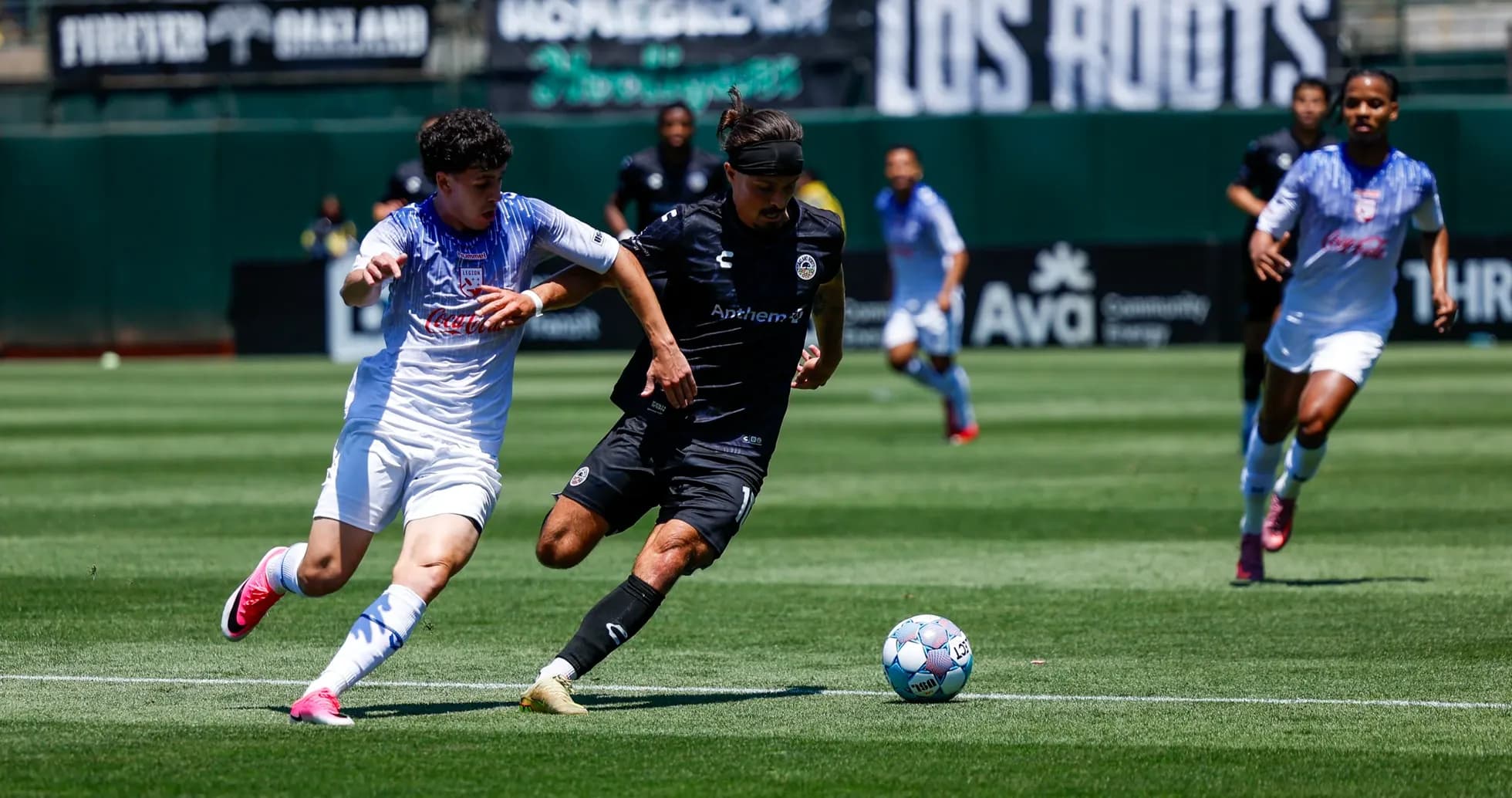
Oakland Roots and Birmingham Legion Draw 1–1: A Tactical Analysis
Under the late light at Laney College Football Stadium, Oakland Roots and Birmingham Legion played out a 1–1 draw that felt less like a dead end and more like a snapshot of two very different projects intersecting in the USL Championship group stage.
I. The Big Picture – contrasting trajectories, shared tension
Following this result, Oakland remain the more stable of the two: 4th in their USL 1 group with 18 points from 13 matches, a goal difference of 2 built from 19 goals for and 17 against. The numbers capture their identity: on their travels they can open up (1.8 away goals on average), but at home they lean into control and marginal gains, scoring 1.3 and conceding 1.0 per match at Laney.
Birmingham sit 10th in the same group, on 12 points from 12 games, their overall goal difference at -2 (13 scored, 15 conceded). Their profile is that of a side still searching for balance: away from home they average 1.6 goals for but ship 1.8, a constant sense of risk that was evident again in Oakland.
The fixture itself followed that logic. Birmingham struck first, taking a 1–0 lead into half-time, before Roots clawed back after the interval to level at 1–1. The scoreboard mirrored the table: Oakland’s resilience and structure against Birmingham’s volatility and flashes of incision.
II. Tactical Voids and Discipline – edges and fault lines
There were no listed absences, so both coaches could lean fully into their preferred personnel profiles. For Ryan Martin, that meant a spine built on familiarity and repetition: R. Spiegel in goal behind a defensive unit anchored by K. Tingey, M. Edwards and J. Bravo, with the ball progression and tempo largely funneled through B. Byaruhanga and T. McCabe.
Oakland’s season-long disciplinary map hints at how they manage risk. Their yellow cards spike between 61–75 minutes (27.27%) and remain high from 76–90 (22.73%), suggesting a side that is willing to foul to protect leads or disrupt transitions as games open up. Red cards, meanwhile, cluster around the middle and late stages (50.00% of reds in 46–60 and 50.00% in 91–105), underlining how aggressive they can become once the match tilts into chaos.
Birmingham’s card profile is even more telling. Their yellow cards peak in the 76–90 window with 30.30%, and they have a 100.00% red-card share in that same late period. This is a team that plays on the edge when chasing or defending narrow margins, and it framed the match narrative: a composed first half, then increasing desperation as Oakland pushed back.
III. Key Matchups – Hunter vs Shield, Engine Room battles
Without official top-scorer data, the “Hunter vs Shield” duel becomes more conceptual: Oakland’s collective attacking structure at home against Birmingham’s away defending.
On their travels, Birmingham concede 1.8 goals per match; Oakland at home score 1.3 but create enough volume to suggest they can tilt games their way with sustained pressure. The Roots’ front line of W. Prentice and P. Wilson, supported by the creative angles of F. Valot and the timing of runs from T. Lepley, is designed to probe those away vulnerabilities. Birmingham’s back line, led by P. Kavita and B. Washington in front of J. Koleilat, had to live on a tightrope: compressing space between the lines while not leaving themselves exposed to balls slipped in behind.
The “Engine Room” duel was more nuanced. Oakland’s midfield triangle of Byaruhanga, McCabe and Lepley is built for circulation and control. Byaruhanga’s role as a metronome allows McCabe to step into half-spaces, while Lepley connects midfield to attack. On the other side, Birmingham leaned on the industry of S. McIllhatton and S. Antwi, flanked by the creative threat of S. Saucedo and the vertical runs of P. Vassell and R. Williams.
This is where the match turned after the break. Birmingham’s early success came from compressing central lanes and springing forward quickly. But as Oakland increased their tempo, the Legion midfield had to cover wider channels, and the gaps between McIllhatton and his back line began to appear. Substitutes like R. Damus, S. Shashoua and G. Diarbian offered fresh legs and different profiles, but they also altered Birmingham’s defensive shape, sometimes leaving Kavita and Washington more exposed to late surges from Oakland’s second line.
IV. Statistical Prognosis – what this draw really says
Following this result, the underlying numbers still paint Oakland as the more sustainable project. Overall, they average 1.5 goals for and 1.3 against per match, with a positive goal difference that matches their 4th-place standing. They have kept 2 clean sheets in total (1 at home, 1 away) and failed to score just 3 times overall, all at home. That last detail is important: when Laney nights get tight, they can still be blunted, as the first half here suggested, but their second-half response underlines a capacity to adjust and find a route back.
Birmingham’s profile is more fragile. Overall they score 1.1 and concede 1.3 per game; on their travels, the 1.6 goals for are undermined by 1.8 against. They have yet to keep a clean sheet away and have failed to score only once on their travels, which fits this 1–1: they almost always carry a punch, but they almost always offer one back.
From an Expected Goals lens – even without explicit xG values – the patterns are clear. Oakland’s territorial control, their higher average goals for at home than Birmingham’s home output, and their relatively tighter defensive numbers suggest they are more likely to generate steady, repeatable chances. Birmingham’s away profile feels more like a volatility machine: when it works, they can win 1–3; when it doesn’t, they are chasing games late, with that 76–90 card spike as the tell.
In knockout terms, Oakland’s current DNA looks more suited to a 1/8 final environment: disciplined, structurally sound, and capable of managing game states. Birmingham, by contrast, are the wildcard – a side that can destabilize any opponent for stretches but will need to tame their late-game chaos if they are to turn draws like this one into defining wins.