
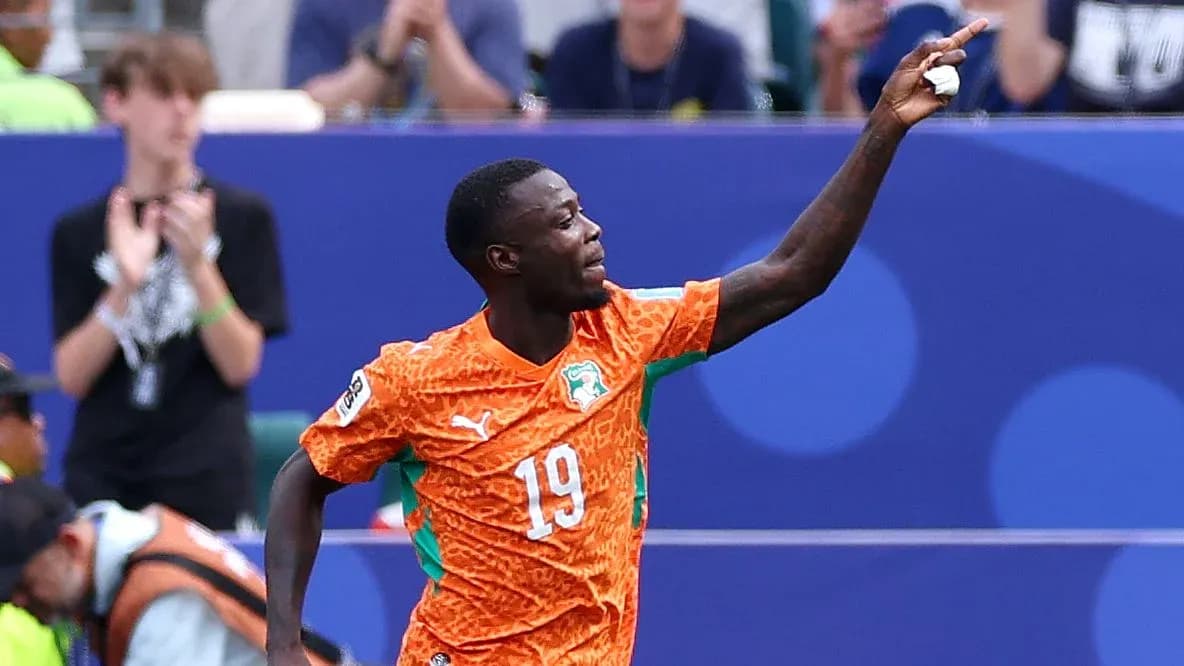
Nicolas Pépé’s Redemption at World Cup: Ivory Coast Makes History
Nicolas Pépé walked back into the spotlight in Philadelphia as if he had never left it.
Seven months ago he watched the Africa Cup of Nations from home, cut from the Ivory Coast squad and drifting on the margins of elite football. Here, on World Cup soil, he was the man who dragged a nation into territory it had never reached before.
Pépé’s redemption, written in orange
It took him seven minutes to announce himself.
A loose Curacao touch, a moment’s hesitation at the back, and Yan Diomande pounced first, sliding the ball into space. Pépé read it quicker than anyone. One touch to steady himself, another to guide it past the keeper. Simple finish, huge statement.
The goal settled Ivory Coast. It also settled Pépé. The winger who had been weighed down by the price tag and the frustrations of his Arsenal years now looked like the version reborn at Villarreal – direct, decisive, ruthless.
The second act of his night came on 65 minutes and felt like a throwback. Pépé cut in from the right, opened his body and whipped that familiar left foot towards the top corner. Vintage. The net bulged, the orange shirts swarmed him, and a World Cup story that had always promised so much finally began to match the noise.
Emerse Fae had backed him when many would not. On this evidence, the recall was not a gamble. It was overdue.
Beyond the ‘Golden Generation’
For all the legends that have worn the shirt – Didier Drogba bullying centre-backs, Yaya Touré ruling midfields – Ivory Coast had never made it out of the group at a World Cup. Not in 2006. Not in 2010. Not in 2014. Three campaigns, three early exits. A “Golden Generation” that glittered, but never quite delivered on this stage.
This time, the script changed.
Victory over Curacao sealed second place in Group E with six points and, with it, a first-ever ticket to the knockout rounds. No late heartbreak, no complicated permutations. Just a clean, controlled job done and a historic barrier smashed.
Fae knew the weight of it.
“My message to fans would be to enjoy this historic qualification, celebrate it,” he said afterwards. He allowed himself a smile, but he did not pretend it was perfect. “Not everything was perfect but not conceding is good for our morale. Now our group has to bask in this victory. It is easy to recuperate after a victory.”
The clean sheet mattered. Ivory Coast had often thrilled going forward in previous eras, only to crack at the back when the stakes rose. Here, they managed the game. They squeezed space, limited mistakes, and left Curacao with just two shots on target.
A squad growing up on the biggest stage
The headlines will belong to Pépé, yet Fae kept steering the conversation towards the group. He sees a team learning in real time, at their first World Cup, and refusing to be overawed.
“This group is growing. They are all at their first World Cup but they are growing well – it is a team that sticks together,” he said. The detail he chose to share told its own story. “Even the players competing for similar positions are laughing together, always together. We have healthy competition which helps every player give their best.”
You can feel it in the way they play. The pressing is coordinated, not frantic. The full-backs time their runs. The front line hunts in packs. It is not just talent; it is a side that looks like it enjoys the work.
And crucially, when the chance came to kill the game, Pépé did not blink.
Curacao bow out with heads high
For Curacao, the fairytale ends here, but it does not vanish.
They arrived at this expanded 2026 World Cup as the smallest nation by population ever to qualify, a story many neutrals adopted on day one. They leave with more than warm applause. They leave with proof they belonged.
A point against Ecuador announced their intent. Against Ivory Coast, they refused to play the underdog caricature. They pressed, they passed, they asked questions. Juninho Bacuna should have levelled just before half-time, only to waste a golden chance that would have changed the tone of the night.
The “Blue Wave” stayed in the contest until the final whistle. They tested the Ivorian back line, but when they did break through, Yassin Fofana stood firm.
“This team has outdone itself against world-class sides,” said manager Dick Advocaat, pointing to the financial gulf as much as the technical one. “[Ivory Coast’s] wingers are worth 50m each … The most important thing when we set out was qualifying for the Gold Cup. And only once we’d done that, qualifying for the World Cup.”
Asked if Curacao could come back to this stage, Advocaat didn’t hesitate. “When you see how we played the second and third game,” he said, “that’s very promising.”
They leave, then, not as a novelty act, but as a blueprint for smaller nations daring to dream.
A dark horse with teeth
Now the stakes rise. The round of 32 awaits, and with it a brutal reality: Ivory Coast will face either Kylian Mbappé’s France or Erling Haaland’s Norway.
On paper, that is a nightmare draw. On current form, it is something else entirely – an opportunity.
Pépé is scoring again. The defence has stopped gifting chances. The mood in the camp, by Fae’s own account, is light, competitive, united. Ivory Coast have slipped quietly into the knockouts with a blend of steel and flair that bigger names will have noticed.
They have never been this far before. The question now is not whether they belong.
It is how much further this reborn side, led by a winger who refused to fade away, can push the giants standing in their way.





