
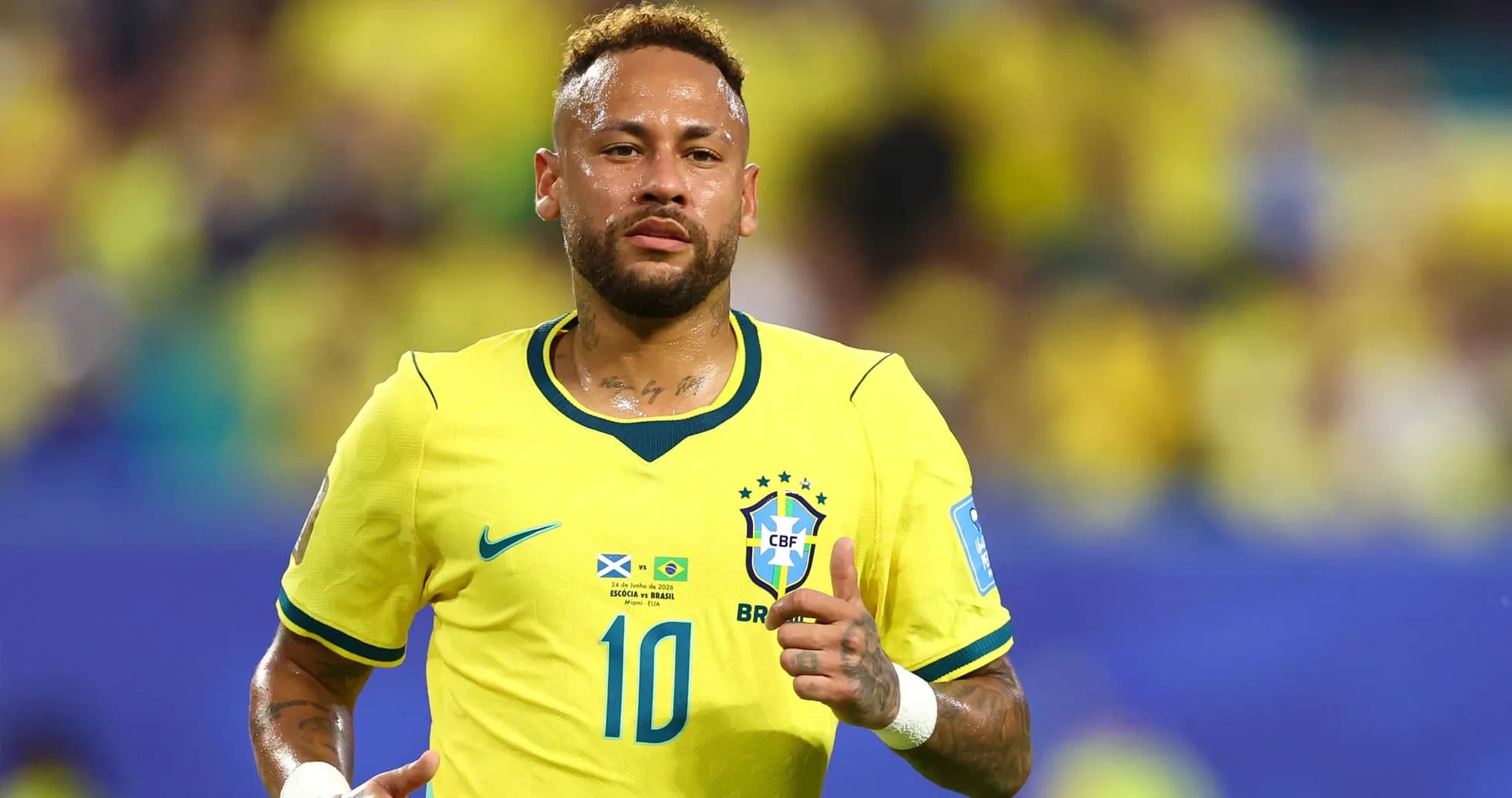
Neymar's Return and Brazil's Challenge Against Japan
Neymar’s road back to the World Cup spotlight has been long, painful and, at times, uncertain. Now he stands on the edge of the knockout rounds with Brazil, fit enough to matter, but not yet fit enough to be the centrepiece.
The 34-year-old’s story since October 2023 has been a grim medical chart: a serious knee injury that halted his momentum, followed by a calf problem that robbed him of the start of this tournament. He watched the opening games against Morocco and Haiti from the sidelines, reduced to a spectator as Brazil tried to move on without him.
The wait finally ended against Scotland. A late cameo in the final group match, three years after his last appearance for the Seleção, was brief but electric. Every touch drew a roar. Every run hinted at the old Neymar, the one who could tilt a World Cup on its axis. For many Brazilian fans, that 15-minute burst was enough to dream of him walking out as a starter in the round of 32.
Carlo Ancelotti is not buying into the romance.
The Brazil coach cut through the emotion with a measured assessment ahead of Monday’s clash with Japan. The message: Neymar is back, but on a tight leash.
“Neymar has progressed very well. I think he improved a lot last week,” Ancelotti told reporters. “It’s a shame he couldn’t train the whole time he was with us. He can play more than 15 minutes. He’s in good shape. But it depends a lot on the game context and how things develop.”
There it is. The context caveat. Ancelotti is keeping his options open, but he is also drawing a clear line. This is not 2014 or 2018 Neymar. This is a veteran forward, just out of the treatment room, being carefully managed through a brutal tournament schedule.
The stakes, though, could hardly be higher. Japan await in the round of 32, a team with form, belief and a recent history of unsettling giants.
Japan’s warning shot
If Brazil needed any extra edge, Kento Shiogai provided it.
The 21-year-old Wolfsburg striker, who has barely featured at this World Cup with just six minutes of action, still found a way into the build-up by hinting that Brazil might be a fading force in the global game. The comments, light on experience but heavy on implication, added a spark to an already fascinating tie.
Ancelotti refused to bite.
“I won’t repeat what others say. We’re focused on the match, on the opponent’s qualities, on preparing well to avoid problems,” he said, shutting down the narrative before it could grow. “That’s what match preparation is about. We’re not doing what they call in England ‘mind games.’ How do you say it in Portuguese? Mind games. We’re not going there.”
No war of words. No bulletin-board material. Just a veteran coach steering his squad away from distractions.
He has good reason to treat Japan with respect. The Samurai Blue are not turning up to make up the numbers. They arrive on a 10-game unbeaten run that includes a 3-2 victory over Brazil in Tokyo and a statement win over England at Wembley. Those are not friendly results you brush aside. They are proof of concept.
Ancelotti remembers that night in Tokyo well. Brazil led at the break, seemingly in control, only to be overrun in the second half as Japan flipped the game on its head. The lesson was clear: lose focus for 20 minutes, and Japan will punish you.
This tournament has only reinforced that image. Japan emerged from Group F with authority and variety: a 2-2 draw with the Netherlands, a ruthless 4-0 dismantling of Tunisia, and a controlled 1-1 draw with Sweden. Different challenges, same outcome. They do not go away.
Brazil’s dilemma
So Brazil walk into this tie as favourites, but not untouchable ones. The aura is there, the talent is there, yet the margin for error is thin.
That is where Neymar’s situation becomes so delicate. Ancelotti knows the emotional pull of starting his star forward. He also knows the physical risk of pushing him too far, too soon. A player who “can play more than 15 minutes” is still a long way from being trusted with 90.
The plan, then, may hinge on feel. If Brazil control the game early, Neymar can be eased in, allowed to influence the closing stages when legs tire and spaces open. If the match turns chaotic, his introduction becomes a high-stakes gamble: the kind of decision that can define a World Cup campaign in a single moment.
Brazil have lived through tournaments where Neymar’s absence was a wound the team could not hide. This time, they are trying to build something more balanced, with or without him at full tilt. Yet when knockout football begins, there is always a temptation to lean on the biggest name in the dressing room.
Japan will not care about the romance of a comeback. They have already bloodied Brazil once in the past year. They have already walked into Wembley and left with a win. They have a clear identity, a long unbeaten run and nothing to lose.
For Ancelotti and Brazil, the equation is brutally simple: manage Neymar wisely, respect Japan’s threat, and survive. Misjudge either, and this World Cup could turn on them far sooner than anyone in Brazil is ready to accept.





