Newcastle's Strategic Transition: Eddie Howe's Departure and Jaissle's Arrival
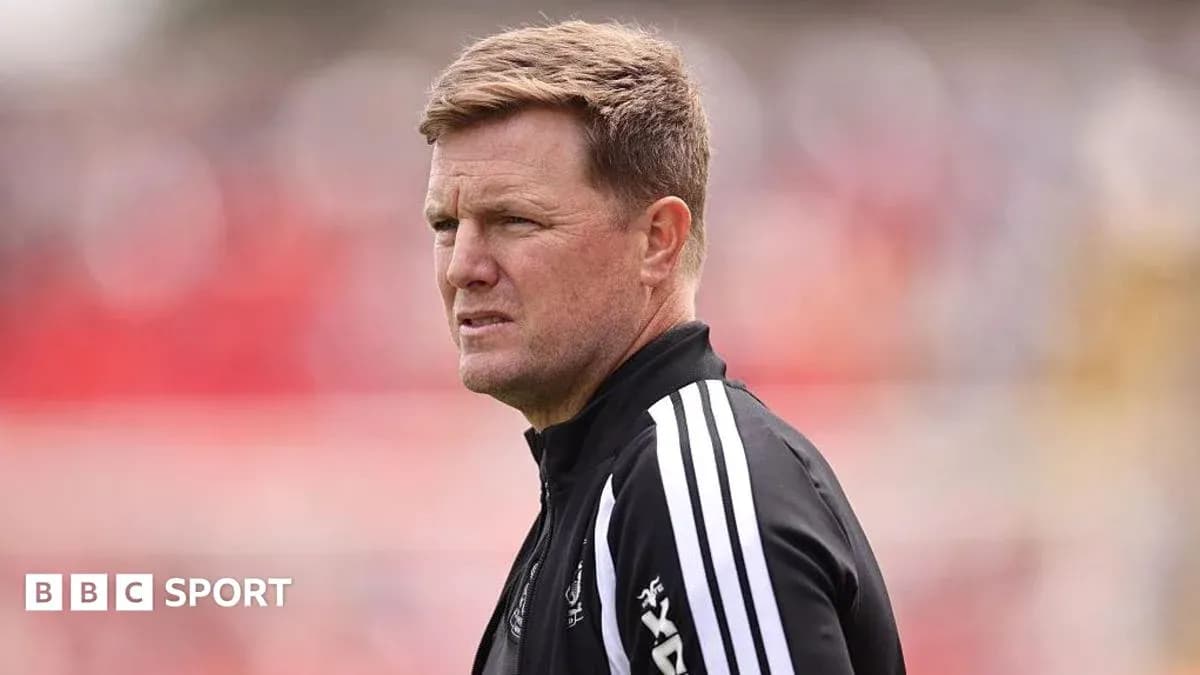
Newcastle’s long goodbye to Eddie Howe did not catch everyone at the club by surprise. Far from it.
Sporting director Ross Wilson has revealed that Newcastle had been quietly preparing for the former head coach’s departure for the best part of nine months, even as Howe wrestled with the idea of carrying on.
He originally planned to stay for this season. The reality of the job, the strain and the demands of almost five years in charge, eventually pushed him to walk away in July, choosing a break for what he felt was the good of everyone.
It came in a summer already ripped open by change. Big names left. The squad shifted. Yet, inside the club, they had not expected the moment of separation with Howe to arrive quite when it did.
Wilson insists it never descended into panic.
“This was not chaotic, it was not painful,” is the clear message from the sporting director, who says Newcastle had a contingency ready that ultimately led them to Matthias Jaissle.
“We always knew where we were going to go,” Wilson said. “That doesn’t mean we were always going to Matthias, but he was always part of our planning.”
The thinking was simple: with a coach as highly regarded as Howe, Newcastle’s hierarchy believed they would eventually face a day when he moved on to something else. Their job was to be ready.
So they planned. Quietly. For months.
The Jaissle decision
Wilson, appointed in October, admits he had been working in the background on a possible managerial change for “eight or nine” of those months. Newcastle spoke to multiple candidates. Jaissle rose through that field.
He was the man they felt could follow what Wilson called a “legend of the club”.
Newcastle wanted continuity in some areas, evolution in others. The next head coach had to build on Howe’s foundations, not rip them up. Aggression, a high press, front-foot football – these were non‑negotiables.
Jaissle ticked those boxes. His track record at Red Bull Salzburg, where he developed younger players and leaned into a high-energy style, matched the club’s broader recruitment strategy of targeting signings aged 24 and under.
When Wilson finally sat down with Jaissle, then at Al-Ahli in the Saudi Pro League, the conversation left a mark. Newcastle chief executive David Hopkinson sensed it immediately.
Hopkinson told Wilson he sounded “really excited about this one”. Wilson did not deny it.
“I didn’t deliberately go on the phone to do that,” Wilson said. “But I remember saying, ‘you’re probably right. I think this is it’.”
So far, the early evidence has been encouraging. Jaissle remains unbeaten in his first four games in charge in all competitions, a steady start amid a club still adjusting to new faces and a new voice on the training ground.
A squad in transition
The draw with Bournemouth – a 2-2 result that mixed frustration with flashes of promise – underlined the scale of the transition. Only three of Newcastle’s eight summer signings, Lukas Hornicek, Amar Dedic and Nico Gonzalez, started that game.
It felt like a reminder. This will take time.
Jaissle has called it a “transition phase” more than once, and the team sheet backed him up. New arrivals need to settle. Established players need to adapt to fresh demands and slightly different patterns.
Behind the scenes, Newcastle have already mapped out a range of financial scenarios for this season, depending on where they finish. Wilson is clear on one point: the German has not been handed a hardline target for the campaign.
The club’s vision stretches far beyond a single season.
Hopkinson has repeatedly framed the long-term ambition: Newcastle want to “consistently and credibly compete” for the biggest prizes. To do that, they must live within the rules.
After entering into a Uefa settlement following a breach of European financial regulations, Newcastle know they cannot afford missteps. Compliance is not a slogan; it shapes every major decision.
The Magpies aim to increase revenues by 50% between now and 2030, largely through sponsorships and commercial growth. Even so, player trading will remain central to how they operate and reinvest.
“We want to have players here who are on a journey with us,” Wilson said.
“Equally, if some of those players’ journeys go at rapid speed, they might go somewhere else but, of course, that’s normal. That’s part of football.”
Guimaraes shock and missed targets
Some exits were expected. Anthony Gordon’s move to Barcelona and Sandro Tonali’s transfer to Tottenham Hotspur had been factored into Newcastle’s planning.
One departure was not.
The club had never intended to lose Bruno Guimaraes, their talismanic midfielder, who left for Arsenal. That forced a recalibration of plans in a window that was already tight and tactical because of financial constraints.
Newcastle also had to react when two major targets slipped away. Victor Munoz chose Liverpool. Johan Manzambi went to Aston Villa. Both had been high on their lists.
Wilson does not pretend those setbacks did not sting.
Yet he maintains that, aside from Guimaraes heading to Arsenal, “everything else that happened during the window was part of the plan”.
“That does not mean that every single player [who signed] was the number one name on our list, but that is never the case in any transfer window,” he said.
“Clearly we were disappointed a couple of times but, again, that’s normal.
“No club goes into the window and reaches the end getting every target they set out to get. If they say they did, it is a lie.”
So Newcastle emerge from a turbulent summer with a new head coach, a reshaped squad and a strategy that leans heavily on planning, flexibility and realism.
The question now is not whether they were prepared for change – it is how quickly Jaissle and this evolving team can turn all that careful planning into a side capable of living with the ambitions being set around them.