New York RB II vs Toronto II: A Tactical Analysis of MLS Next Pro Match
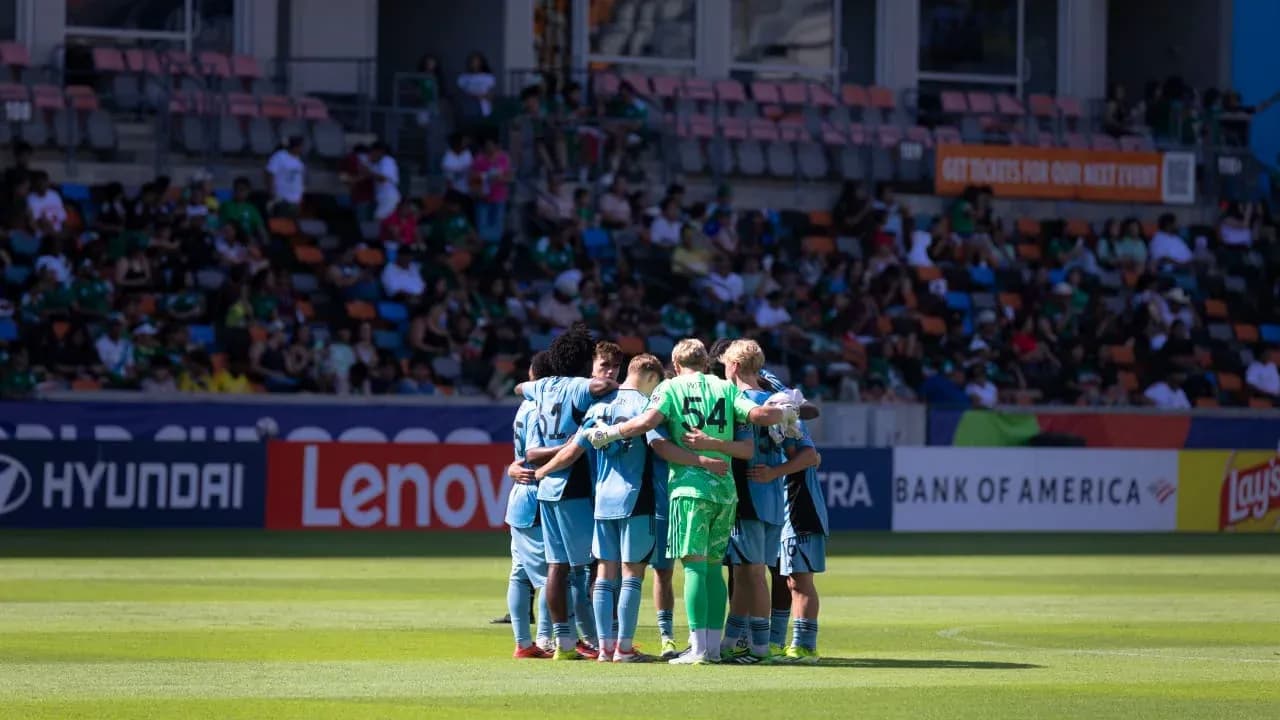
York Lions Stadium felt like a proving ground rather than a neutral stage. In MLS Next Pro’s Eastern Conference, where development and results constantly wrestle for priority, this 2–1 win for New York RB II over Toronto II underlined the gap between a ruthless league leader and a talented but fragile chaser.
Following this result, the table still tells a stark story. New York RB II sit 1st in both the Eastern Conference and the Northeast Division on 23 points, with a goal difference of 13 built from 22 goals for and 9 against overall across 9 matches. Toronto II, meanwhile, are 10th in the Eastern Conference and 4th in the Northeast Division with 11 points and a goal difference of -1, their 14 goals for outweighed by 15 against in total. The scoreline in Toronto – 1–2 – neatly mirrors that broader narrative: New York RB II know how to win tight games; Toronto II know how to make them tight, but not yet how to control them.
I. The Big Picture – contrasting identities
Toronto II’s season profile is that of a high-variance side. Overall they have played 9 fixtures, winning 3 and losing 6, with no draws at all. At home, they have played 4, winning 2 and losing 2, scoring 7 and conceding 7. On their travels they have played 5, with 1 win and 4 defeats, scoring 7 and conceding 10. The averages underline the volatility: at home they score 1.8 goals per game and concede 1.8; away they score 1.4 and concede 2.0, for an overall average of 1.6 goals for and 1.9 against. Every match is a coin toss between thrilling attack and defensive exposure.
New York RB II, by contrast, look like a finished blueprint. Overall they have 7 wins and 2 defeats from 9 fixtures, with no draws. At home they have played 5, winning 4 and losing 1, scoring 15 and conceding 6. Away, they have played 4, winning 3 and losing 1, scoring 7 and conceding 5. Their attacking averages are imposing: 3.0 goals per game at home, 1.8 away, 2.4 overall. Defensively, they concede 1.2 at home, 1.3 away, 1.2 overall. The numbers speak of a side that presses high, scores in bursts, yet maintains enough defensive structure to absorb transitions.
This match, in regular time, was a microcosm: Toronto II competitive and energetic, New York RB II more efficient, more ruthless.
II. Tactical Voids and Discipline
Neither side had listed absentees in the data, so the tactical voids here are more structural than personnel-based. For Toronto II, the season’s defensive profile is the clearest gap. They have conceded 17 goals in total (7 at home, 10 away), and while they have managed 2 clean sheets overall (1 at home, 1 away), they have also failed to score 3 times, all away from home. That inconsistency forces coach Gianni Cimini into a constant balancing act: how much risk can he take in possession when his back line is so often exposed?
New York RB II’s defensive record is stronger – 11 goals conceded overall, 6 at home and 5 away – but not watertight. They have only 1 clean sheet all season, and their style invites duels and late-game chaos. Their disciplinary profile is telling: yellow cards peak late, with 40.00% of their bookings coming between 76–90 minutes and another 10.00% between 91–105. They also carry a red-card flashpoint between 61–75 minutes, where 100.00% of their reds have arrived. This is a side that finishes games on the edge, emotionally and physically.
Toronto II’s yellow-card distribution is more evenly spread but still hints at pressure points. They take 30.77% of their yellows between 31–45 minutes and 23.08% between 76–90, with further spikes of 15.38% in both the 46–60 and 61–75 windows. They may not be as combustible as New York RB II, but they do get stretched as halves wear on, especially around the interval and in the closing stages.
III. Key Matchups – Hunter vs Shield, Engine Room
With no explicit top scorers listed for either club, the “Hunter vs Shield” lens becomes more collective than individual. New York RB II’s attack as a unit is the hunter: 22 goals in total, powered by a 3.0 home and 1.8 away scoring average. Toronto II’s defence is the shield under stress: 17 goals conceded in total, 7 at home and 10 away, with their biggest home defeat a 3–4 scoreline that underlines how open their games can become.
On the pitch at York Lions Stadium, that dynamic played out in the way New York RB II’s front line – led by players like D. Gjengaar, M. Jimenez and D. Nelich – repeatedly asked questions of a Toronto II back unit containing R. Fisher, J. Gilman and L. Costabile. Without formal formations listed, the pattern still felt clear: New York RB II’s forwards rotating and pressing, Toronto II’s defenders forced into recovery runs rather than proactive positioning.
In the “Engine Room”, Toronto II leaned heavily on the energy and distribution of B. Boneau and T. Fortier, with S. Pinnock and L. Costabile offering outlets. Their task was to connect A. De Rosario and D. Dixon to the game without leaving the back line exposed. For New York RB II, the midfield axis of N. Worth, D. Cadigan and A. Rojas looked more cohesive, better drilled at moving as a unit and compressing space after turnovers.
Off the bench, the presence of Shunya Sakai for New York RB II – listed across multiple league leaderboards – hints at an emerging two-way weapon. Even without headline stats yet, his inclusion in the squad offers defensive steel and transitional running that suits New York RB II’s late-game intensity.
IV. Statistical Prognosis – what this result tells us
Following this result, the underlying numbers still frame New York RB II as a side whose xG profile would be strong: high volume of chances, consistent scoring (they have not failed to score in any of their 9 fixtures), and a positive goal difference of 13 built on a 2.4 goals-for and 1.2 goals-against average overall. Their penalty record is perfect so far, with 1 taken and 1 scored, reinforcing the sense of composure in decisive moments.
Toronto II’s expected goals picture is more volatile. They score 1.6 per game overall but concede 1.9, with a total goal difference of -3 in the statistics block and -1 in the standings snapshot – a reminder of how fine the margins are in their matches. They have taken 1 penalty and scored it, but their inability to grind out low-event games, combined with only 2 clean sheets in total, leaves them constantly chasing equilibrium rather than dictating it.
This 2–1 defeat will sting, because it showed Toronto II can live with the conference leaders for long stretches. Yet it also confirmed the strategic gap: New York RB II know exactly who they are, from the late-game yellow-card surge to the relentless attacking output; Toronto II are still oscillating between expansive ambition and defensive vulnerability.
If this were a tactical preview of their next meeting, the prognosis would be clear. Unless Toronto II tighten their structure around the 31–45 and 76–90 windows – their own peak card periods and New York RB II’s most aggressive phases – the league leaders’ sharper xG profile and superior defensive solidity will continue to tilt close matches their way.