Morocco Holds Brazil to Draw with Tactical Masterclass in World Cup Clash
Morocco’s Tactical Trap Shakes Brazil
In a surprising twist during their World Cup meeting, Morocco executed a sharp, well-planned strategy that caught Brazil off guard. The match ended 1-1, revealing a contrast between Morocco’s collective discipline and Brazil’s star-studded but disjointed squad.
Starting Lineups and Formations
Brazil set up in a 4-2-3-1 formation, with Allison guarding the net. The backline featured Ibanez, Marquinhos, Gabriel, and Santos. Casemiro and Guimaraes held midfield roles behind an attacking quartet of Paqueta, Raphinha, Vinicius, and Thiago Silva as the striker.
Morocco also used a 4-2-3-1 setup, fielding Bono in goal with Mazraoui, Riad, Diop, and Hakimi forming the defense. Midfield duties were handled by Aynaoui, Bouaddi, and Ounahi, while El Khannous, Saibari, and Diaz led the attack.
Morocco’s Early Domination
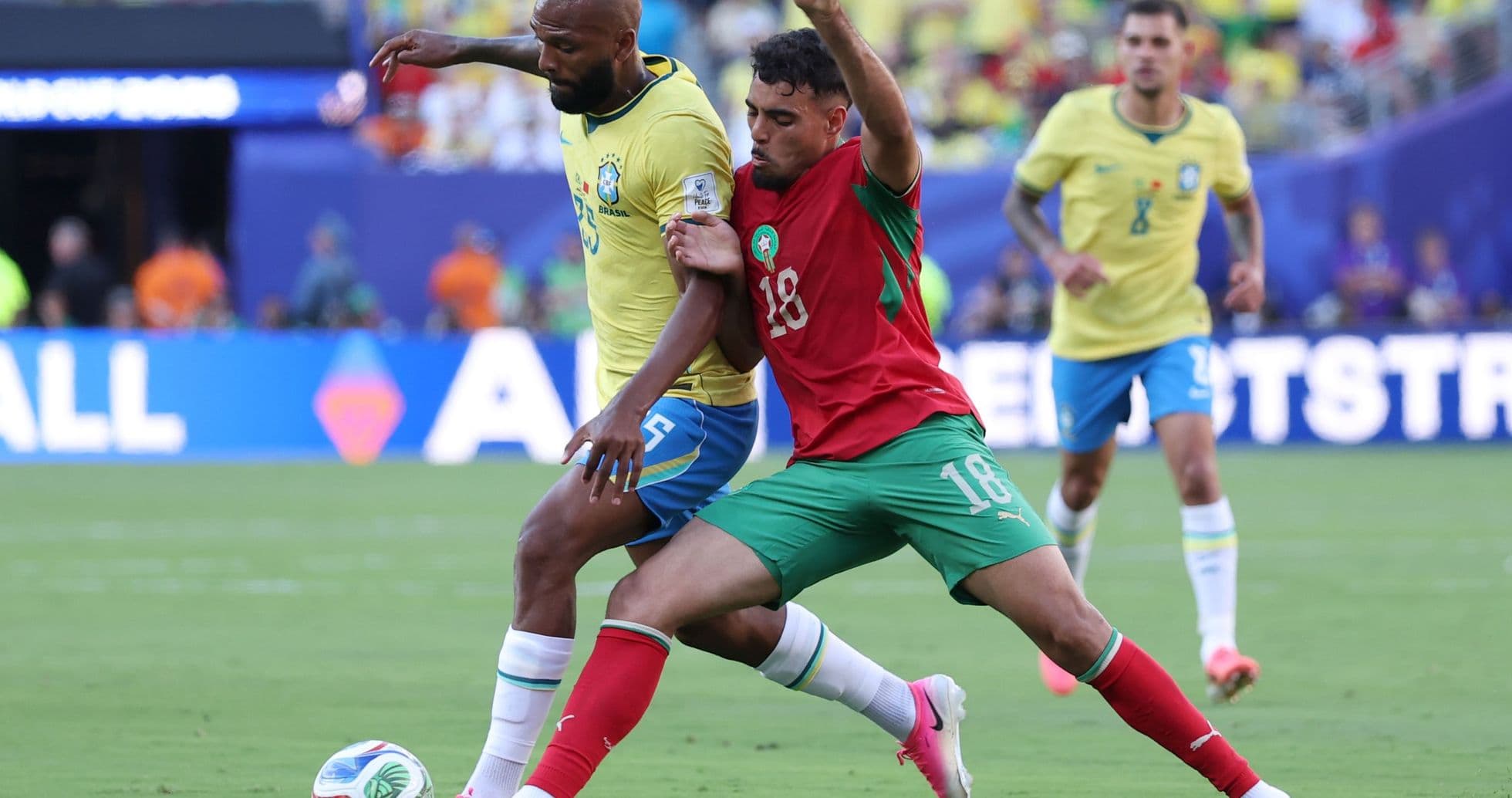
Despite being viewed as underdogs, Morocco stormed the game from the outset. They applied fast transitions combined with a compact, aggressive mid-block that frustrated Brazil and resulted in their opening goal. Bouaddi stood out, orchestrating the midfield with energy and skill both offensively and defensively.
The Moroccan defensive shape resembled a tight 4-4-2 block, minimizing gaps between lines and denying Brazil clear paths through the center. Instead of pressing high, Morocco smartly funneled Brazilian play toward the flanks. This tactic paid off when Morocco intercepted a wide pass and quickly set up Saibari to score after a clever through ball from Diaz.
Brazil’s Struggles with Cohesion and Progression
Brazil grappled with moving the ball forward smoothly. Their build-up often faltered due to poor spacing between midfielders and attackers. Casemiro and Guimaraes anchored the midfield but found it tough to break Morocco’s lines or retain possession under pressure, leading to several turnovers deep in their half.
Defensively, Brazil appeared vulnerable. Morocco’s fluid possession repeatedly exposed gaps, particularly in midfield. Casemiro showed signs of slowing down physically, prompting his substitution for Fabinho early in the second half. Morocco’s coach seemed to have pinpointed Brazil’s weaknesses in midfield and fullback positions, exploiting them with early tactical changes.
Vinicius’s Flair Highlights Brazil’s Offensive Issues
Brazil lacked a key link player in attack to connect midfield with forwards effectively. Vinicius’s individual skill often masked this problem but didn’t fix it. Attacks frequently broke down without a reliable facilitator to combine and create chances. Thiago Silva, playing as a traditional target man, was less effective in this role than a forward like Cunha might have been. The decision to start Thiago rather than Cunha raised questions about Brazil’s attacking balance.
Key Takeaways
Despite boasting world-class talent, Brazil’s familiar issues surfaced: imprecise build-up play and defensive lapses after losing possession. These flaws may become more costly against stronger opponents as the tournament unfolds.
Morocco reinforced their reputation as one of international football’s most tactically disciplined teams. Their defensive organization and quick counterattacks allowed them to match Brazil’s individual brilliance. This draw wasn’t luck but the result of a carefully executed plan.