Morocco’s Bid for 2030 World Cup Final Faces Political Hurdles
Morocco’s bid to bring the 2030 World Cup final to Casablanca has run straight into a political tackle from its own Prime Minister.
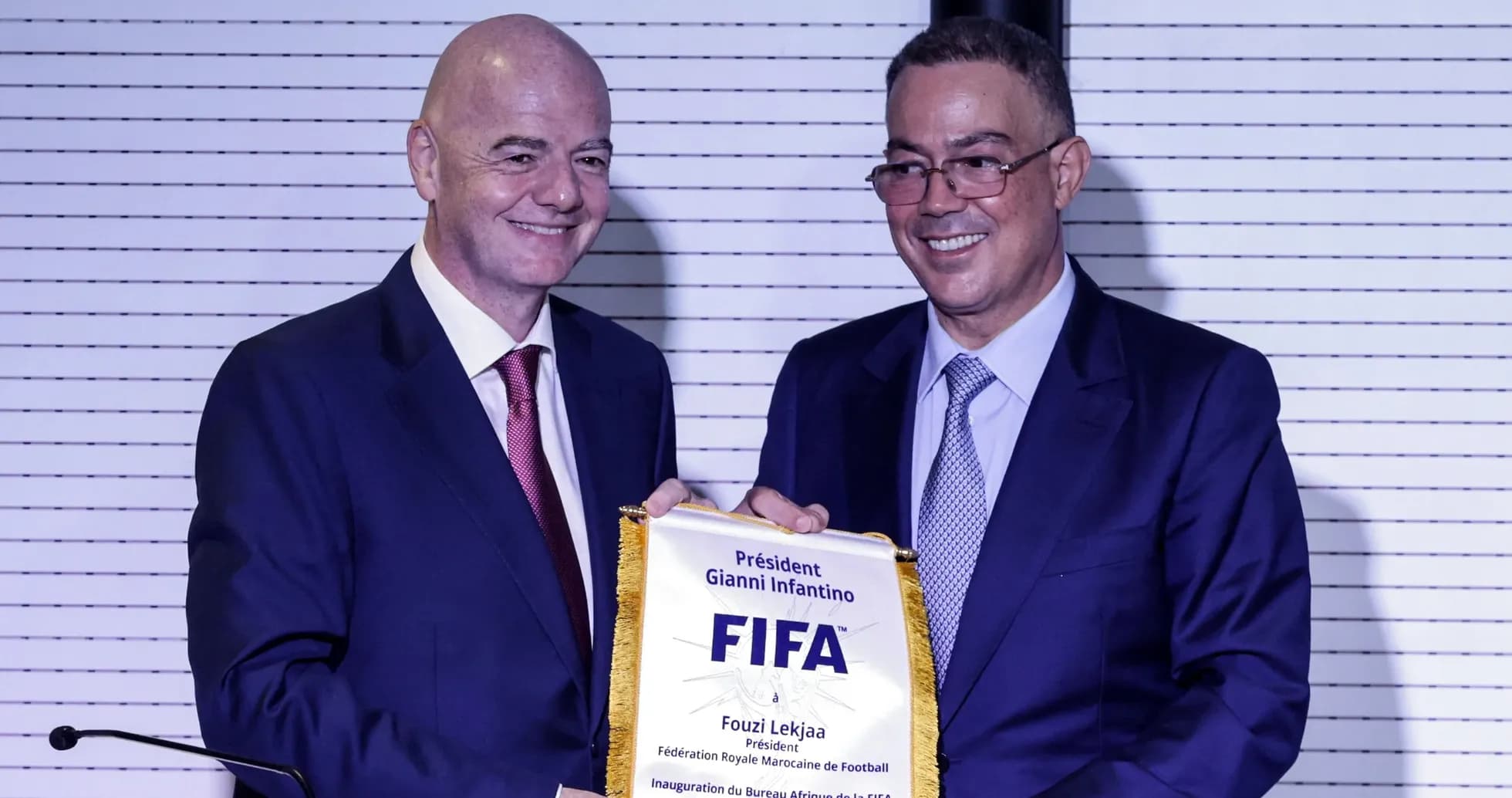
Aziz Akhannouch has publicly rebuked Fouzi Lekjaa, the powerful president of the Royal Moroccan Football Federation (RMFF), ordering him to stop making promises about hosting the showpiece match before anything has been agreed with co-hosts Spain and Portugal.
Prime Minister steps in
The flashpoint came after Lekjaa, speaking at a political party event, declared that Morocco’s planned new mega-stadium in Casablanca would have the “honour” of staging the final of the centenary World Cup.
That crossed a line for Akhannouch.
Addressing supporters at a rally, the Prime Minister delivered a blunt message aimed squarely at the federation chief: “Do not offer to host the big final game in Morocco while we still have not discussed the matter with our allies, Spain and Portugal. There should be some respect, brothers. Stop using electoral promises to pull the rug out from under us. These are huge matters. Deciding where the final will be held is a major issue.”
The intervention underlined the political sensitivity around the 2030 tournament, which will be shared between Morocco, Spain and Portugal, with opening matches also staged in South America to mark 100 years of the World Cup.
Morocco wants the final. So does Spain. Neither has a guarantee.
FIFA keeps its distance
For now, FIFA is staying out of the public crossfire. World football’s governing body has not named a host city for the final, saying only that “a decision will be made in due course.”
That leaves room for manoeuvre and, inevitably, for tension.
Morocco is pushing to bring the World Cup’s climax back to Africa for the first time since Johannesburg in 2010. Spain, armed with heavyweight stadiums and a recent surge in on-pitch success, is just as determined to keep the decisive night on European soil.
Spain stakes its claim
On the other side of the Mediterranean, the Spanish federation (RFEF) has been anything but shy about its ambitions.
Rafael Louzan, the RFEF president, has repeatedly framed Spain as the only logical destination for the final. Speaking to Cadena SER radio, he said: “Even though no decision has been taken, I believe Spain is the place because it cannot be any other way. As you know, we are currently world champions. I believe Spain’s organisational capacity for major events is beyond question and that is why reality dictates that the grand final cannot and must not be held anywhere other than in Spain.”
Spain’s argument leans heavily on two pillars: pedigree and infrastructure.
The men’s national team has just added a second World Cup title after beating Argentina this past summer, reinforcing its status at the top of the game. Off the pitch, the country can point to an upgraded Santiago Bernabeu in Madrid and the vast, ongoing redevelopment of Barcelona’s Spotify Camp Nou as proof it can deliver a grand stage at short notice.
From the RFEF’s perspective, that combination gives Spain the edge in any internal 2030 negotiations.
Morocco’s giant gamble
Morocco, though, is not backing down. It is building.
The country has launched construction of a colossal 115,000-seat stadium, designed to be the largest football-specific venue on the planet. The project, anchored in Casablanca, is meant to stand shoulder to shoulder with Europe’s most iconic grounds and to send a clear signal: Morocco can host the biggest night in world football.
Lekjaa’s enthusiasm for showcasing that new arena on World Cup final night clearly resonated domestically. It also clearly alarmed the government.
Akhannouch’s warning was as much about diplomacy as it was about stadiums. With Spain and Portugal locked in as partners for 2030, Rabat is determined not to fracture the alliance with unilateral declarations, especially on an issue as symbolically charged as the final venue.
Long game to the final whistle
The timeline offers all three hosts some breathing space. For the 2026 World Cup, FIFA did not confirm New Jersey’s MetLife Stadium as the final venue until early 2024, even though the tournament was already well into its planning phase.
That precedent suggests the 2030 decision could still be some way off. It also means the political and sporting jostling between Madrid and Rabat is unlikely to ease any time soon.
For now, Morocco’s government wants to cool the rhetoric, keep Spain and Portugal onside and avoid turning the final into an open diplomatic row.
The stadiums will rise, the lobbying will intensify, and the centenary World Cup will edge closer. When FIFA finally points to a city for that last match in 2030, will it be Casablanca or Madrid that erupts?