Mikel Arteta's Crucial Contract Negotiations at Arsenal
At Arsenal, the debate over the transfer window will run and run. What nobody at the Emirates is arguing about is this: the most important deal of their season is still to be signed, and it has nothing to do with a player.
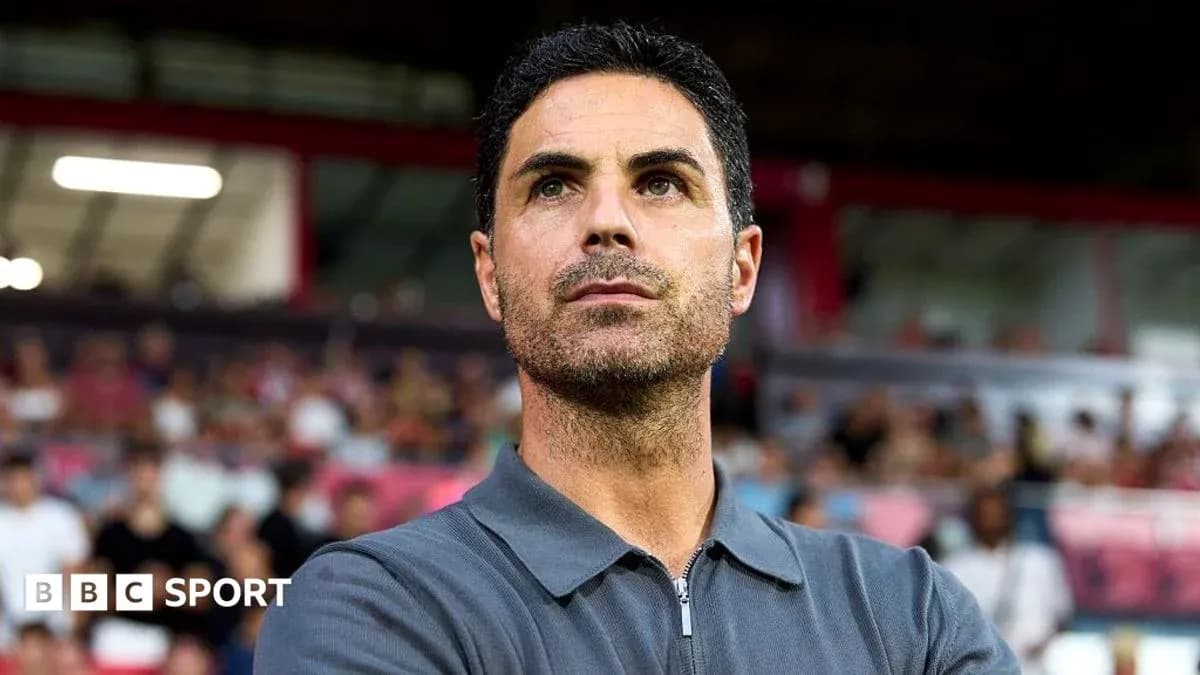
With the market shut until January, Arsenal’s hierarchy have turned fully to the contract that really matters now – tying down Mikel Arteta.
Talks that had dragged on have accelerated in recent weeks. Well-placed figures around the negotiations are confident the Spaniard will commit, and Arteta himself has already tried to kill off any suspense.
“Everybody feels comfortable that the timing of the contract is not going to be an issue because my will certainly is to be here and I'm very happy here,” he said last month. “My feeling from the club is the same one. That's why everyone is doing things in a very organic way.”
Inside the club, that calm is echoed. Chief executive Richard Garlick has already framed the new long-term deal as a formality, describing it as a “matter of time” before it is confirmed.
When it lands, it will be lucrative. Arsenal are ready to push Arteta into the bracket of the best-paid managers in world football, significantly upgrading his current £10m-a-year terms, which also include a £5m bonus for Champions League qualification. For a coach with only nine months left on his existing contract, the timing feels critical. For supporters, the announcement cannot arrive quickly enough.
Arteta’s impact since arriving in December 2019 explains the urgency. He walked into a club drifting away from the Champions League elite and has turned it into the team that ended a 22-year wait for a Premier League title last season. Now, Arsenal are not just defending champions; they are widely tipped to retain their crown and strongly fancied to mount a genuine push for a first-ever Champions League triumph.
Success brings clout. At Arsenal, Arteta now occupies a position of authority reminiscent of Arsene Wenger’s peak years. From a football standpoint, he is the dominant voice at the club. People often insist the manager should always be the leading figure at any institution. In reality, that level of control is rare. At Arsenal, it is very real.
His influence runs through the building and, most tangibly, through the squad. Nothing significant happens around the first team without his sign-off. When Arsenal made their moves for Julian Alvarez and Vinicius Jr last month, it was Arteta who fronted the charm offensive, driving the club’s pitch to two of the game’s biggest attacking names.
That is why, for the club’s ownership, the idea of removing Arteta from this ecosystem is almost unimaginable. One day, Spain will almost certainly call. A job at Real Madrid or Barcelona, or perhaps the national team, will be floated his way. The lure of home will be strong. But he also understands the trade-off. At those giants, where internal politics are woven into the fabric, he is unlikely to enjoy the same breadth of authority he currently wields in north London.
Right now, the pull for Arteta lies firmly with Arsenal.
He has a squad that reflects his ideas and has grown under his demanding coaching. The group’s average age, 26.2, makes it one of the older squads in the Premier League, but that is by design. This is a team in its prime, built not just to compete in the present but to carve out a legacy over the next few years.
The club’s recent transfer business underlines the shared ambition. Arsenal spent heavily to bring in Bruno Guimaraes and Ezri Konsa in the summer, even though both will turn 30 next year. Those signings, combined with the high-profile but ultimately unsuccessful pursuits of Vinicius Jr and Alvarez, have given Arteta proof that the club’s American owners are prepared to go deep into their pockets for elite-level talent.
That willingness to push financially is understood to have been a key condition for Arteta as contract talks progressed. If he was going to stay, he needed to see that the project would not stall through caution.
Arteta is already an outlier in another sense. His six years at the Emirates make him, by some distance, the longest-serving manager across the Premier League and EFL. The new deal will edge him towards a decade in charge, a tenure that belongs to a different era of English football.
Yet there is no sign of him easing off. No sense of a manager content to coast on past achievements. The standards remain ferocious, the demands on players unrelenting, the vision still expanding.
Arsenal are about to pay him like one of the game’s true heavyweights. The more interesting question is how far he can push them while he holds this rare level of power in modern football.