Michael Olise: From Hayes Estate to World Cup Stardom
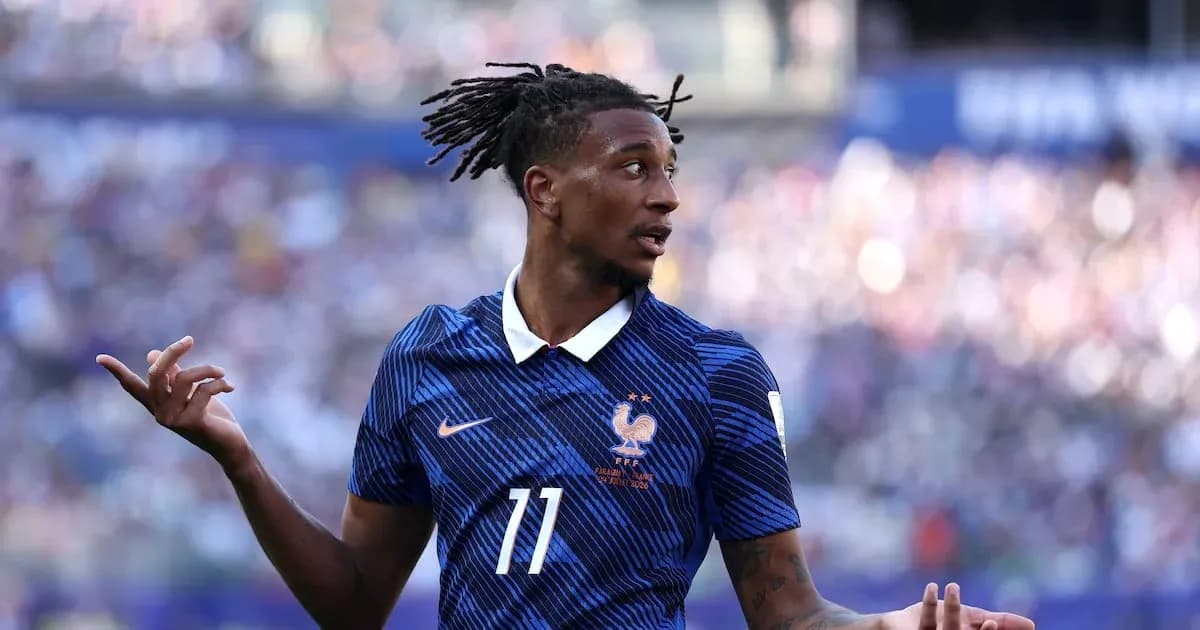
If Michael Olise ends up lifting the World Cup, there will be a patch of grass on a Hayes housing estate that belongs to France as much as it ever did to England.
It’s not much to look at. A small green, framed by low-rise blocks and strips of concrete where cars rarely bother to park. But this is where a seven‑year‑old Olise, ball at his feet and brother Richard for company, spent hours turning repetition into instinct.
“Football in these conditions, it’s just freedom,” he told L’Équipe last month. “It’s not really learning in the strict sense. It was simply the pleasure of playing football. I just loved it.”
Those who watched him then, on that scrap of parkland in west London, recognised something different long before the rest of the world caught up.
“He glides around the pitch: very graceful, perfect co-ordination, everything effortless,” says Sean Conlon, one of his first coaches at Old Isleworthians. “The way he moves today was how he moved when he was six. That’s something he’s been born with. People say he’s the best player England has ever developed.”
The one Chelsea and City let go
Conlon had worked at Chelsea, so when Olise turned nine the path felt obvious. The club’s academy took him in, another gifted London kid fed into the machine. His talent still shone brightly enough for Manchester City to take him later on, in the same year group as Cole Palmer and a year behind Phil Foden.
Then came the rejection. Twice.
City released him at 16. Chelsea had already decided he wasn’t one for their future. The game’s most powerful academies had seen him up close and let him walk away.
He went back to Conlon, who by then was running an academy called We Make Footballers, searching for a professional club and a way back in. That route arrived via Reading and a scout called Brendan Flanagan, who had been tipped off about a technically gifted, slightly misunderstood teenager in west London.
“There was a lot of scepticism from various members of staff at Reading that he would be a bad egg,” Flanagan remembers. “‘He’s been released by Chelsea, by Man City. We shouldn’t be bringing him in. He’ll be a problem.’ I said: ‘Look, let’s just get the kid in and make our decision.’”
Conlon heard the same doubts from other scouts. “‘He’s just come out of Manchester City, he’s just come out of Chelsea, why have they not kept him on?’ They were half and half,” he says. “They could see him and say: ‘Why are we not taking this talent?’ But Reading were the ones that committed.”
The first impression at Reading wasn’t a Cruyff turn or a defence‑splitting pass. It was a phone call.
Olise had to travel in from London, taking the train before a club shuttle collected academy players from the station.
“On his first day I got a call from him at the station and he was asking: ‘Where do I need to pick the bus up please?’” Flanagan says. “I directed him to the shuttle bus but everything was ‘please’ and ‘thank you’ and I thought to myself: ‘This ain’t a bad kid. He’s just a kid who’s a bit misunderstood, different.’
“And we never had a problem with him. He wasn’t ever a bad lad. He was always an intelligent, quiet lad who just expressed himself a bit differently. What wasn’t right for them [City and Chelsea] ... well, we’re just little old Reading. We can work with these kids.”
Sparta Prague, 17 minutes, one revelation
Once Reading took the chance, Olise climbed quickly. He moved into the under‑21s, where his story began to accelerate.
Flanagan recalls a European Under‑21 Cup tie against Sparta Prague. He arrived at half‑time. Olise, 17 and on the bench, came on with 17 minutes left.
“I sat in front of Hayden Mullins, who used to work for us and who I got on well with,” Flanagan says. “Michael came on with 17 minutes to go. Within five minutes Hayden leaned over to me and said: ‘Who the fuck is that?!’ I just started laughing. And Hayden said: ‘Come on then, tell me, where did you find this one?’ So I explained the story ...”
The impact lingered long after the final whistle.
“He was absolutely unbelievable that day,” Flanagan says. “Hayden and I shook hands at the end and said: ‘This kid will play for the first team by the end of the season.’”
They were right. A few weeks later, first‑team manager José Gomes needed extra numbers in training and pulled Olise in. By that Saturday, he was on the bench. Soon after, he made his debut.
“The manager obviously saw him and thought: ‘This kid is unbelievable.’”
The trajectory, from then on, only pointed one way.
Four nations, one decision
The more Olise’s star rises in a France shirt, the more pointed the question becomes in England: how did a boy born in London, formed in English academies, end up orchestrating games for someone else’s national team?
The answer lies in his family and in timing.
His mother, Mina, is French Algerian. His father, Vincent, is British Nigerian. “I actually come from four countries,” he told Bayern Munich’s website last season. “France, Algeria, Nigeria and Great Britain. I consider myself very lucky to possess these four parts, which all enrich me.
“I’ve developed attachments in all my countries. When I was growing up in London, we regularly visited Algeria, Nigeria and France. My dad always spoke English with me at home, my mum, French.”
While England’s age‑group sides brimmed with talent, Olise simply wasn’t on their radar.
“We weren’t as attractive a club,” Flanagan says of Reading. “It’s slightly changed now, but back then, for England, generally, you had to come from Chelsea, Manchester City, Manchester United and Arsenal.”
France moved first. They found out about the French connection, called Reading, then called the player. Olise joined their under‑18s. Only later did England arrive, with an under‑20s invitation that came too late to change his mind.
“France reached out to us and we spoke to Michael,” Flanagan says. “They were the first one who selected him and, even though England came in for him for the under‑20s, he was happy where he was.”
England, at that point, could lean on a golden generation. The 2012 overhaul of club academies had filled the system with technical, confident attackers. In Olise’s age group alone were Palmer, Bukayo Saka, Morgan Rogers, Anthony Gordon and Noni Madueke, with Jude Bellingham and Jamal Musiala – then at Chelsea and playing for England – just behind.
Yet here we are at a World Cup, watching the most inventive player at the tournament – born in England, shaped by its pitches and coaches – threading passes in blue rather than white. Olise leads the competition for assists with five.
Premier League academies have educated the world. The Football Association can only watch as one of the sharpest products of that education turns his vision elsewhere.
From Hayes to the Ballon d’Or conversation
“Could I see he would reach the levels that he’s reached?” Flanagan asks. “I don’t think anyone could. Some kids do look like they might be a Ballon d’Or contender at 16 and then kind of level out. But Michael was on a trajectory that went up and up and up, and he still hasn’t levelled off. He just seems to be getting better and better.
“He’s always had a picture in his head, saw things quicker than anyone else and had the ability to find a way to make the pass. But he’s just gone to another level.”
Conlon feels the same sense of disbelief, tinged with pride, when he looks back to that Hayes estate.
“It’s crazy,” he says. “With the under-8s, we say to the kids: ‘One day you’re going to win the World Cup. One day you’re going to win the Champions League.’ This is why you have to have these standards. You preach it and now we’ve actually had someone go and do it.”
From telling children to dream big, to watching one of them stand on the brink of football’s greatest prize. The journey from that small green to the global stage has been anything but straightforward, yet the line between them feels clear enough to those who were there at the start.
There is, though, one final twist for his early mentors to consider.
What happens if England meet France in a World Cup final and the boy from Hayes stands in their way?
“I’m going to be sat on the fence,” Flanagan says. “I want Michael to do well, but I want England to win as well. So I probably won’t watch the game and stay out of the way.”