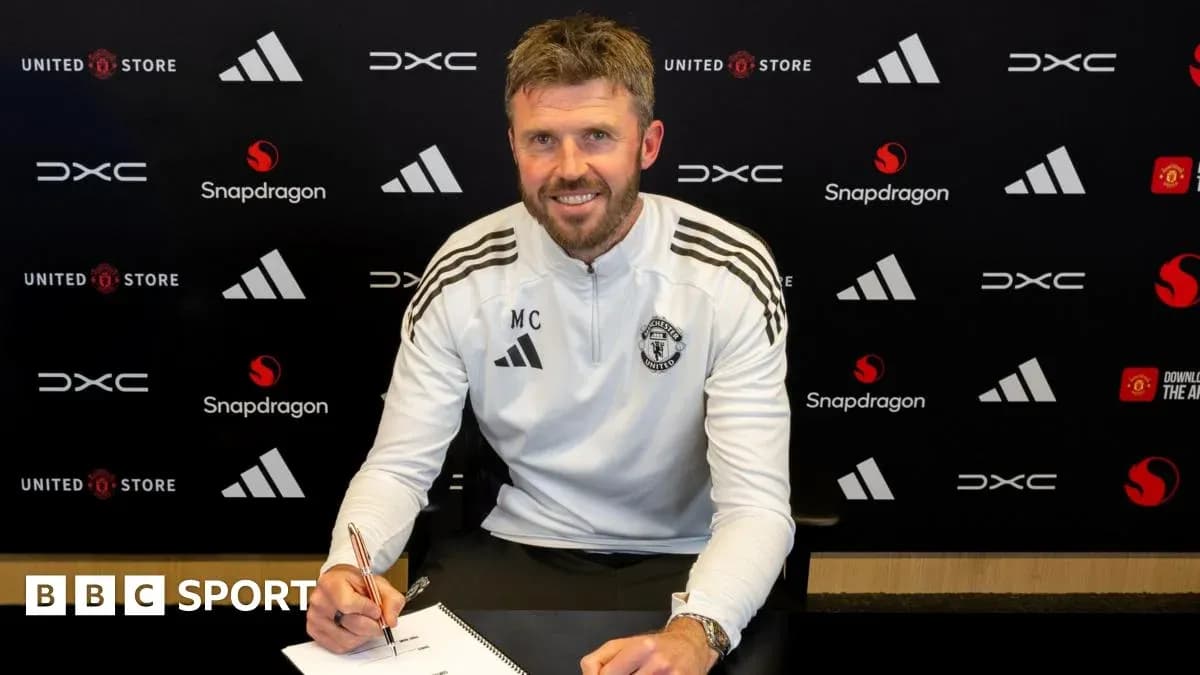
Michael Carrick Appointed Permanent Head Coach of Manchester United
Manchester United have removed the word “interim” from Michael Carrick’s title. The 44-year-old has been appointed permanent head coach on a two-year deal, rewarded for hauling the club back into the Champions League and restoring a sense of order after a turbulent winter.
He stepped in when Ruben Amorim was sacked in January. Since then, United have not just stabilised – they have surged.
Third place in the Premier League is already secure after Sunday’s breathless win over Nottingham Forest, and with it a return to Europe’s top table. Carrick has won 11 of his 16 games in charge and sits on a six-man shortlist for the Premier League manager of the season award. No side in the division has collected more points than United’s 36 since he took over on 13 January.
“From the moment that I arrived here 20 years ago, I felt the magic of Manchester United. Carrying the responsibility of leading our special football club fills me with immense pride,” Carrick said, speaking with the calm that has become his trademark.
“Throughout the past five months, this group of players have shown they can reach the standards of resilience, togetherness and determination that we demand here. Now it's time to move forward together again, with ambition and a clear sense of purpose. Manchester United and our incredible supporters deserve to be challenging for the biggest honours again.”
A calm hand on a chaotic season
Carrick has been asked about his future so often in recent weeks he could almost have handed reporters a pre-printed answer. The uncertainty is over now. What replaces it is expectation.
His impact has gone beyond the league table. Around Carrington, staff talk of a calmer environment, a dressing room that no longer feels permanently on edge, a head coach who does not flinch when games tilt against him. United’s late surge has invited statistical pieces suggesting they have overperformed compared with underlying numbers, that the results flatter the performances.
That line ignores what has been obvious on the pitch: players who had been drifting now look clear about their roles, and a team that once panicked in tight games now tends to hold its nerve.
Yet for all the praise, there is no disguising the size of the next step.
From 40 games to 60
This season, United’s calendar has been forgiving. No European football. Early exits in both domestic cups. Just 40 matches to manage, and even that tested the squad’s depth at times.
Next year could stretch to 60 games. Different world. Different demands.
Finishing third in a lighter schedule is one thing. Matching – or bettering – that position while juggling the Champions League, deeper cup runs and the relentlessness of the league is something else entirely. To do that, Carrick needs more than goodwill and structure. He needs players.
Midfield rebuild at the heart of the project
Central midfield sits at the centre of every discussion. Casemiro is leaving. Manuel Ugarte has not convinced at the required level. Kobbie Mainoo, as gifted as he is, cannot be asked to carry the engine room every three days across four competitions.
Without a major reinforcement in that area, the balance Carrick has carefully built will creak. United need a midfielder who can live with the tempo of the Champions League, protect the back four and still offer enough on the ball to keep them on the front foot. Get that signing wrong and the entire season plan starts to wobble.
Questions at left-back and in goal
The gaps do not stop in midfield.
If Patrick Dorgu continues to be used higher up the pitch, United suddenly look light at left-back. Luke Shaw, when fit, remains first choice, but the club cannot afford another season of improvisation every time he is unavailable. Genuine competition is no longer a luxury; it is urgent.
The same tension exists in goal. Senne Lammens needs someone pushing him, yet the obvious candidate, Radek Vitek, has his own priorities. After an outstanding season on loan at Bristol City, Vitek wants to keep playing every week. Returning to Old Trafford next season would almost certainly reduce his minutes. That decision will shape United’s depth in a position where one injury can change everything.
Academy promise, but not a shortcut
Support can, and likely will, come from the academy.
Eighteen-year-old midfielder Jacob Devaney has caught the eye in the Scottish Premiership with St Mirren, showing the maturity to handle senior football. England Under-20 international Shea Lacey is another who should edge closer to regular first-team involvement next season.
Those are encouraging signs. United have always prided themselves on a pathway from youth to senior level, and Carrick, a former academy graduate elsewhere who became a serial winner, understands that journey as well as anyone.
But the academy cannot carry the weight of a 60-game season. Not yet. Not on its own.
Carrick will need the recruitment department to match his clarity on the training ground with decisiveness in the market. The margin for error is small. One or two wrong calls and United risk another year of patching problems rather than building a coherent squad.
A new standard – and a higher bar
Strip away the noise and the picture is simple.
Carrick has brought stability, results and a sense of direction to a club that had lost all three. He has done it quietly, without theatrics, and with a points return no other Premier League club has bettered in his time in charge. He has earned this contract.
Now the bar moves.
With more games, heavier legs and bigger nights ahead, finishing third again next season would, in context, represent a significant step forward, not a sideways shuffle. To give himself any chance of hitting that mark, Carrick needs backing, not just a badge on the office door.
He has the job. The question now is whether he will be given the tools to keep Manchester United where he has steered them – and to push them further.