
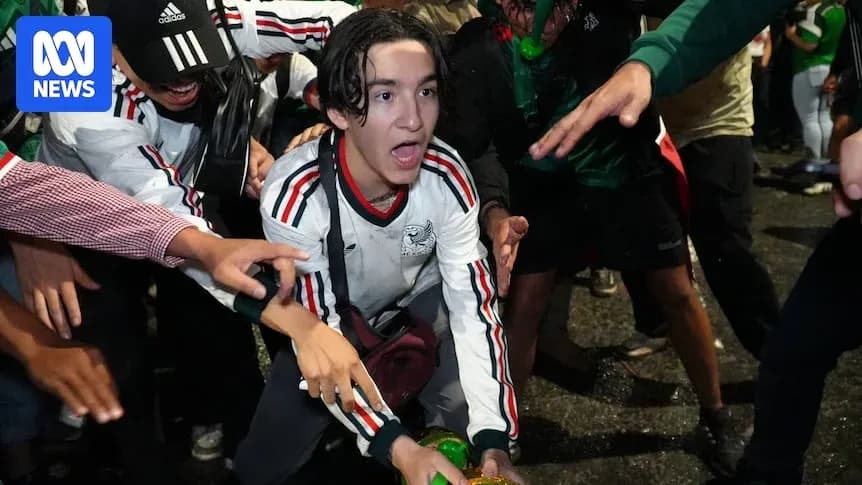
Mexico City Transforms into Fan Zone for World Cup
The clues were everywhere on the eve of kickoff.
Last-minute scrambles at street stalls as fans snapped up green Mexico jerseys. Spontaneous choirs forming around El Ángel de la Independencia, that golden-winged guardian of the capital. Car horns, fireworks, and songs echoing through the night until the city finally dozed off for a few brief hours.
If this was the warm-up, the main event was always going to be wild.
A capital city turns into a fan zone
Mexico did its part on the pitch first, taking care of South Africa 2-0 in the opening match of a World Cup spread across Mexico, Canada, and the USA. That result was the spark. What followed on the streets of Mexico City was the explosion.
Paseo de la Reforma, usually a busy artery of traffic, morphed into a pedestrian river of green shirts and waving flags. It felt less like a boulevard and more like a fan park without fences.
Beer flew through the air in jubilant showers. Fake snow sprayed over strangers who instantly became friends. Conga lines snaked past plastic World Cup trophies held aloft as if they were the real thing. Every few metres, someone had set up a makeshift stall: tacos sizzling on hotplates, bags of snacks, souvenir scarves, and glow sticks painting neon streaks through the night.
A free concert turned the whole scene into something between a national holiday and a street rave. For outsiders, it might look like an over-the-top celebration for a group-stage win. For Mexico, this is muscle memory. This is what happens when the men’s national team delivers.
Fans converged on their traditional meeting point, the victory monument on a hectic roundabout that functions as Mexico City’s answer to Fed Square. They came with drums, flags, and an almost inexhaustible capacity to keep the party going until the sun came up again.
Roars, cramps, and a 17-year-old’s welcome
The energy had been building all day. Outside the stadium, traditional performers worked the crowd, feeding the anticipation. Inside, 80,000 people whipped the atmosphere into something close to chaos.
The noise hit a different level when the opening ceremony began. Fans belted out songs with the performers, with a special surge of volume reserved for Shakira, the World Cup icon whose music has soundtracked so many tournaments.
But those were just warm-up acts for the main sound of the night: the roars for the goals. The loudest came when Raúl Jiménez rose to head home, a moment loaded with meaning after his long road back from a horrific head injury. You could feel the emotion in the way the stadium erupted, a mixture of joy, relief, and respect.
Not far behind on the decibel scale was the reception for 17-year-old Gilberto Mora. When he came on in the second half, the reaction was instant and unanimous. Tens of thousands chanting his name, an ovation usually reserved for legends, not teenagers. It was a statement from the stands: this is the kid many believe can change the face of the sport in this country.
On the touchline, coach Javier Aguirre understood exactly what his players were feeling. He has lived this before, having played in the 1986 World Cup on home soil.
“The start of the World Cup, is a brutal scenario, it makes your legs shake a little,” he said. The journey from the calm of the training centre to a city in full celebration mode hits hard. “The people, the fans are in the street and that tells the player, ‘Wow, wow, wow.’”
The evidence was right there in the numbers. “Never, never in 25 matches we had one case of cramps, today we had three players with cramps. It’s a very strong emotional state.”
Aguirre knows his squad now has to bottle that emotion, cool their heads, and prepare for the next group game. The supporters have no such obligation. For them, the lid is off.
“It means everything. It means a lot,” one fan said amid the celebrations. “It’s putting us back on the map. It shows that Mexico is present in the world of football.”
Infantino’s relief, and the questions ahead
High above the noise, one man in a suit would have been quietly satisfied. FIFA president Gianni Infantino spent the previous day railing against the criticism directed at his organisation in the buildup to this tournament. He slipped into early-2000s slang to plead with everyone to “chillax.”
Now the football has finally started, and the mood has shifted. The “chill pills,” as he framed them, have been swallowed. The party is in full swing. For the moment, the game is drowning out the grumbling.
Infantino can breathe a little easier, but only for now. This World Cup stretches across three very different markets. Mexico lives and breathes the sport. In Canada and the United States, “soccer” still fights for attention.
The marquee fixtures and superstar names will draw huge crowds. The real test comes away from the spotlight. Will fans in North America pay top dollar for matches that don’t feature the giants? Will ticket prices empty the stands for those off-Broadway group games?
There is another shadow in the United States: the potential presence of Immigration and Customs Enforcement — ICE — around venues and fan zones. That possibility hangs over parts of the tournament and raises questions that no amount of music or fireworks can drown out.
Those debates will grow louder as the competition unfolds. For now, Mexico has set the tone on and off the pitch. The football has started speaking for itself — and in this city, it’s shouting.





