Mauricio Pochettino's Journey with the USMNT: From Heartbreak to Hope
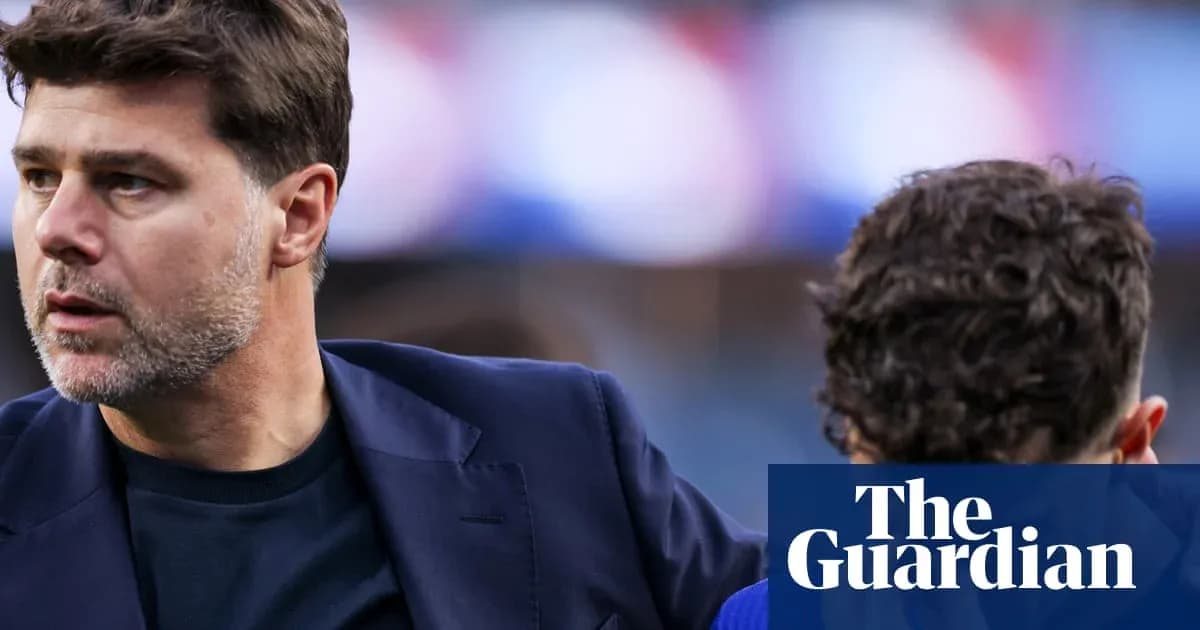
Mauricio Pochettino stood on the touchline in Houston with tears in his eyes, beaten by Mexico, beaten by the noise, beaten by the reality of what coaching the United States actually meant.
His team had just lost the 2025 Gold Cup final. A regional crown gone to their fiercest rival. Yet what cut deepest was not just the scoreline. It was the soundtrack. In one of the biggest metropolitan areas in the country he now called home, the stadium roared almost entirely for the other side.
For a man who had lived the white‑hot cauldrons of Tottenham–Arsenal and Paris Saint‑Germain–Marseille, it felt surreal. Like walking into a derby and finding your own ground draped in enemy colors.
One year out from a home World Cup, Pochettino’s education had begun with a punch to the jaw.
“We misjudged the situation,” he admitted this week. “When we arrived here, we received a big bang, punch, and we were knocked out for a while. We said: ‘What the fuck?’”
That “punch” landed even before the Gold Cup heartbreak. It was the first of three stinging lessons that dragged this US side from illusion to relevance, from comfort to the sharp edge they now carry into the 2026 World Cup.
Today, the picture could not look more different. Two games, two wins, a 6-1 combined scoreline. Top of Group D with a match to spare. Only four teams wrapped up first place after two games: Argentina, Germany, Mexico – and Pochettino’s United States. The atmospheres at home have turned, too. Raucous, partisan, loud in all the right ways. The kind of backing Pochettino once wondered if he’d ever see in this sport on these shores.
This is the high point of his tenure. It has been earned the hard way.
A crash in an empty stadium
The first jolt came in March 2025 in the Concacaf Nations League. On paper, the path looked familiar and straightforward: beat Panama in the semi-final, then another expected showdown with Mexico or Canada. The US had won the first three editions of the competition. This was supposed to be routine.
They didn’t even make the final.
Panama arrived organized and hungry. The US lacked incision, lacked edge. And this time, the problem was not a hostile crowd. It was no crowd at all.
“It was empty,” Pochettino recalled. “You remember the game, Panama? It was the Mexican people [in the stands] because they played after us.”
For years, the US had bullied Panama, racking up a 17-4-2 record by mid-2021. But the dynamic had shifted. Panama’s 1-0 win that night was their fourth in six against the Americans, after victories in the 2023 Gold Cup semi-final and a 2024 Copa América group match. One mental lapse, one clinical strike with their third shot, and the US were out.
“That was [a] good crash, no?” Pochettino said. He meant it. The defeat exposed something deeper than tactics or selection. It exposed a culture that had grown too comfortable.
All-in or stay home
That culture came into sharp focus when Christian Pulisic approached his coach with a request. The captain wanted to skip the Gold Cup but still join for the friendlies against Turkey and Switzerland beforehand.
Pochettino’s answer was simple: no.
He wanted one group, one camp, one journey from the first day to the last. No half-measures. No star treatment. The same hard line he later applied to his World Cup squad.
The decision triggered tension. Back-and-forth between coach and star. Heavy defeats in those pre-Gold Cup friendlies turned up the external pressure. But the standard had been set: you are either all-in, or you watch from home.
On the field, that Gold Cup became a laboratory. Malik Tillman finally stepped into the role of chief creator, dictating play as the team’s primary playmaker. Matt Freese seized the No 1 shirt and outlasted Keylor Navas in a shootout. Alex Freeman emerged as a young full-back Pochettino felt he could no longer drop. Sebastian Berhalter forced his way into the midfield rotation.
Pochettino changed, too. For the first time at international level, he had a squad with him every day for over a month. It felt more like club football – his natural habitat – than the stop-start rhythm of typical international windows. Systems could be honed. Automatism built. Mistakes corrected on the training pitch the next morning instead of three months later.
They lost the final to Mexico. Pochettino fought back tears in the aftermath, but his message in the locker room was not about regret.
“Keep improving, but please don’t change,” he told them.
He could not shake the image of that Houston crowd. Nor another scene, days earlier in Columbus.
“Why not us?”
In late August 2025, Pochettino sat in the stands at Ohio State v Texas. Seventy thousand fans, deafening, living every snap of a college football game.
“There were 70,000 fans there,” he said. “And my question was, you know, why not? If the fans are very passionate, why not with us, with soccer? Because if [the support is] with us, they will be and show the same passion. It’s massive. It’s so powerful for the player.”
Out of that question grew a mantra: “Why not us?”
It was not just a slogan. It came with a tactical and psychological shift. When Pulisic and the other mainstays returned in September, Pochettino rolled out what would become his default shape. Fluid, restless, hard to pin down. The US began to morph constantly between phases, using off-ball movement to unhinge defensive blocks, switching play quickly, and attacking gaps without hesitation.
Results followed. A 2-0 win over Japan in September. A draw with Ecuador and a win over Australia in October. Then a November window that felt like a statement: a victory over Paraguay and a 5-1 demolition of Uruguay to close 2025.
The US were no longer just talking about “Why not us?” They were playing like they believed it.
The March setback
Just as the arc seemed to rise without interruption, the third hard lesson arrived.
Two defeats in March. A 7-2 aggregate humbling against Belgium and Portugal. The numbers stung, but the manner of the performances hurt more. The team looked unsure. The defense, which had been trending upward, was sliced open. Against Belgium, they even slipped back into an older, leakier structure.
Pulisic, in the middle of a career-worst goal drought, started at center-forward against Portugal. The experiment produced little.
“I feel like we’ve always bought in,” defender Chris Richards said this week, “but I really feel like the March camp that we had was really important. … I think we really gave, you know, two really good teams in Europe a really strong game.”
Pochettino defended his players, but he did not sugarcoat the gap.
“Belgium and Portugal have, in the top 100 players, [a] few or some players in that top 100,” he said. “I think we don’t have [any].”
Outside the camp, pessimism returned. This, many felt, was the USMNT they knew too well: capable of the occasional big scalp, just as capable of collapsing, fragile against giants and vulnerable to upsets from smaller nations.
So when the federation lined up pre-World Cup friendlies against Senegal and Germany, the reaction was predictable. Why risk more bruises?
Pochettino never flinched.
“No,” he said when asked if he feared the schedule. “That is good for us. It’s going to measure our level.”
Peaking on home soil
The response was exactly what he wanted. A 3-2 win over Senegal, full of attacking conviction. A narrow 2-1 defeat to Germany that still hinted at a team sharpening at the right time.
Then came the World Cup itself.
Paraguay first. A 4-1 bulldozing, the kind of performance that felt like release – all that movement, all that front-foot intent, finally exploding on the biggest stage. Australia next. A 2-0 win, controlled and clinical, that sealed top spot in Group D with a game to spare.
On Thursday, they faced Turkey in a dead rubber: Turkey already out, the US already through as group winners. A luxury, or a curse? Pochettino has called it both. Either way, it is unfamiliar territory.
Only four teams at this World Cup wrapped up their groups after two matches. Argentina and Germany, serial contenders. Mexico, with their massive backing and comfort in hostile environments. And the United States, who not long ago played a competitive semi-final in front of almost nobody and a Gold Cup final in front of almost nobody cheering for them.
Defender Mark McKenzie put the journey in blunt terms.
“It’s not going to be figured out overnight, it’s not going to be figured out in one camp, or sometimes in six months, or 12 months, maybe not as fast as everybody wanted,” he said. “I think we’re showcasing that it’s a process.”
The process has left scars: an empty stadium in the Nations League, a hostile one in Houston, a March window that reopened old doubts. But it has also forged something harder, more ambitious, more unapologetically bold.
Now comes the real test. The US have their mantra, their style, and finally, their crowd. On home soil, with the world watching, how far can “Why not us?” really go?