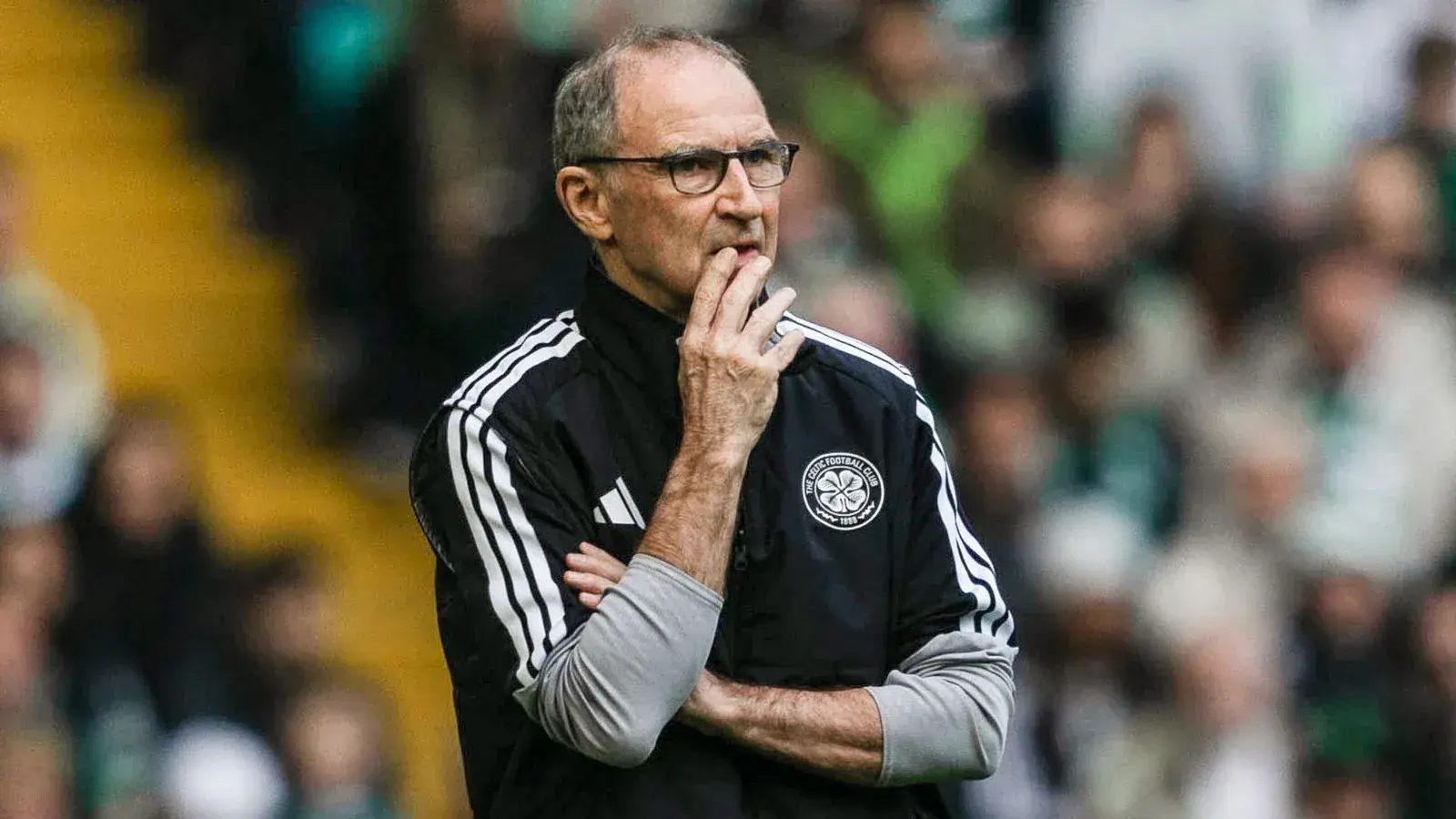
Martin O’Neill’s Celtic: A Crossroads of Reset or Rupture
There is no argument about Martin O’Neill’s place in Celtic history. He is a legend. A serial winner. The architect of one of the club’s great modern eras.
But right now, that legacy is being dragged into a very uncomfortable present.
After a bruising week that brought two Old Firm defeats and a Europa League collapse, the 74-year-old has openly admitted he will “stop and decide if it is time to wrap it up.” When a manager of his stature starts talking like that, it’s no longer background noise. It’s a live issue.
From perfect start to spiralling doubts
On paper, the league table still flatters Celtic. Top of the Scottish Premiership heading into a three-week international break. Six wins from seven.
Scratch the surface and it looks far less reassuring.
The champions opened their title defence with six straight victories, yet even during that run there were warning signs: unconvincing spells, flat performances, a sense that the control was more fragile than the results suggested.
Then came the Champions League play-off against LASK. From 4-0 up in the tie to losing 5-4 on aggregate. An implosion of that scale doesn’t just sting, it shakes belief – in the manager, in the players, in the whole direction of travel.
The response? A heavy defeat to Rangers in the Scottish League Cup. A limp 3-1 loss to Ferencvaros in the Europa League. And finally, a 1-0 Old Firm defeat at Parkhead, in front of 60,000 of their own supporters, that felt heavier than the scoreline.
Celtic could have gone into the break eight points clear. Instead, the gap is two. The momentum, once theirs, has stalled.
Bigger than one man
It is always tempting to blame the man in the dugout. But Celtic’s problems stretch beyond O’Neill’s technical area.
Fan protests against the board last season were not a one-off outburst. The discontent has lingered. Questions over the club’s strategy have not gone away.
Recruitment is at the heart of it.
Record signing Kasper Hogh and Camilo Duran arrived before the Champions League exit. Then, as the clock ticked towards Deadline Day, the club spent close to £20m on Mika Baur, Haissem Hassan and Joel van den Berg. Five more late signings followed.
O’Neill is still trying to make sense of this new-look squad. Still shuffling pieces. Still searching for a system that fits.
Midfield combinations have been changed repeatedly. Shapes have been tweaked. On Sunday, in the latest Old Firm defeat, he went drastic: five defenders, wingers dropped, Kieran Tierney pushed higher. The plan was bold. The outcome was familiar.
For years, Celtic have dominated domestically without fully replacing key players when they’ve been sold. The trophies kept coming. The warnings were ignored.
Now Rangers and Hearts are offering a far more serious challenge. The landscape has shifted, and some supporters believe the club’s long comfort at the top has bred complacency in the boardroom. They see money in the bank but not enough certainty on the pitch. Many of them suspect that only a trophyless season will force the reset they crave.
A giant’s legacy on the line
Scottish football can turn on a single month. O’Neill knows that better than most.
Twice last season he came back as interim manager and steadied a listing ship, turning anxiety into a league and cup double that had looked improbable. That rescue act persuaded him to delay retirement and accept the job permanently, 21 years after his first spell ended.
Back then, he was a force of nature at Parkhead. Seven major trophies. A UEFA Cup final in 2003. A team that snarled, pressed and refused to be beaten.
This version of Celtic is the opposite: too easy to play against, too fragile when pressure builds.
The bond between O’Neill and the Celtic support remains strong, but even his most loyal backers are starting to ask the hard question: is it time for him to walk away before the story sours?
He has not been afraid to make big calls. After the defeat at Ibrox in the League Cup, he ripped up his approach for Ferencvaros. It didn’t work. He changed again for Rangers at Parkhead. That didn’t work either.
The danger is obvious. If he cannot solve the structural problems in this squad, the man who came back as the saviour could end up presiding over a trophyless season and a damaged legacy.
A reset, not a funeral
Amid the gloom, one fact keeps intruding: Celtic are still top. The season is not lost. It has barely begun.
Seven league games played out of 38. Seven Europa League fixtures still to come. There is time – not infinite, but real – to repair the damage.
O’Neill, speaking to Sky Sports after Sunday’s defeat, tried to drag the conversation back towards context. He insisted “there’s very much not between the teams” and pointed to “the history of the club” as proof Celtic will fight back from this turbulent spell.
“It’s concerning. Is it a disaster? I don’t think so. We have to rethink and reset,” he said.
That is the challenge now. The international break offers a rare pause: a chance to strip things back, settle on a shape, decide which of the summer arrivals can be trusted and which ideas need to be binned.
The run that will define the mood
There will be no gentle easing back into action. The fixtures after the break carry weight.
- Motherwell away on October 11, live on television, with every touch under the microscope.
- Benfica in Lisbon on October 15 in the Europa League, a test of nerve as much as quality.
- Hearts at Parkhead on October 18, then Celta Vigo in Europe on October 22.
- Hibernian away on October 25, Dundee United at home on October 28.
Six games that will either calm the noise or crank it to unbearable levels.
Celtic still have the platform to turn this into another successful season. They also stand on the edge of something far more volatile.
O’Neill came back to restore order and add to his legend. Over the next few weeks, he may discover whether this chapter ends as a final flourish – or the moment the story starts to unravel.