Marseille and Bilbao: A Transfer Window of Silence
As the summer transfer window slammed shut, a strange statistic emerged from Europe’s top five leagues. Out of hundreds of clubs scrambling for late deals, only two finished with nothing. No permanent signings, no loans, no options triggered. Nothing.
Olympique de Marseille and Athletic Bilbao stand alone.
On paper, the similarity is striking. In reality, the stories could not be more different.
Two clubs, one number, two worlds
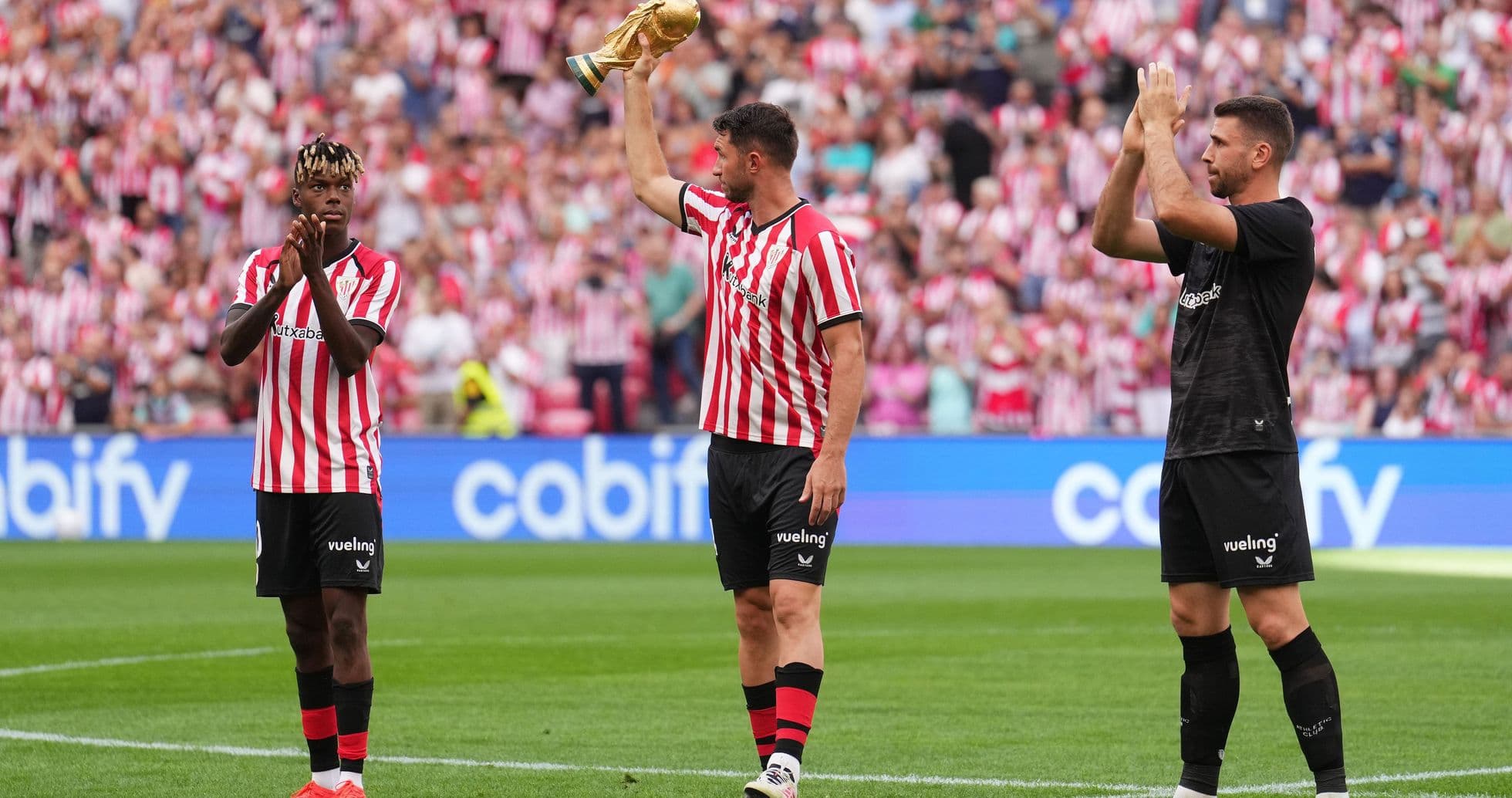
Athletic’s silence fits a century-old script. The Basque club has long tied its identity to a fiercely protected recruitment policy: players from the Basque region or of Basque descent, heavily fed by their own academy. A quiet window in Bilbao is rarely a crisis; it is almost a statement of faith. Trust in Lezama. Trust in continuity. Trust in a model that has survived eras, fashions, and financial bubbles.
Marseille’s stillness tells a harsher tale.
At the Vélodrome, the transfer drought is not a philosophical choice. It is a financial chokehold. Across a summer when rivals reshaped and reinforced, OM watched the market from the outside, hands effectively tied. No late bargain, no opportunistic loan, no short-term patch. The door stayed shut.
An exodus on the Mediterranean
The only movement in Marseille was outbound, and it was relentless.
- Mason Greenwood left for Fenerbahce.
- Facundo Medina headed to Leverkusen.
- Quinten Timber found his next step at Crystal Palace.
- Geronimo Rulli departed for Manchester City.
- Pierre-Emerick Aubameyang moved on to La Coruna.
- Leonardo Balerdi joined Roma.
- Bilal Nadir and Hamed Traore also exited.
One by one, established names and useful options walked away, stripping depth from a squad already under strain. Each departure thinned the bench. Each sale or exit widened the gap between Marseille’s ambitions and their actual resources.
By the end of the window, OM were left with a drastically reduced group and no external help on the way.
Bilbao’s conviction, Marseille’s constraint
At San Mamés, the lack of arrivals is almost routine. Athletic lean into their identity, doubling down on youth, on homegrown development, on a tight-knit core that knows the club inside out. When they sit out a transfer window, it feels like continuity, not negligence.
In Marseille, the same outcome lands very differently. A club of their size and expectation, in a league where the financial gap to Paris Saint-Germain already yawns wide, now has to march into a long season with fewer weapons and no new edge. The contrast with Bilbao is stark: one club follows a deliberate path; the other is boxed in by its accounts.
A season on a knife-edge
The consequences are obvious. Domestically, Marseille will be asked to keep pace with rivals who have strengthened while they have shrunk. In Europe, where depth and rotation often decide campaigns, the challenge grows even steeper.
Managerial and recruitment staff now have no choice but to turn inward. Internal solutions are no longer a slogan; they are the only plan available. Youth prospects will be pushed forward faster. Versatile players will be stretched across multiple roles. Tactical creativity will have to cover for a lack of fresh legs.
There is no safety net. No January promise. No hidden signing waiting to be announced.
As the fixtures pile up and the pressure rises, one question will hang over the Vélodrome: can this stripped-back, untouched squad carry the weight of Marseille’s expectations without a single new face to help them?