
Marcus Rashford's Journey: From Barcelona to England's World Cup Hopes
Marcus Rashford has spent the last year rebuilding his reputation a thousand miles from Old Trafford, in the colours of Barcelona. Fourteen goals, a La Liga title and a Spanish Super Cup later, the Manchester United academy product looks like a player who has remembered who he is.
Yet his future has rarely felt so uncertain.
Barca door closes, questions open
At Camp Nou, Rashford found rhythm again. Sharing a frontline with Lamine Yamal and Robert Lewandowski, he rediscovered that direct, ruthless edge that once made him the face of Manchester United’s attack. His loan spell in 2025-26 was productive, his role important, his confidence visibly restored.
Barcelona held an option to make the move permanent for £26 million, a figure that once would have felt laughably low for a player of his profile. They walked away. The Catalan club have chosen to pour serious money into Anthony Gordon instead, leaving Rashford back where he started: technically a United player, practically a forward in limbo.
Michael Carrick, now confirmed as United’s permanent manager after his own interim audition, is understood to be open to offering Rashford a clean slate. The door at Old Trafford is not bolted shut. But Rashford, after a season that hinted at a new life, appears to want a clean break, not a reset. England’s jet-heeled forward is listening to ideas from the Premier League and across Europe as his representatives test the market.
For now, though, the shop window is the World Cup.
Barnes’ blunt verdict: country before career
World Cups have a habit of being framed as platforms for unsettled stars to advertise themselves. John Barnes wants no part of that narrative where Rashford is concerned.
Speaking to GOAL in association with viagogo’s ‘World Cuts’ campaign, the former England playmaker cut straight through the noise.
“England needs to do well as a team,” he said. “If he feels he wants to do well by himself, that's not going to help England.
“If he wants to make this a market or a shop window for himself, where he's going to say, ‘I'm going to get the ball, I'm going to dribble around players because I want to look good individually’ - that is not what's going to win the World Cup. So him needing to do well for himself is not important. He needs to do well for England.”
Barnes pushed the point further. Rashford’s domestic uncertainty, his search for a new club, his desire for a bigger role under Thomas Tuchel at international level – none of it, in his eyes, should shape how the forward plays.
“And if Thomas Tuchel feels that he's going to be a bit-part player in the squad, he can do nothing about that,” Barnes said. “So it's not a question of individual players feeling I'm going to take this mantle upon myself to do things, to put myself in the shop window. That's not going to help England. Helping the team play is more important than him looking good for himself.”
For Barnes, this World Cup is not Rashford’s personal audition. It is a test of his discipline.
“It depends on his attitude and his commitment. That has always been the issue with Marcus Rashford. I know he's got the talent, but in terms of his attitude, his commitment is the most important thing.
“Thomas Tuchel isn’t worried about Marcus Rashford putting himself in the shop window. He's worried about Marcus Rashford playing well for England, which means he just holds the position, passes it simple, plays a simple game, which maybe will help the team but not help him individually. That's the decision Thomas Tuchel will take. So this has got nothing to do with Marcus Rashford. It has nothing to do with Marcus Rashford trying to find himself a club. It's to do with England trying to win the World Cup.”
A flying start and a familiar warning
On the evidence of England’s opener, Rashford has heard the message – and so have his teammates.
The Three Lions tore into Croatia, winning 4-2 to launch their campaign with authority. Harry Kane, relentless and remorseless, struck twice to move on to 81 international goals and tighten his grip on the record books. Jude Bellingham, deployed in the No.10 role after edging out Morgan Rogers for that slot, scored early in the second half to underline his status as the heartbeat of this side.
Then came Rashford’s moment.
Bukayo Saka surged forward, Croatia’s defence backpedalled, and the ball broke to Rashford on the edge of the area. One touch to shift it onto his right foot, one crisp, low finish into the bottom corner. No fuss, no overcomplication. Just the kind of cold, decisive execution that deserted him at times in Manchester but seemed to return in Barcelona.
Was this the old Rashford, back for good? Barnes refused to be swept away by 15 minutes of sharp movement and one well-taken goal.
“Watching Marcus Rashford for 15 minutes isn't going to lead us to know whether he's back to his old self or not,” he said. “We can't get carried away because he came on and did what he did to say, ‘OK, he's back to his old self, let's play him’. Very much like we can't get carried away that we've beaten Croatia 4-2 and thinking we're going to win the World Cup.
“I don't go from minute to minute or from game to game to make a decision as to who I think is going to do well, either individually or collectively.”
Barnes has long believed Rashford is better suited to international football than the grind of the club game.
“Marcus Rashford, I always felt that he'd do better for England than he does for his club. I think international football, particularly from an attacking perspective, you get more room, you get more space. It's easier for him. I remember Darius Vassell at Villa always did better for England than he did for Villa. But I don't think that that's necessarily going to mean that Thomas Tuchel is going to put him in to start when the big games come along.”
The message is clear: one bright cameo does not guarantee a starting shirt when the stakes climb.
Confidence back, spotlight fixed
What is undeniable is that Rashford looks lighter. The heaviness that clung to his game in his final months at United has eased. Barcelona gave him minutes, responsibility, and trophies. Now, with England chasing an end to 60 years of hurt, he has the chance to turn that personal resurgence into something far bigger.
Supporters have bought into this generation. Kids drape themselves in flags, paint their faces, and mimic the celebrations of Kane, Bellingham, Saka and Rashford in parks up and down the country. They are not just following a team; they are attaching themselves to an identity, to a group they hope will finally deliver a first major international trophy since 1966.
What they are less likely to copy this time, Barnes believes, is the hair.
No more mohawks and bleached statements
From David Beckham’s mohawk to the bleached-blonde looks of Paul Gascoigne and Phil Foden, World Cups and haircuts once went hand in hand. Not now, says Barnes.
Asked whether fashion and football will collide again during FIFA’s showpiece in North America, he was dismissive.
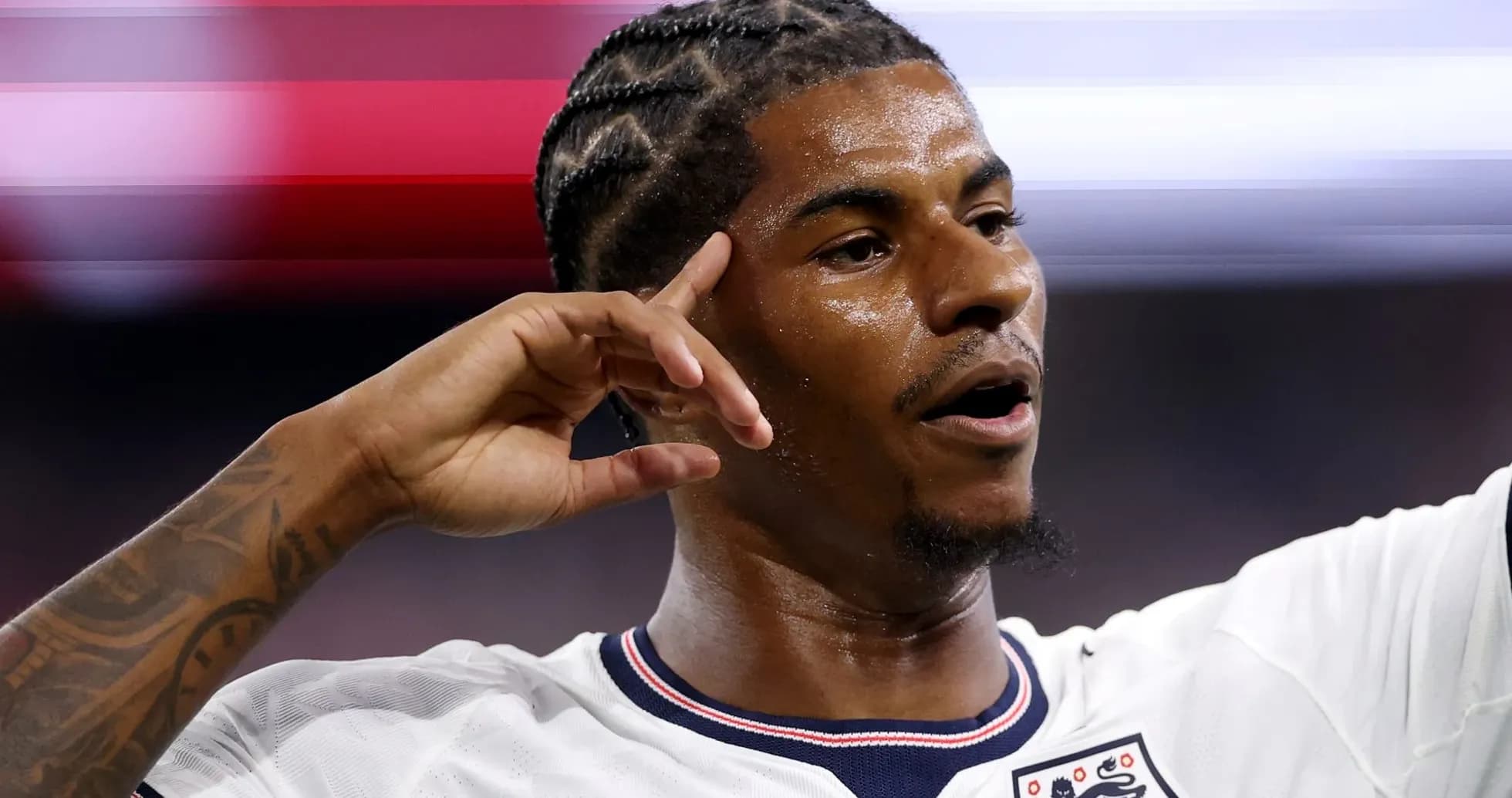
“No, those days are over. Footballers are sensible now. You don't let anything get in the way of football. Marcus Rashford, he has some kind braids, but haircuts don't mean much anymore. So no, I think they'll be concentrating on the football this World Cup, not the hairstyles.”
The image might have softened. The priorities have not.
As children across the country look to Rashford and this England squad for inspiration, the stakes are obvious. Rashford is playing for more than a move, more than a role under Tuchel, more than redemption after a turbulent spell at his boyhood club.
He is playing in a tournament that could reshape his career and, just maybe, rewrite England’s footballing history.





