Manchester United's Striker Dilemma: Lewandowski vs. Youth
At Old Trafford they know all about expensive attacking experiments that never quite catch fire. Too many windows, too many false dawns. Yet the summer of 2025 felt different, and by the end of the 2026 run-in there was finally a sense that Manchester United’s forward line had some structure, some bite, and crucially, some promise.
Matheus Cunha and Bryan Mbeumo settled quickly, their debut seasons under Michael Carrick bringing goals, assists and a sharper edge to a previously blunt attack. Carrick, handed the reins after Ruben Amorim’s departure, guided United back towards the Champions League with a front line that looked less like a collection of names and more like a plan.
At the heart of it, Benjamin Sesko.
A £74 million signing from RB Leipzig.
A 22-year-old who finished the campaign with 12 goals, 10 of them crammed into just 16 appearances in 2026 as United surged over the line.
He is raw, powerful, and clearly nowhere near his ceiling. That is exactly why United are already talking about competition. Champions League nights demand depth. They demand options. They demand players who know every angle of the penalty area.
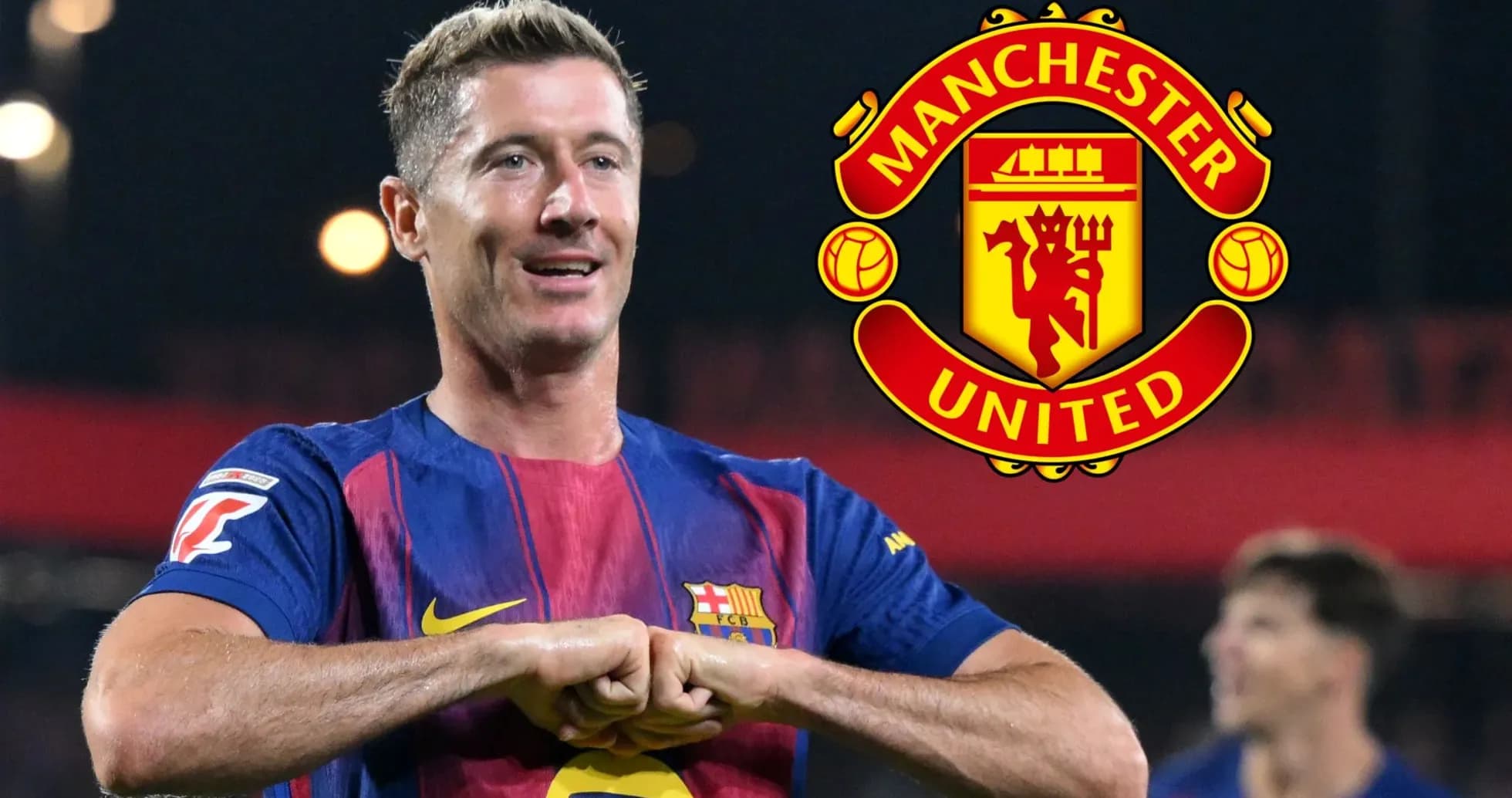
Which is where Robert Lewandowski enters the conversation.
A free agent with 109 Champions League goals. One of the great modern No.9s. Thirty-seven years old, yes, but still a name that carries weight in any dressing room and on any team sheet. For Carrick, the idea of adding that kind of pedigree without a transfer fee is understandably tempting.
Louis Saha can see the logic. The former United striker, speaking to GOAL in association with CasinoNews, did not dismiss the idea. Far from it.
“I would think about it. He is the type of player who has enormous experience in the Champions League. He will definitely help,” Saha said, before pointing to the domestic picture as well. In the Premier League, he argued, Lewandowski could share the load with Sesko, ease the pressure on the younger man and set standards in training and on matchdays.
Saha believes the veteran Pole still has 15 to 20 goals a season in him “in some way or another”. For a free transfer, that kind of return is hard to ignore. The catch is obvious: time.
As Saha put it, the question is not whether Lewandowski can deliver now, but how long he can remain the focal point. Building a project around a 37-year-old is a very different conversation from using him as a bridge to the future. The comparison came quickly: Zlatan Ibrahimovic.
When Ibrahimovic arrived at Old Trafford in 2016, also as a free agent, the narrative was similar. Big name, big ego, big doubts about age. He answered them with 28 goals in his first season, dragging United to the Community Shield, League Cup and Europa League under Jose Mourinho. He gave the club an edge, a snarl, and a trophy habit.
Could Lewandowski do the same?
That is where Saha’s enthusiasm cools slightly.
“The problem I see is just because Lewandowski still has the same style as Sesko,” he admitted. Two penalty-box finishers, two classic No.9s. It raises a tactical headache rather than solving one. Saha talked about a 4-4-2, about the idea of a proper strike partnership, but he struggled to picture Sesko and Lewandowski thriving together rather than rotating for the same role.
In his view, it becomes a question of sharing minutes, not striking up a devastating duo.
That is why, when pushed on the type of forward United really need, Saha’s mind went elsewhere. To a different profile. To a different kind of threat.
“I would prefer someone like, I don’t know if I’m saying something crazy, but Kylian Mbappe, or someone that style,” he said. Not necessarily Mbappe himself, but that blueprint: a mobile, explosive forward who can buzz around a central reference point in the way Mbappe has done off Olivier Giroud for France.
This, Saha argued, is the kind of formula that has always suited Manchester United. The names rolled off his tongue: Dwight Yorke spinning around Andy Cole, a runner buzzing around Ruud van Nistelrooy. One focal point, one mover. One to pin defenders, one to torment them.
“Whatever formation, whatever era, this formula works,” he insisted.
United, crucially, are not shopping out of desperation this time. With Champions League qualification secured and revenue flowing back in, they are expected to have serious money to spend when the window opens on June 15. They do not have to raid the free-agent market for bargains. They can target exactly what they want.
Yet the Lewandowski question will not go away easily. Signing him for nothing would free up funds for other areas — particularly central midfield, where reinforcements are clearly needed — and offer Sesko a masterclass in the art of No.9 play from one of the best to do it this century.
For a club that has burned cash on “ready-made” strikers before, that kind of mentorship has value. If Lewandowski helps turn Sesko into the long-term answer, United might finally break the cycle of overpaying for the next big name up front.
So Carrick stands at an intriguing crossroads: double down on youth and mobility, or bring in a legendary finisher for one last act on the biggest stage. At a club that still calls itself the “Theatre of Dreams”, how long can they resist a striker who has spent a career turning Champions League nights into his own personal show?