Manchester United's Midfield Overhaul: The Arrival of Carlos Baleba
Manchester United have spent more than £150million on a brand new midfield. One big question still hangs in the air.
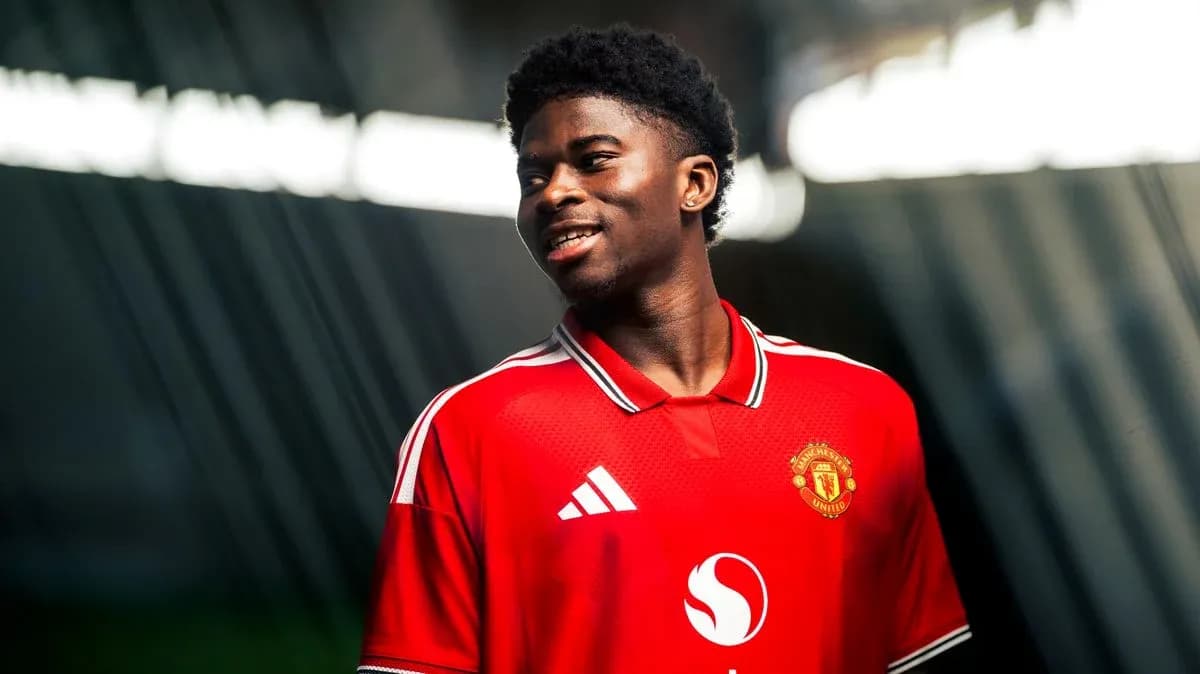
Last summer was about the attack. This one has been about ripping up the centre of the pitch and starting again. Carlos Baleba walked through the door on Tuesday as the third new midfielder of the window, following Andrey Santos and Youri Tielemans.
Baleba arrives from Brighton in a deal worth up to £70m. That figure represents a sizeable climb-down from the Seagulls’ stance in 2025, when they were holding out for north of £100m as United circled and the Moises Caicedo money still burned bright on the balance sheet.
Back then, Brighton could point to Baleba’s explosive 2024/25 campaign and a booming market for elite ball-winners. A year on, the tone has changed. An underwhelming 2025/26 has dragged the price down and turned this into a calculated gamble rather than an all‑in statement.
United are happy to roll the dice.
At his best, Baleba looks like the piece they have been missing for years: a midfielder who can anchor, cover ground and still give you something with the ball. Someone who lets a coach like Michael Carrick flip between systems without ripping out the spine every time.
United’s long search for a backbone
This is not a new problem at Old Trafford. For all the money thrown at the squad, midfield solidity has often been an illusion. Casemiro was meant to be the answer, then ended up spending his final season charging into the box. Manuel Ugarte arrived with bite but brought his own issues in and out of possession.
The numbers from Baleba’s breakout Brighton season hint at why United kept coming back.
In 2024/25 he completed 79 tackles in the Premier League, joint 25th in the division and just behind Casemiro and Bruno Fernandes. That alone doesn’t capture his impact. Per Fotmob, he ranked 14th in the league for interceptions per 90 minutes, averaging 1.6. Among United’s players, only Harry Maguire could better that figure.
He hit the same 1.6 interceptions per 90 last season as well. The volume dropped — 29 interceptions compared to 46 the year before — but the instinct to step in and break play remained.
Rio Ferdinand has made no secret of his admiration. On YouTube, the former United defender broke down what he sees.
“He brings that ability to get around the pitch, that physical prowess,” Ferdinand said. “I think his duels power is great, his press resistance… He can beat the press with the ball but his vertical ball progression with the ball especially… is an asset to this team now and he can do it with real pace. I think he complements every other one of those midfielders he’s coming into the team with. Whoever he plays with, he complements them.”
That is the theory. The reality is that Baleba is coming off a season that did not hit those heights.
The dip, the distraction and AFCON
Critics will not ignore 2025/26. They shouldn’t. For a £70m midfielder, the last campaign matters.
There are, though, explanations that carry weight. Brighton manager Fabian Hurzeler spoke openly about the impact of United’s long-running interest and the size of the offer on a young player still learning the demands of the Premier League.
“For sure, when a young boy reads there is interest from Manchester United with a big, big offer, it might affect him deep, deep (down),” Hurzeler said early in the season. He framed it as part of the development curve: play well, attract a big club, then learn how to live with the noise and stay focused.
He also stressed Baleba’s humanity. The midfielder, Hurzeler said, is “not a machine that if you click on then he always runs and off then he stops”. Managing his emotions, his background and his expectations became part of Brighton’s job description.
On top of that came the Africa Cup of Nations. A mid-season tournament, travel, the physical and mental load of representing Cameroon – it all sliced into his rhythm. AFCON will not interrupt his first year at Old Trafford.
The context doesn’t wipe the slate clean, but it does explain why United believe last season can be the exception rather than the pattern.
Minutes, durability and a different kind of risk
One more wrinkle: Baleba joins United while injured. Supporters may need to wait before they see him imposing himself in the Premier League again.
When he is fit, his recent workload could become a major asset. United’s revamped midfield is talented but hardly battle-hardened over 50-game seasons.
Tielemans managed 1,863 league minutes for Aston Villa last term, with two separate injuries stopping him from building any real momentum. Kobbie Mainoo finished on 1,654 minutes after being used sparingly before Carrick’s appointment. Santos logged 1,255 league minutes for Chelsea, even if his total across all competitions edged past Mainoo’s.
You can read that two ways. Fresh legs, or a core that has not yet proved it can absorb the grind of playing every three days while adapting to new roles and relationships.
Baleba, by contrast, showed he can live in that world. He played 2,673 league minutes in 2024/25 and still found 1,662 last season despite the AFCON disruption in December. United expect the role at Old Trafford to test his durability again. If he stands up to it, Carrick gains the freedom to rotate and protect those around him.
Baleba sounds ready for that challenge.
“I cannot wait to work with Michael Carrick; his experience and knowledge of the game make him the perfect coach to help me to reach the highest level,” he said after the move was confirmed.
The tools are there: the tackling, the interceptions, the power, the ability to carry and punch passes through lines. United have paid for the player from 2024/25 and bet that 2025/26 was a blip.
They have rebuilt their midfield at huge expense. Now comes the real test: can Baleba turn a calculated gamble into the foundation of a new era, or will that big question about United’s centre of the pitch linger for yet another season?