Manchester United's Draw at Everton Raises Concerns
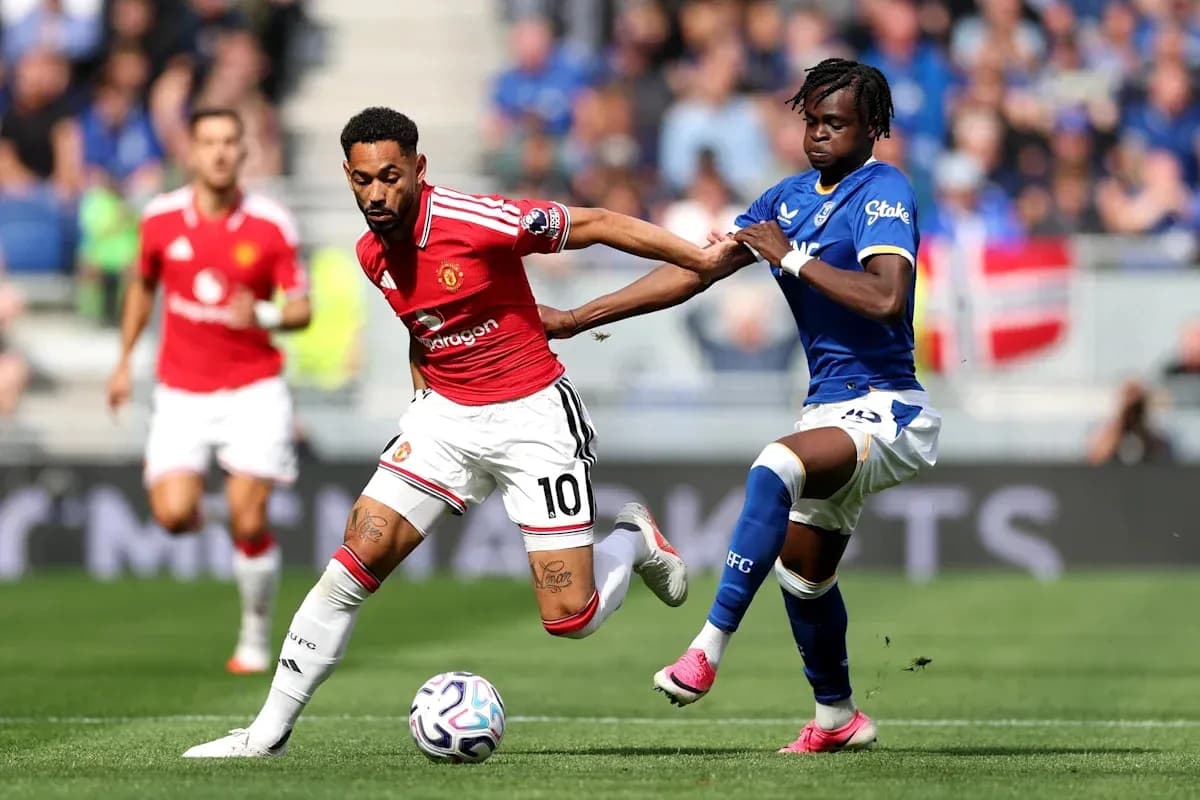
Manchester United walked out of Goodison Park with a 2-2 draw and a familiar feeling: they had the game in their hands. Twice. They let it go. Twice.
They created, they led, they even looked composed for long stretches. But when it came to the details that decide matches – the finish in both boxes – they blinked.
Everything but the finish
United’s attacking play had shape and intent. The movement behind Everton’s midfield lines was sharp, the passing angles were there, and twice they struck after restarts to tilt the game in their favour. On the ball, this wasn’t a side short of ideas.
The problem came where it matters most.
In the final third, United lacked that ruthless presence around the six-yard box. The approach play from three creative forwards patched over some issues, but there was no consistent penalty-area menace, no one repeatedly making those horrible runs that defenders hate tracking. Too often, promising moves fizzled out before the ball reached a truly dangerous position.
That absence of a natural runner in the box still hangs over this team. Benjamin Sesko’s return to fitness offers one obvious answer; Bryan Mbeumo moving back into a central striker role is another. Out wide, the puzzle isn’t solved either. Amad’s absence on the right has been felt, and there’s a clear reluctance to throw Shea Lacey in before he’s ready. Matheus Cunha on the right flank doesn’t look like a realistic long-term option.
Up front, United look one piece short. At the back, they look two goals light every week.
Three games into the season, three times they’ve conceded twice. Six goals shipped to Hull City, Ipswich Town and now an Everton side that has been blunt in attack. That’s no quirk of early-season chaos. It’s a pattern, and it’s starting to define them.
Until key players return to restore some balance, this might require a tactical rethink rather than just waiting for personnel to heal.
Back four on shaky ground
The numbers are damning enough. The performance at Goodison put faces to those statistics.
Everton, hardly an attacking juggernaut, carved out far too many chances. United’s back four never looked settled, and when the pressure rose, the cracks widened.
Luke Shaw actually produced his best display of the season so far. He timed overlaps with Marcus Rashford, delivered some dangerous crosses – one of which Benjamin Sesko buried in the 88th minute, a header that should have been the winner – and threw himself in front of shots when needed.
But his defensive positioning again came at a cost.
On Tyrique George’s 83rd-minute equaliser, Shaw drifted too far inside, leaving the Everton man the space he wanted on the edge of the box. George didn’t hesitate, smashing a shot into the near-post top corner. Arne Lammens got a hand to it and might feel he should have done better, but the ball still ripped past him. United’s lead, once more, was gone.
Shaw wasn’t alone in his struggles. Harry Maguire, Lisandro Martinez and Diogo Dalot all turned in subpar displays. As a unit, they allowed Everton too many looks at goal.
Maguire was fortunate not to be punished in the 42nd minute when Thierno Barry climbed above him and headed over from a position that begged for the net to bulge. Dalot, deep into first-half stoppage time, tried to clear the danger but instead passed the ball straight to Jarrad Branthwaite, who could only fire at Lammens. Later, a wayward Dalot cross in midfield left Shaw and Martinez scrambling to recover and just about doing enough to deflect Brennan Johnson’s effort over.
The pattern was clear after the break. With a 1-0 lead, United retreated. Instead of squeezing the game, they ceded territory and possession, inviting Everton to build wave after wave of attacks. The home side obliged, dominating the ball while United sat deeper and deeper, almost waiting for trouble.
Those “screamers” that saved Everton didn’t come out of nowhere. They came after prolonged pressure that United allowed to build.
Michael Carrick’s changes at fullback only twisted the knife. Mazraoui came on at left back and Leny Yoro on the right, but the reshuffle did not stabilise anything. In the 90th minute, Mazraoui lost track of George again, allowing him another crack at the near post. Lammens saved this time, and the flag went up for offside, but the warning lights were flashing.
United ignored them.
Five minutes into stoppage time, with Everton’s last real attack, Hayden Hackney glided past Yoro too easily and slipped the ball into the box for Kiernan Dewsbury-Hall. Mazraoui’s attempted clearance only pushed the danger to the edge of the area, where Ainsley Maitland-Niles met it with a stunning strike worthy of any Puskas shortlist. Another rocket. Another two points gone.
Carrick’s substitutions will be questioned, but the bigger issue sits deeper. Would keeping Dalot and Shaw on have truly changed the outcome, or are United simply unable to keep the door shut regardless of who plays fullback?
Matthijs de Ligt is edging towards his first appearance since November 2025. His return should help, but how much can one centre-back realistically fix when the entire defensive structure looks brittle? At some point, Carrick may have to consider giving Ayden Heaven more minutes just to see if fresh legs and a different profile can tilt the balance.
Right now, the only constant is that opponents are finding ways through.
Same story, same weak spot
Strip away the positives – and there were some – and one truth remains: Manchester United’s back line is not convincing.
The tweaks in midfield have brought more control and fluency. The forwards are combining well enough to suggest goals will come in bunches once a true penalty-box presence returns. United can build from that.
But every time an opponent runs at them with pace, the whole structure looks fragile.
The fullback positions are at the heart of it. Shaw still offers quality on the ball, but his recovery speed has dipped. When United commit numbers forward, that lack of pace becomes a glaring problem. Dalot faces similar issues on the opposite flank. Too often, the centre-backs are dragged into huge spaces, forced to defend the channels as well as the box.
Smarter, sharper sides will see this on tape and go straight for the jugular. Attack United out wide. Turn the fullbacks. Hit the space behind. Make the centre-backs run.
The squad’s balance reflects the summer’s priorities. The midfield was rebuilt and refreshed; the defense, by comparison, felt like an afterthought. The result is a team that can score, create and entertain, yet still looks one transition away from chaos.
Unless Carrick finds a tactical fix – a different line, a different press, or a different blend of personnel – United could light up the scoreboard this season and still bleed points at the other end.
And with the first Champions League match looming this week, that is a dangerous way to live.