Manchester United's Struggles Under Carrick: A Deepening Crisis
The boos came first. Then the shrug of indifference. By the time Manchester United had stumbled out of the Carabao Cup on Wednesday night, the soundtrack at Old Trafford was a familiar mix of anger and apathy.
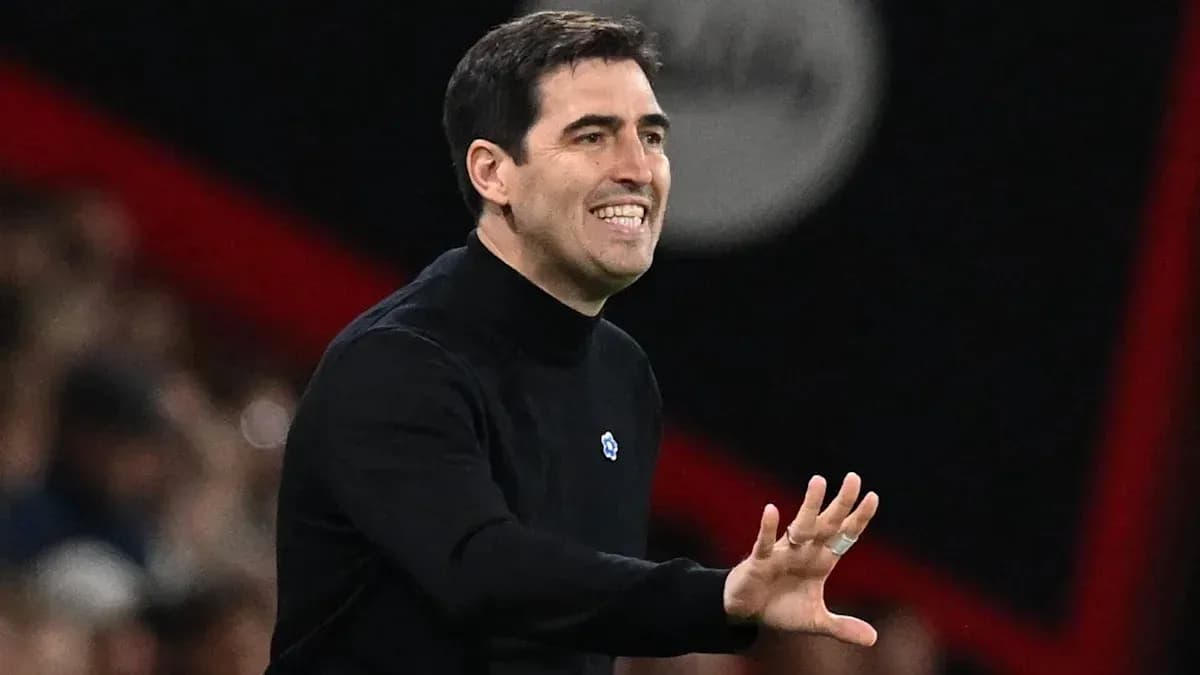
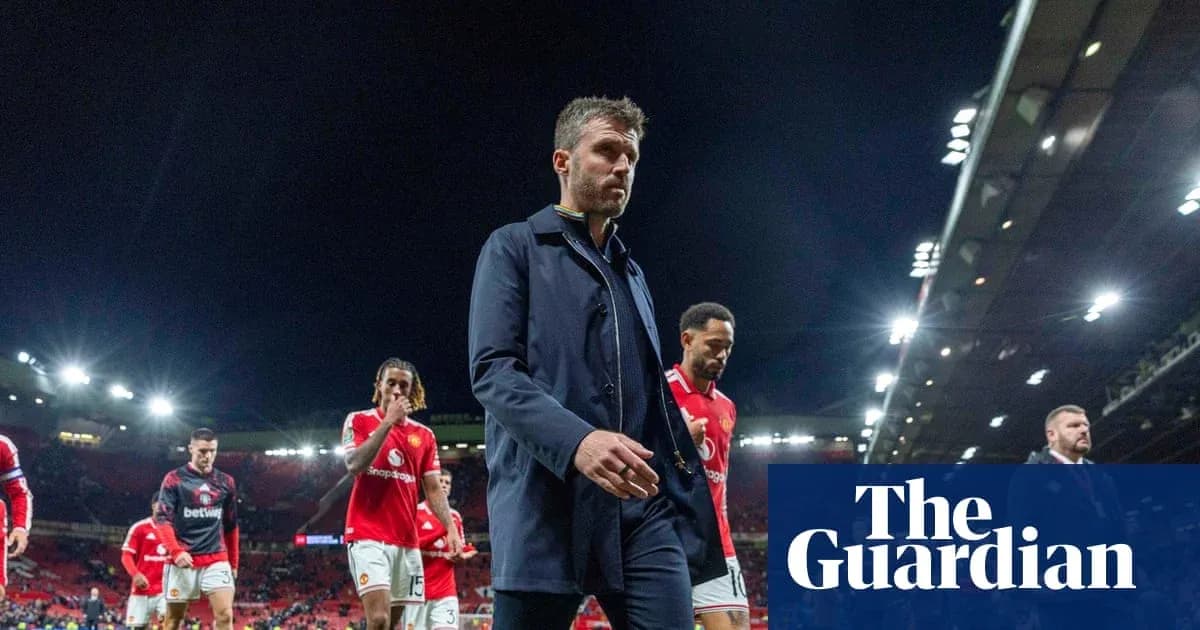
Michael Carrick, expression fixed and sombre, walked towards the tunnel as the jeers rained down. His players followed, heads bowed. Up in the directors’ box, Jason Wilcox did not disguise his displeasure as he made his way out. But the director of football, like those above him, cannot pretend this is someone else’s mess.
This is how football works. Supporters judge in real time. They see what is in front of them, they know when it is not good enough, and they let those they believe they pay tellers’ wages know about it. Carrick and his squad are the public face of the club, the ones who sit in front of microphones and smile for sponsors. They carry the heat.
Yet the problems stretch far beyond the dugout.
Carrick under pressure, but not alone
Carrick only returned to United in January. The long-term strategy, such as it is, has been steered by others, with the head coach slotted into a framework he did not design. That does not spare him the pressure. Lose at Fulham on Sunday and that pressure spikes.
United fans, though, are not naïve. They know exactly who runs their club. Protests against the Glazer family and Sir Jim Ratcliffe have become a regular feature. They understand that not every misplaced pass or tactical misstep is down to the head coach or the players on the pitch. The boos are for the latest performance. The apathy is for the direction of travel.
It is a jarring reality. United are back in the Champions League, yet were outspent in the summer by promoted sides. Years of financial mismanagement have left a club of this size counting pennies and talking about value. Every pound now has to work.
On the pitch, the warning signs are blinding. Racing 2-0 ahead against Brighton inside 10 minutes, then barely laying a glove on them for the remaining 80 and losing deservedly, spoke volumes. Something is broken.
Carrick does not need telling.
Brighton arrived heavily rotated but armed with a vibrant, cleverly assembled squad. Their recruitment team has scoured the globe, signing players this summer from clubs in seven different countries. United, by contrast, restricted themselves to four signings from fellow Premier League sides. Risk-taking, imagination, dynamism – the traits that define Brighton’s model – rarely surface at Old Trafford these days.
The irony? Last summer’s most effective signing, judged on fee and consistency, was Senne Lammens from Royal Antwerp.
A lopsided rebuild
Carrick and Wilcox cannot be judged fully until Carlos Baleba is on the pitch. The most expensive of the three summer buys is supposed to bring the mobility United’s midfield so clearly lacks. Targeting central midfielders made sense after Casemiro’s departure and Manuel Ugarte’s struggles. But it was never the only area in need of surgery.
Inside the club, there was no denial about the overall weakness of the squad. The issue was how they chose to address it. Pouring resources into one area while leaving others exposed felt naïve at the time. It is starting to look reckless.
Buying from within the Premier League usually comes at a premium. The argument is that adaptation time shrinks. Even so, with a left-back shortage looming and Joshua Zirkzee failing to convince, opting for a cheaper alternative than £50m Andrey Santos in midfield might have served the squad better.
Instead, United spent £155m on three players in the same position. Someone, somewhere, has to explain that calculation. Until they do, those outside will continue to speculate while Carrick scrambles for a plan B with Luke Shaw – as many feared – again sidelined.
Silence at the top
Wilcox has not been completely invisible. On 30 October 2025, with United buoyed by three straight wins, he sat down with the club’s in-house media to outline the long-term vision. Two months later, Ruben Amorim was sacked and that vision was torn up.
When results are good, Wilcox talks. When they turn, he disappears from view. Beyond brief statements confirming dismissals, he has shown little appetite to face scrutiny during downturns.
Across Europe, sporting directors regularly front up to the media. In the Premier League, that culture has yet to take hold. At United, the silence only grows louder as the team sits 13th.
Wilcox’s path to this point has been steady. He arrived from Southampton in 2024, initially as technical director, and played a role in retaining Erik ten Hag after an eighth-placed finish. Ten Hag was eventually removed after a poor start to the following season. Amorim came in from Sporting, despite his tactical approach clashing with the squad at his disposal and no budget to reshape it properly.
The outcome was brutal. United slumped to 15th in the league and lost tamely to Tottenham in the Europa League final. When Amorim was dismissed after 14 months, Wilcox was given another chance to get it right.
So far, the evidence is mixed.
Underperformance on the pitch
Carrick is not shielded from criticism. This United side are not playing to their potential, and heavy wins over promoted Ipswich and Azerbaijani side Sabah do little to disguise an underwhelming start.
Defensively, they have been fragile, conceding seven goals in four Premier League matches. Against Brighton, the central pairing of Leny Yoro and Ayden Heaven struggled badly, veering close to inept at times. Up front, the attack has lacked cohesion, the movements disjointed and the threat intermittent.
Wilcox’s reputation was built at Manchester City, where he excelled as head of academy. Those who worked with him there speak highly of his judgement and suitability for that level of role. At United, higher up the ladder, his decisions are under a harsher spotlight.
The potential departure of JJ Gabriel will only inflame frustrations among supporters. Yet, on that front, Wilcox has at least pushed hard to keep the teenager, engaging with the player’s inner circle in an attempt to persuade him to stay. If Gabriel goes, it will not be for a lack of effort from the director of football.
One man carrying the blame
At United, power carries weight – but not always accountability. Ten Hag and Amorim have already paid with their jobs. Others have continued, their influence undimmed.
Carrick and Wilcox are both heavily invested in making this work. Both helped shape this version of United. Only one of them, though, stands in the technical area, hears the boos, and lives week to week on results.
If this slide continues, it feels obvious who will be asked to walk away first.