Manchester United's Battle to Keep 15-Year-Old Prodigy Gabriel
Manchester United are locked in a fight they cannot afford to lose – and the opponent is not Real Madrid, Barcelona, Paris Saint-Germain or Bayern Munich. It’s a 15-year-old called Gabriel.
Those four European giants are circling, ready to move if the chance appears. United, though, are refusing to even entertain the idea. Senior figures at the club are now working overtime to convince the teenager to stay, desperate to stop a prodigy walking out of the door before he has even kicked a ball for the first team.
For Sir Jim Ratcliffe, the stakes are brutal. The INEOS chairman has already been hammered by sections of the fanbase for a string of unpopular calls. Letting a once-in-a-generation academy talent slip away would turn the criticism into open revolt.
A Contract Loophole and a European Escape Route
On paper, United have Gabriel tied down until next summer. In reality, the situation is far more fragile.
He is not a full-time scholar, nor part of the club’s long-term contractual model. When he turns 16 on October 16, he will technically be free to leave – provided he has a European passport. That detail has suddenly become central to United’s future planning.
The club are now digging into his eligibility. Gabriel’s father, Joe O’Cearuill, is a former professional who represented Ireland twice, and his mother has Greek Cypriot roots. Under post-Brexit regulations, that combination could give Gabriel dual nationality and a route out of England to any EU club before he turns 18.
It is exactly the kind of loophole clubs like Madrid, Barca, PSG and Bayern are built to exploit.
United fought off Manchester City to keep him last year. This time, the battle feels different. Colder. More ominous.
Evidence? He was due to train with the first team on Saturday. He didn’t show. He has not been seen at Carrington all week.
History on Hold
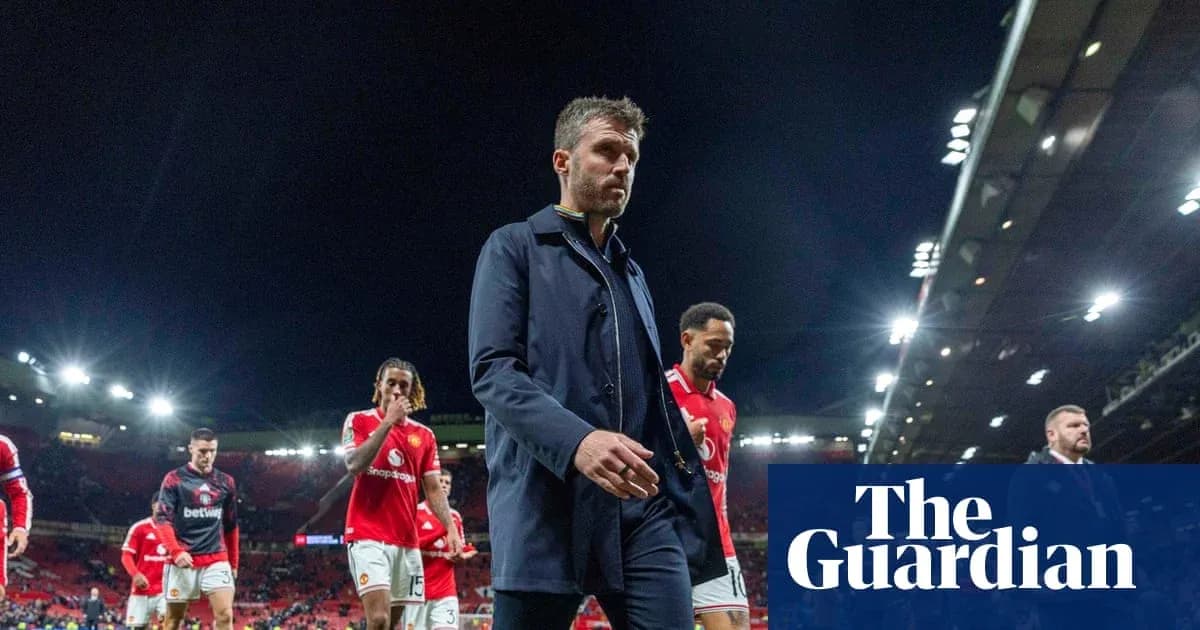
Michael Carrick had planned to include Gabriel in his squad for Wednesday’s Carabao Cup third-round tie against Brighton at Old Trafford. Had he stepped onto the pitch, the forward would have become the youngest player ever to appear for United’s senior side.
That chance has vanished. His name has been scrubbed from the selection.
For a club still searching for the next true superstar from their academy since Marcus Rashford, Gabriel has been the great hope. He joined United at 11 and has lit up every age group since – a two-footed, elusive forward who glides out of tight spaces and punishes any glimpse of goal with ruthless finishing.
Comparisons to Lionel Messi do him no favours, but stylistically he sits closer to Neymar – one of the Barcelona legend’s old team-mates – in the way he dribbles, feints and improvises. He even laces up in the same model of Nike boots as the Brazilian, having signed a lucrative extension with the sportswear giant in March 2025.
The numbers back up the noise. Last season he broke into United’s Under-18s at just 14, another club record, and scored 20 goals in 21 league games. That haul earned him the first ever Premier League U18s Player of the Year award and made him the youngest winner of United’s Jimmy Murphy Young Player of the Year.
He then jumped to the U21s in August and treated it like a playground. On debut against Ipswich, he produced two assists and a delicate chip in a 5-0 rout. A week later, he scored again as United battered Leicester City 4-1.
This is not a normal trajectory. This is a teenager operating several levels ahead of his age group.
The Dowman Effect
That is why the clamour has grown for Carrick to unleash him. United’s senior side are crying out for inspiration in the final third, and Arsenal have just provided the perfect – and dangerous – reference point.
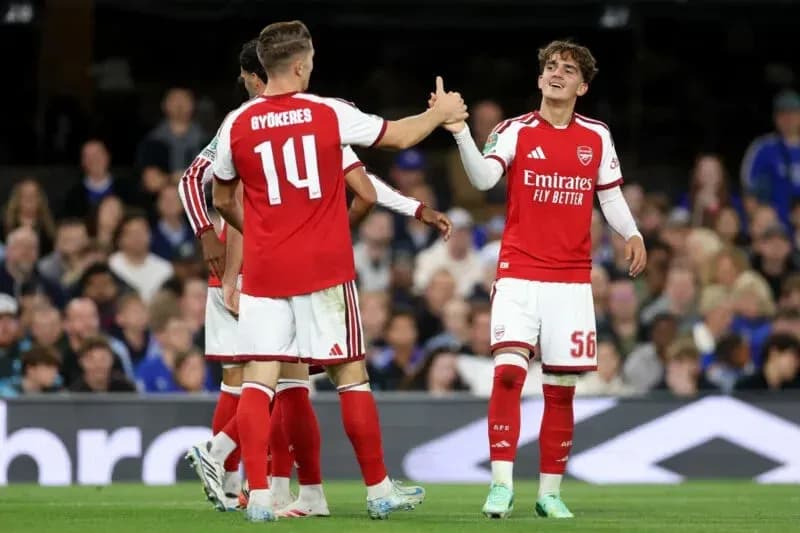
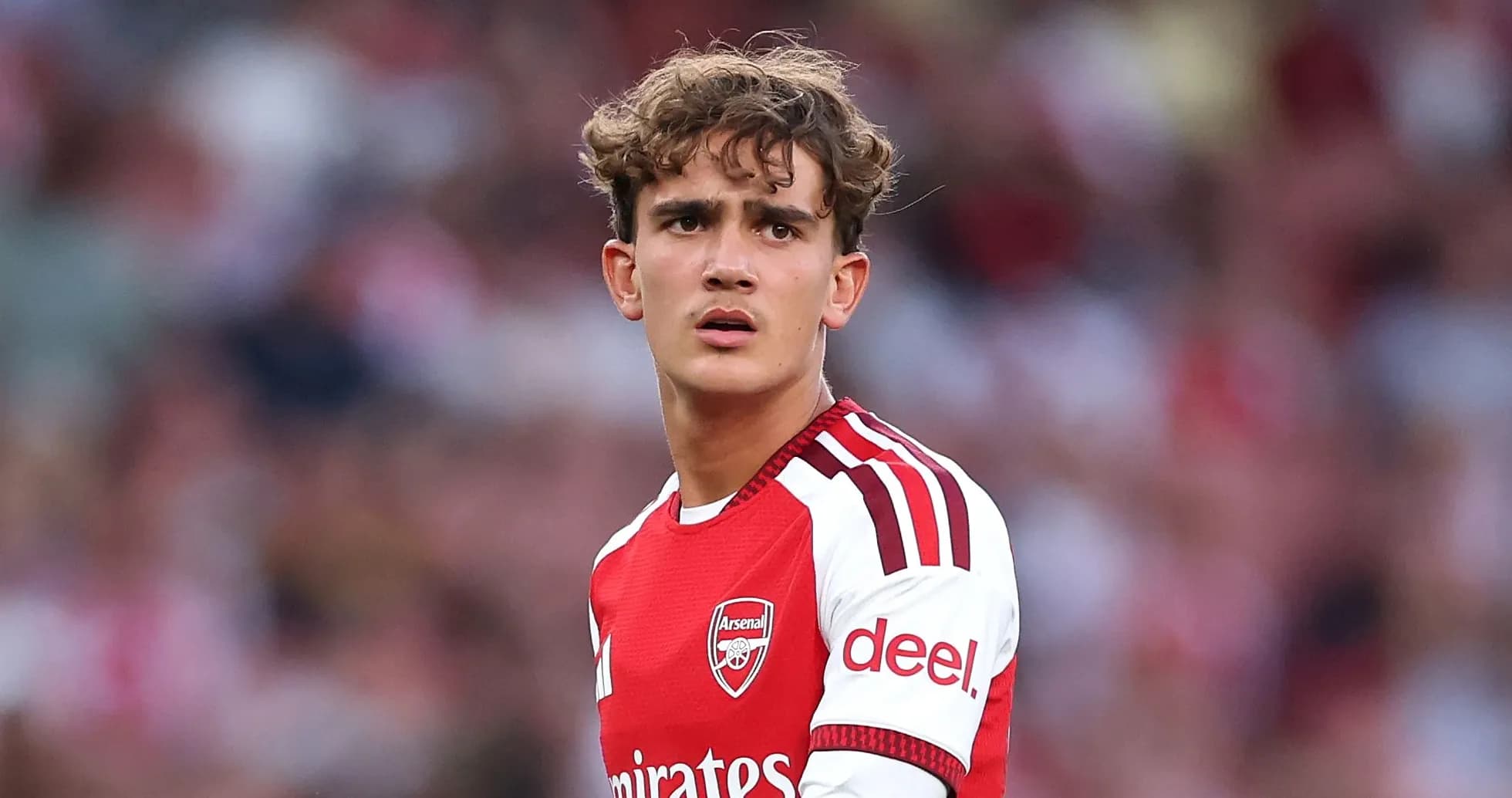
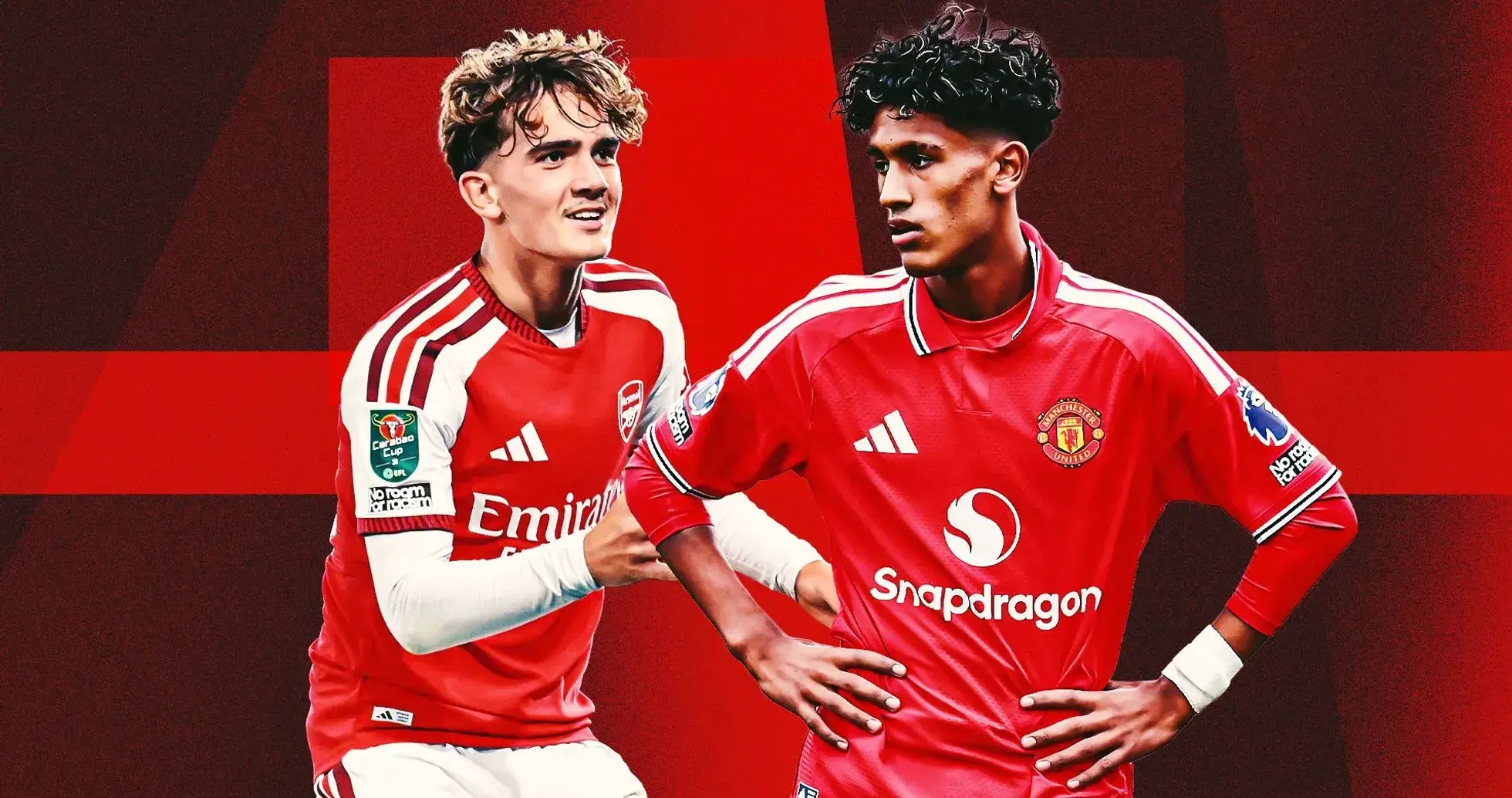
Max Dowman has become the poster boy for the “if you’re good enough, you’re old enough” mantra. Arsenal handed him his Premier League debut at 16, making him the second-youngest player in the competition’s history when Mikel Arteta sent him on against Leeds in August 2025.
Dowman then tore up the record books. In March, he broke James Vaughan’s long-standing mark as the league’s youngest goalscorer with a stunning solo strike against Everton at 16 years and 139 days. In May, he became the youngest title-winner ever. This week, he joined Wayne Rooney in a very exclusive club, becoming only the second 16-year-old to score a brace for a Premier League side in a major competition, as Arsenal beat Ipswich 4-2.
Fourteen senior appearances already. A blend of flair and physical power that has forced Arteta to keep finding minutes for him. The Arsenal manager has even mentioned Dowman in the same breath as Messi – and yet, crucially, he has handled him with care, drip-feeding opportunities.
“We have to look after him. He’s 16 years old. You don’t see that in this league,” Arteta said after the Ipswich tie, stressing the need to choose the right moments in a division that places extreme physical and mental demands on teenagers.
It is an approach that looks like a template. But Gabriel is not Dowman.
The Risk of Rushing
Physically, the contrast is stark. Dowman already carries the frame of a modern Premier League forward. Gabriel does not. He is slight, often the smallest body on the pitch, relying on toughness and sharpness rather than power.
Throwing him into United’s first team now is not just a tactical decision. It is a medical and psychological gamble.
If he explodes on impact, the pressure on Carrick to pick him every week would be immense. United do not have the luxury Arsenal enjoy. Arteta can rotate Dowman in and out of a deep, stable, winning squad. Carrick is managing a team whose performances swing wildly from game to game.
Drop Gabriel after a few dazzling cameos and Carrick gets branded too cautious. Keep picking him and the club risks overloading a teenager still growing into his own body. If Gabriel struggles, the narrative flips again: overhyped, overrated, another academy myth.
So far, Carrick has resisted the noise. Former United academy product Danny Simpson, who broke through under Sir Alex Ferguson, believes that restraint is exactly what the situation demands.
Speaking to GOAL via Free Bets, Simpson pointed to Dowman’s environment as a crucial difference.
He recalled coming into United sides that were already 2-0 or 3-0 up, or stepping into what was effectively a second XI strong enough to challenge for titles. Dowman, Simpson argued, is enjoying something similar – joining an Arsenal team “flying in confidence, full of top, top talent, winning games,” where even the back-up options are “just as good”.
United, he said bluntly, are in a very different place.
Simpson’s view is simple: let Gabriel train, let him feel the environment, let the moment come when it is right – not when social media demands it.
The Lure of Yamal and the Spanish Giants
That logic, though, is harder to sell to a teenager watching his peers conquer Europe.
If Dowman is one reference point, Lamine Yamal is another – and perhaps the one that stings most. Yamal made his Barcelona debut in 2023 at 15 years, nine months and 16 days. He was as skinny as Gabriel, but his speed and intelligence allowed him to avoid the worst of the physical punishment.
La Liga’s rhythm helped. The Spanish top flight leans more towards structure and possession than the frantic transitions of the Premier League. It is a kinder place for pure technicians to grow. Drop Yamal into England at the same age and his rise might have looked very different.
Gabriel will know that. He may well believe Barca or Real Madrid can fast-track him in the same way.
On the surface, it makes sense. In reality, timing is everything. When Yamal broke through, Barcelona were marching towards the La Liga title under Xavi but had crashed out of the Champions League at the group stage. Raphinha, Ousmane Dembele and Ferran Torres were not yet at their current levels. There was space for a teenager to disrupt the hierarchy.
That space has shrunk. Barca now boast Yamal, a peak Raphinha, Anthony Gordon, Karim Adeyemi and Gabriel Jesus in their attacking stable. Across Spain’s capital, Jose Mourinho can call on Kylian Mbappe, Vinicius Junior, Jude Bellingham and Yan Diomande at Real Madrid.
At any of those clubs, Gabriel would still be queuing for minutes.
At United, the path is clearer. Not guaranteed, but visible. If he insists on having everything now, he may end up with less than he could have had by waiting.
United’s Line in the Sand
There is a hard truth at the heart of this saga: Manchester United cannot allow themselves to be held hostage by a boy who is still 18 months away from sitting his GCSEs.
Gabriel is special. That is not in doubt. But the club’s standards cannot bend around one teenager’s impatience or the ambitions of those advising him. Carrick and United’s academy staff have guided him carefully so far. They will keep doing so if he stays and buys into the plan.
If he doesn’t? There is little value in a long, draining stand-off. It will only distract from a season that already needs rescuing.
Right now, Gabriel is acting like a player convinced the world owes him a shortcut. Whether that belief comes from within or from the people around him, it is a dangerous mindset at a club built on graft.
United’s history is littered with homegrown icons – George Best, Sir Bobby Charlton, Ryan Giggs, David Beckham, Paul Scholes, Gary Neville – who fought for every step. Nothing came on a silver platter. The badge demanded excellence on and off the pitch, and they met it.
Ruben Amorim, for all his failings during a short and turbulent spell in charge, cut to the core of the modern problem before his sacking in January. He spoke of entitlement, of players too quick to complain and too slow to endure. “Let’s stay. Let’s fight. Let’s overcome,” he said. “That is the way we can solve things.”
On that, he was right.
If Gabriel cannot absorb that lesson, if he cannot accept that no player is bigger than Manchester United, then the club may have to do the unthinkable and let one of their brightest prospects walk away.
Because the question is no longer just how good he can be. It’s whether he is willing to grow up where greatness is still supposed to be earned, not assumed.