Manchester City Faces Uncertain Future After Key Departures
The Etihad has seen enough great nights to know when something feels different. On this one, after a 3-0 dismantling by Arsenal in the Community Shield, the place did not just look quiet. It looked like it was watching the end of its own golden age.
This was not a routine August defeat dressed up as a warning. It felt like the first hard piece of evidence that the project built over more than a decade is starting to come apart at its foundations.
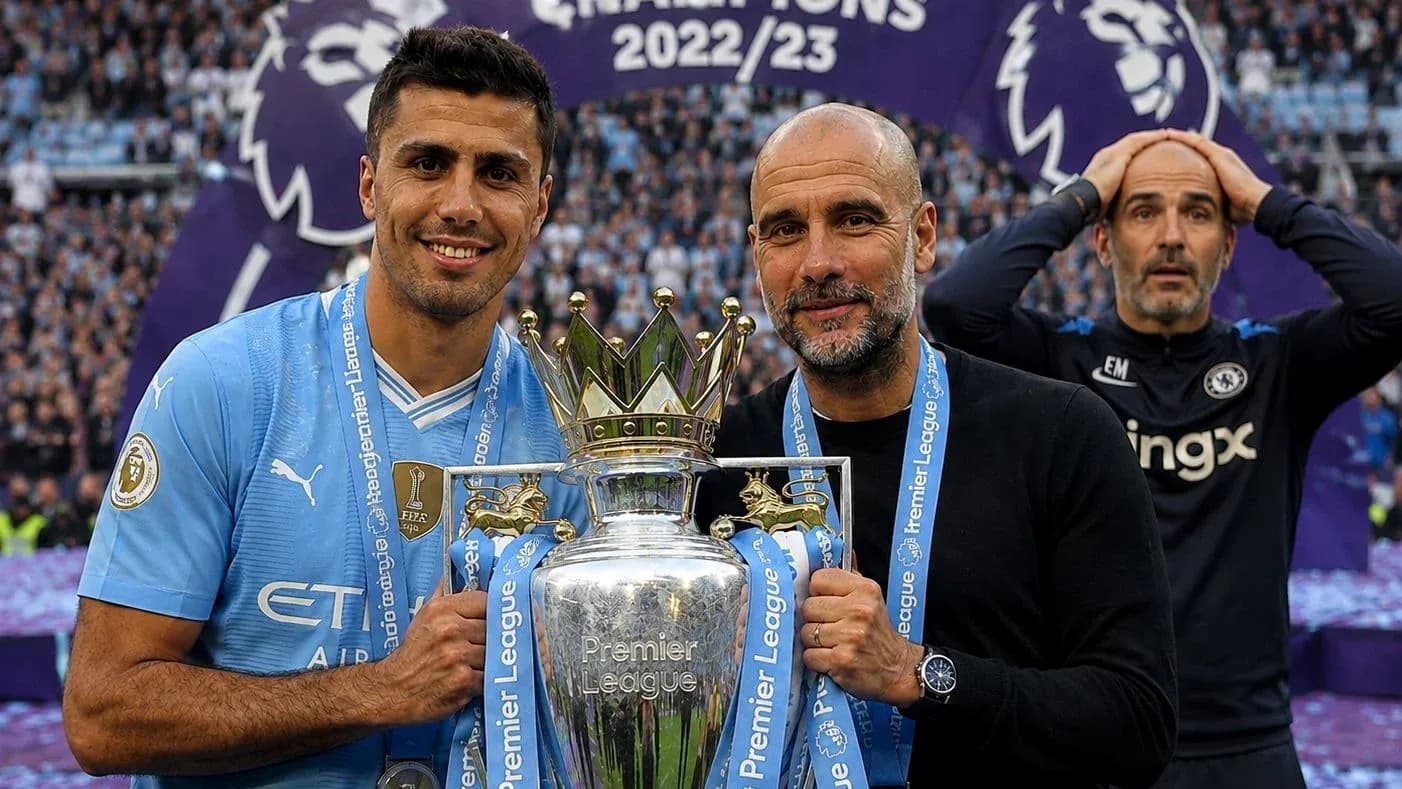
Txiki Begiristain has gone. Pep Guardiola is following him out of the door. Rodri, the heartbeat in the middle of it all, is edging towards an exit of his own. The club that turned itself into a ruthless winning machine now finds itself searching for a new identity, on ground that suddenly feels unfamiliar.
A question that haunts the corridors
The comparison is impossible to dodge. Can Manchester City avoid the post-empire collapse that swallowed Manchester United after Sir Alex Ferguson left? Or does losing three pillars in quick succession drag them back to the starting line, with the weight of trophies and expectations pressing down harder than ever?
That debate is no longer confined to think pieces and pub arguments. It has begun to play out on the pitch.
Whoever inherits this version of City steps into a job that is far more complicated than inheriting a winning squad. Enzo Maresca has discovered that immediately. Decorated from spells with Leicester City and Chelsea, he arrived with a reputation and a clear idea of how he wants to play. Then he ran straight into Arsenal and straight into a wall.
The scoreline – 3-0 – told its own story. City looked like a team at the start of something, not the continuation of a dynasty. The sense leaving Wembley was not of a bad day, but of hard days beginning.
Life after Txiki
On paper, the structure at City still looks solid. Ownership remains unchanged. Ferran Soriano is still in place as the executive brain, overseeing the financial and operational side of the project.
But in less than a year, City have lost the first man who turned their lavish spending into a coherent sporting vision. Txiki Begiristain, arguably the defining sporting director of the modern era, chose to step away quietly more than a year ago. He did not slam the door; he guided the transition, advising his successor Hugo Viana through the early months.
Time, though, has exposed the difference.
Begiristain was the architect who brought in Erling Haaland for around £60 million and Rodri for about £70 million, building a hugely expensive squad while still balancing the books with smart sales. It was targeted aggression in the market, not just raw power.
Viana’s first summer has already passed £130 million on just two signings. The money is there, as always, but the profile and precision of the deals tell a different story.
This is not a minor administrative tweak. It is a change of philosophy. And it is exactly the kind of shift that Manchester United endured when the Ferguson era ended and the clear line of sporting thought blurred almost overnight.
When Pep walks away, the style goes with him
If Begiristain was the architect, Guardiola was the artist who painted over every wall of the club. He is the second pillar to fall.
His tactical work and relentless hunger for trophies are well documented. What truly separated him was something rarer: absolute power and absolute trust. Pep was untouchable. Win or lose, his position was never in doubt. No successor – including Maresca – will inherit that status.
The difference between a manager who knows he is effectively immortal and one who does not shows up in every decision and every performance. Under Guardiola, City did not just have a style. They had certainty. They had an aura that bent opponents before a ball was kicked.
When he leaves, that goes with him. The positional play, the automatisms, the psychological grip on the league – all of it will need to be rebuilt, not simply maintained.
The risk is obvious. United went from Ferguson to a carousel of managers, each trying to restore something that could not be replicated. Years disappeared in a fog of half-plans and expensive mistakes.
City now stare at a similar void.
The Rodri problem
And then there is Rodri. The third pillar. The most dangerous loss of all.
Very few midfielders in world football can drag a team’s level up on their own. With Rodri, City were champions. Without him, they were something else entirely.
His previous absences told the story in brutal clarity. The midfield lost its balance. The press lost its shape. The defence lost its protection. Games that once felt under control suddenly became chaotic.
Rodri’s looming departure is not just another big name moving on. It rips out the stabilising force in the middle of the pitch, the player who stitched Guardiola’s complex ideas into something simple and repeatable for those around him. Replacing that in one window is close to impossible.
History is full of clubs who thought they could survive the loss of their pivotal man, only to watch their level collapse. There is little reason to believe City are immune to that pattern.
A rebuild under pressure
City still possess advantages that most clubs can only dream of: vast financial muscle, world-class facilities, and owners who are not going anywhere. Those strengths matter.
But the three minds who defined the project – Txiki, Pep and Rodri – are gone or going. That changes everything. This is no longer a team fine-tuning a winning formula. It is a club entering a genuine rebuilding phase.
Maresca must do two things at once: create a new identity and deliver immediate results. That combination breaks plenty of managers at big clubs. It is a test he has never faced at this scale.
The defeat to Arsenal does not decide a season. It does, though, strip away the illusion that City can simply glide from one era into the next. The balance, control and inevitability that marked their best years were nowhere to be seen.
If the poor results continue into the league campaign, the pressure will rise quickly. At that point, the temptation will be to rip things up and start again – a near-total rebuild, just as United drifted into after 2013.
The warning is clear enough. United’s post-Ferguson years were a mess of conflicting visions in the boardroom, the dugout and the transfer market. The trophies dried up. The identity blurred. The spending never really stopped.
City have the tools to avoid that fate. Ownership continuity and disciplined financial planning give them a platform their neighbours never quite had. But the first crack appeared against Arsenal, and with it came a legitimate fear: that the success built on Txiki, Pep and Rodri was a one-off storm that cannot be summoned again with the same force.
The months ahead will reveal the truth. Is this just turbulence on the way to a new version of City – or the first steps into a long, dark tunnel their rivals know only too well?