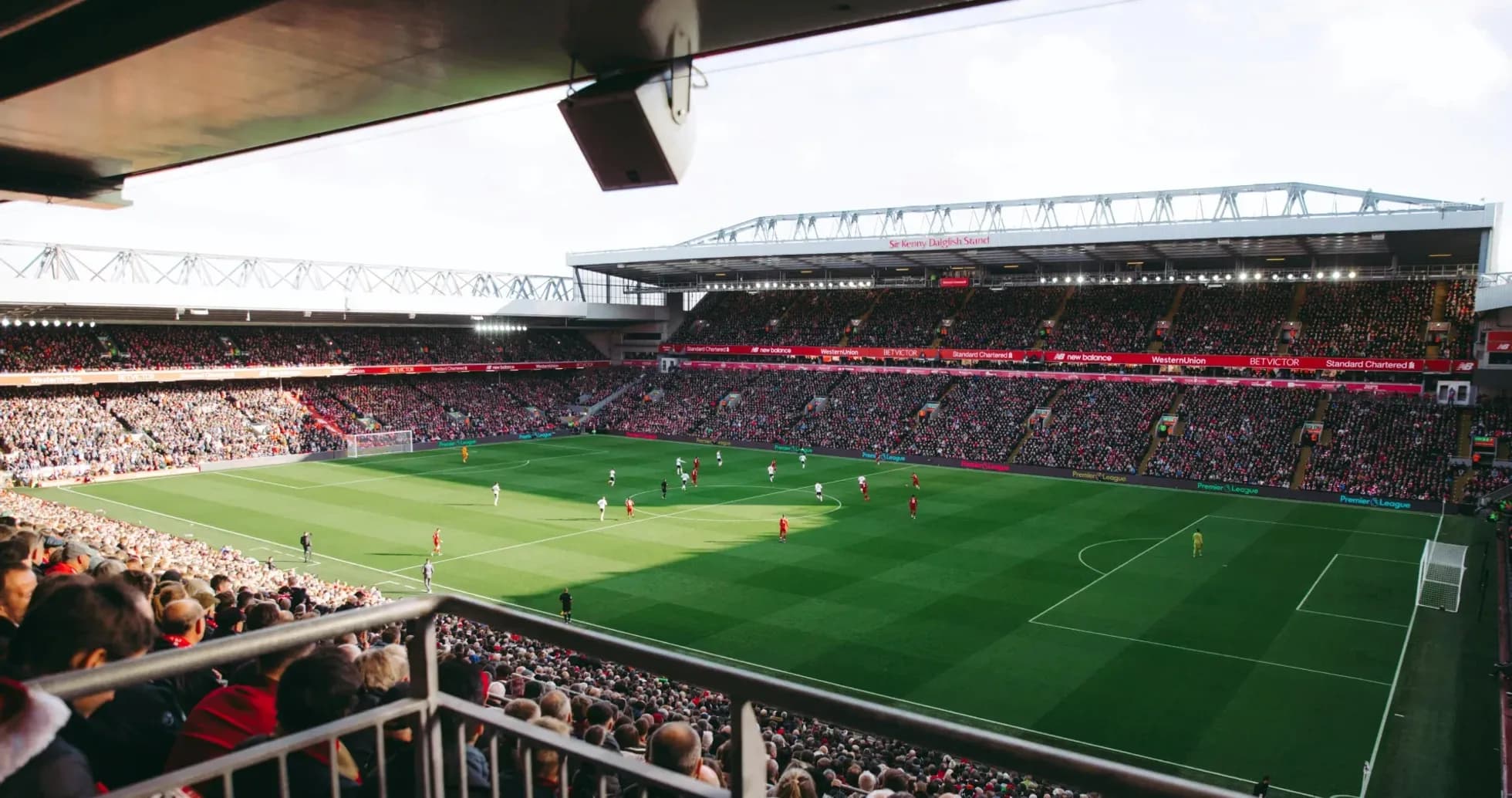
Manchester City vs Sunderland: A Thrilling 5-3 Encounter
Under a pale Manchester sky, the Etihad Stadium staged a wild, eight-goal spectacle that laid bare the contrasting identities of Manchester City and Sunderland. The league leaders emerged 5-3 winners, a scoreline that both confirmed their attacking supremacy and exposed the structural risks Sunderland are willing to take to survive in this Premier League season.
I. The Big Picture – City’s machine versus Sunderland’s ambition
Heading into this game, Manchester City sat top of the table in the Premier League, with 15 points from 5 matches and a goal difference of +8, built on 13 goals scored and 5 conceded overall. At home, they had been ruthless: 3 wins from 3, 8 goals for and 4 against, averaging 2.7 goals scored and 1.3 conceded at the Etihad. Sunderland arrived in 14th, a fragile mid-table presence with 4 points from 5 games and a goal difference of -4 (6 scored, 10 conceded overall). On their travels they had yet to win, with 0 victories, 1 draw and 2 defeats, scoring 5 and conceding 8 away from home.
Both sides lined up in mirrored 4-2-3-1 shapes, but the similarity ended on the tactics board. Enzo Maresca’s Manchester City are already defined by control and vertical threat. In total this campaign, they had not failed to score once, and their biggest home result before this was a 5-3 win – a template they repeated here. Sunderland, under Régis Le Bris, are more volatile: 1 win, 1 draw and 3 defeats overall, with their away form marked by a 5-3 loss that foreshadowed the chaos they would encounter again in Manchester.
The match itself followed that narrative arc. City’s 3-2 half-time lead hinted at Sunderland’s capacity to punch back, but the champions-elect simply had more gears. By full time, the 5-3 scoreline felt like an accurate reflection of City’s relentless attacking weight and Sunderland’s defensive overstretch.
II. Tactical Voids – Suspensions, scars and discipline
Both managers had to navigate significant absences that shaped the tactical landscape. For City, P. Foden was unavailable due to a red card suspension. His season so far had been paradoxical: 2 assists in the league and enough creative influence to sit among the top assist providers, but also a disciplinary record that included 1 yellow and 1 red card. His absence removed a left-sided playmaker who can drift inside, forcing Maresca to lean more heavily on R. Cherki between the lines and A. Semenyo from wide areas to supply E. Haaland.
Sunderland’s issues were deeper and more structural. H. Diarra was ruled out with a hamstring injury, while R. Mandava missed the fixture through suspension after his own red-card-related disciplinary troubles. Mandava’s numbers this season underline what they lost: 360 minutes, 8 tackles, 1 blocked shot and 8 interceptions, plus 24 duels won from 42. He is both an aggressive front-foot defender and a key outlet in build-up, with 151 passes at 86% accuracy. Without him, Le Bris had to reshuffle his back line, turning to K. Danso and D. Ballard as the central pairing, with D. Methalie and N. Mukiele as full-backs.
This was a Sunderland side already walking a disciplinary tightrope. In total this campaign, they had collected yellow cards across every phase of matches, with a notable late spike: 25.00% of their yellows arrived between 61-75 minutes, and 16.67% in each of the 0-15, 76-90 and 91-105 windows. Crucially, they had also already seen a red card in added time – 100.00% of their reds coming between 91-105 minutes. City’s own card profile is different: their yellow-card peak is a late-game surge, with 50.00% of yellows coming between 76-90 minutes, and a single early red between 16-30 minutes.
III. Key Matchups – Hunter vs Shield, and the engine room
The headline duel was always going to be E. Haaland against Sunderland’s patched-together back four. Haaland entered this round as the league’s top-rated forward: 4 goals in 4 appearances, 15 shots (9 on target), and a 7.98 average rating. His duels profile – 30 contests, 17 won – reveals a striker who doesn’t just finish moves but also fights for territory, pins defenders and opens lanes for midfield runners.
Against him, Danso and Ballard had to manage the box, while Methalie and Mukiele were dragged into uncomfortable central positions whenever Cherki and Semenyo inverted. Sunderland’s defensive record on their travels – 8 goals conceded away, at an average of 2.7 per game – always hinted that this would be a mismatch. The 5-3 final score simply confirmed how difficult it is for this back line to hold a high line or defend transitions for 90 minutes against elite movement.
Behind Haaland, Cherki was the conductor. With 2 goals and 2 assists in the league before this fixture, 10 key passes and 91% pass accuracy, he is City’s creative hub in the half-spaces. His ability to receive between Sunderland’s double pivot of G. Xhaka and N. Sadiki and their centre-backs repeatedly forced Xhaka into defensive decisions he would rather avoid. Xhaka’s role as a deep distributor and tempo-setter was compromised by the need to track Cherki, leaving Sunderland’s transitions to rely more on E. Le Fée and N. Angulo drifting inside from the line of three.
On the flanks, Semenyo’s work without the ball was pivotal. He came into this game with 2 assists, 7 key passes and 47 duels contested, winning 15. His high defensive workload and willingness to drive at full-backs helped City lock Sunderland in, especially against Methalie on the left. For Sunderland, B. Brobbey’s lone-forward role was unforgiving: he needed service from wide and from Le Fée, but too often he was isolated against Rúben Dias and M. Guéhi, who could defend aggressively knowing City’s double pivot of E. Fernández and E. Anderson would sweep up second balls.
IV. Statistical Prognosis – What this game tells us going forward
Following this result, the underlying trends only harden. City’s attacking profile – 13 goals in 5 matches overall, with a total average of 2.6 goals scored per game and no failures to score – makes them the league’s most reliable offensive unit. Defensively, 5 goals conceded overall at an average of 1.0 per match shows they do allow chances, but their own firepower consistently outstrips any vulnerability.
Sunderland, by contrast, live on a knife edge. In total this campaign, they average 1.2 goals scored per match but concede 2.0, with their away record particularly alarming: 1.7 goals for but 2.7 against on their travels. Their penalty record is another warning sign of composure under pressure – 2 penalties taken in total, with only 1 scored and 1 missed, a 50.00% conversion rate that underlines their inconsistency in key moments.
Tactically, this 5-3 defeat at the Etihad underlines a simple truth: Sunderland’s ambition to play, to push numbers forward and to trust their front four, can trouble even the best, as the three goals here suggest. But without Mandava’s defensive presence and with a disciplinary profile that skews towards late-game fatigue and errors, they remain vulnerable to exactly the sort of late surges that define City’s dominance.
For Maresca, the story is more reassuring. Even without Foden, City’s 4-2-3-1 looks fully internalised: Donnarumma’s security behind a back four of Gvardiol, Guéhi, Dias and Matheus Nunes, the control of Fernández and Anderson, and the fluidity of Ndiaye, Cherki and Semenyo behind Haaland create a structure that can both suffocate and slice through opponents. In a league where margins often come down to xG and defensive solidity, City’s balance of controlled risk and overwhelming attacking talent keeps them firmly on course at the top, while Sunderland leave Manchester knowing that their survival will depend on tightening the back line without losing the attacking courage that at least keeps them in the fight.