
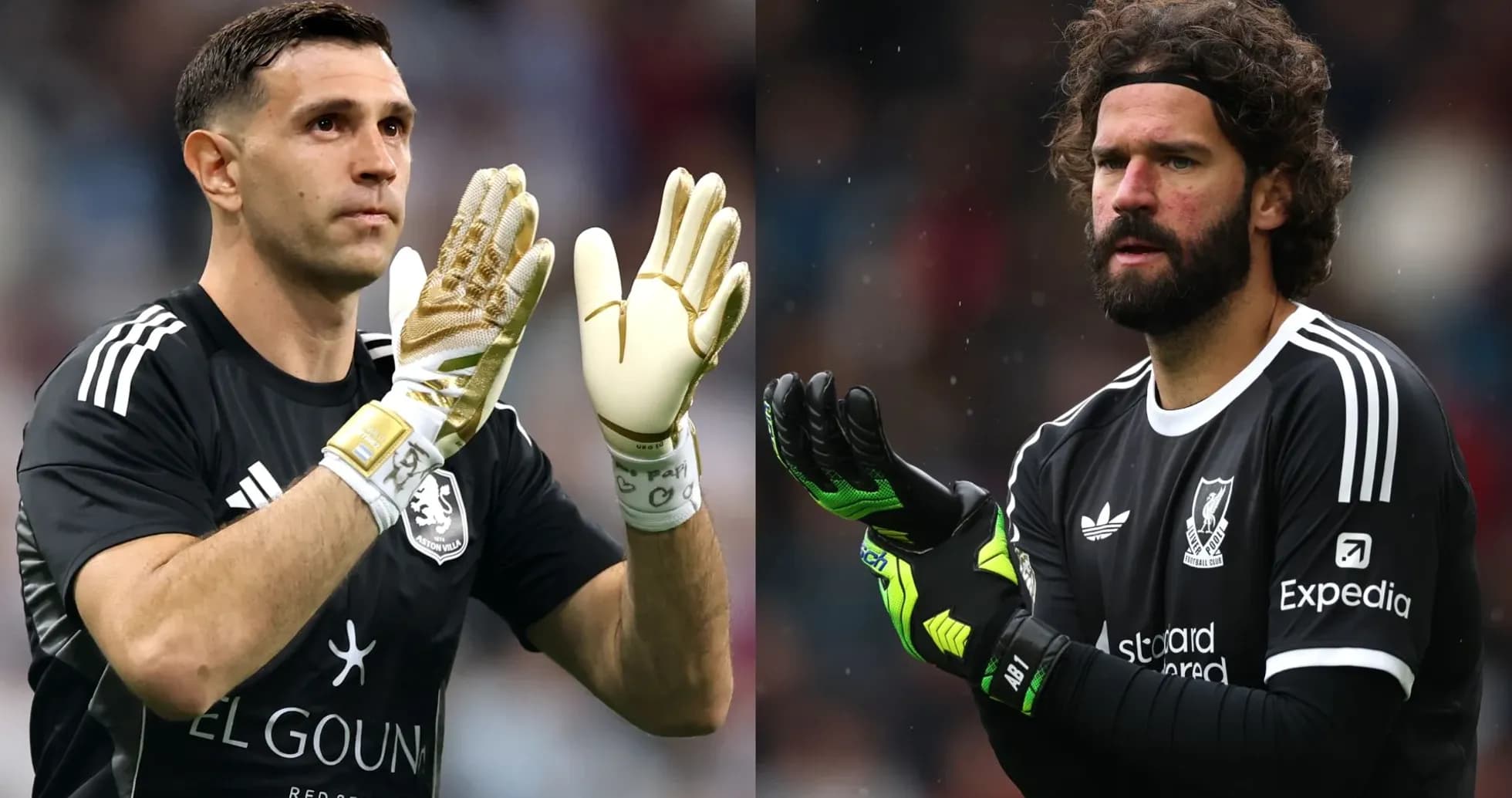
Liverpool's Goalkeeper Dilemma: The Future of Alisson Becker
For six years now, Liverpool’s safety net has worn a beard, gloves and the calmest expression in Anfield. When Alisson Becker arrived from Roma in 2018, he didn’t just solve a problem position. He completed a structure. The defence straightened up, the trophies followed, and the chaos that once lived in Liverpool’s six-yard box quietly disappeared.
Since then, the Brazilian has racked up 333 appearances in all competitions, anchored two Premier League title wins and stood firm on the road to Champions League, FA Cup and League Cup success. He became the constant in a side that evolved around him. Managers changed, systems shifted, but the No.1 stayed exactly that.
Now comes the uncomfortable part.
Alisson is 33. His contract has only 12 months left to run. That clock has triggered a familiar conversation on Merseyside: sell now and cash in, or hold him to the deal and risk losing him for nothing. Interest from leading Serie A clubs has been noted. The idea of Liverpool even listening to offers for their goalkeeper would have sounded absurd not long ago. Today, it’s at least a live debate.
For Brad Friedel, it’s a prospect that cuts deeper than most. The former Liverpool goalkeeper, speaking to GOAL in association with MrQ, didn’t hesitate when asked how seismic an Alisson exit would be – even compared to the looming departure of 257-goal talisman Mohamed Salah.
“From Arne Slot’s perspective, possibly, because I don’t think Arne Slot and Salah were seeing eye to eye,” Friedel said, lifting the lid on a relationship that had begun to grate. “That was starting to become a little bit like oil and water. So maybe from that perspective. But what Salah’s done over the last decade has been truly remarkable, and he will be a huge loss.”
Then he turned to Alisson.
“Alisson would be one of the hardest goalkeepers to replace in global football if he were to go. I think it’d be very difficult for Liverpool to replace him.”
This isn’t the usual polite praise for a departing star. Friedel spoke as both a former professional and a fan who knows exactly what a good goalkeeper looks like in front of the Kop.
“I would hate to see him go, professionally speaking, and as a Liverpool supporter, I would be particularly devastated if he left because of how good he’s been for the club. He never brought the club into disrepute. Held his hand up if he made a mistake, which was not many mistakes. He is one of the best 1v1 goalkeepers that has ever played the game.
“I think those types of goalkeepers, even as they decline in their age, even with maybe a couple of injuries, are still better than almost everyone in the world. I think that replacing him would be tough, really tough.”
That’s the dilemma facing Liverpool’s new regime. Letting Salah go is emotionally brutal, but structurally manageable: elite wide forwards exist, and Liverpool have a track record of finding them. Replacing a goalkeeper who has redefined the team’s defensive ceiling is another challenge entirely.
If Liverpool are pushed into that corner, where do they turn?
One name already floated is James Trafford. The 23-year-old England international, on the books at Manchester City, finds himself wedged behind Gianluigi Donnarumma in the pecking order and has long been talked about as a future No.1 at a major club. On paper, he fits the profile: young, talented, homegrown, comfortable with the ball.
Friedel isn’t dismissive. But he is wary.
“Possibly,” he said when asked if Trafford could be a solution. “But you need someone with a skin of leather, you need someone who’s going to be able to play in all the big matches. You need someone who expects to win the Champions League, not just play in it. Expects to win the Champions League, win the Premier League, win the FA Cup, and win the League Cup. It’s a different type of mentality that you need when you’re a goalkeeper at these top clubs.”
That word – expects – is doing the heavy lifting. At Liverpool, merely competing is never enough. The goalkeeper lives with that weight more than anyone. One mistake can define a season. Alisson has thrived in that environment, often looking as if he’s playing a different, calmer sport to the 21 others on the pitch.
“And it’s not easy to find, you know, and Trafford’s a really good goalkeeper. I like him a lot, but that’s also a lot to load onto him,” Friedel added.
So he looked elsewhere. Towards a profile, not a prototype.
“Maybe the likes of an Emi Martínez, someone like that, that can take all the games all the time, any criticism, any plaudits, and they know how to deal with it. There aren’t many out there that you can just pinpoint and say: ‘He’s our guy’. That’s a hard decision.”
That’s the reality of life after a great goalkeeper. You don’t just sign “the next Alisson”. You sign a different personality, a different style, and hope the dressing room, the back four and the fanbase bend around him quickly enough.
Liverpool have lived this before. The years before Alisson were defined by anxiety every time the ball went near their own penalty area. Under him, that fear vanished. The back line pushed higher. The midfield pressed more aggressively. The forwards attacked knowing the man behind them would win the duels that really mattered.
Take that away, and you’re not just swapping one player for another. You’re tugging at the thread that has held a winning era together.
So Liverpool stand at a crossroads. Keep faith with a 33-year-old who still plays like one of the world’s best, risk losing him for nothing, and squeeze every last drop out of this partnership? Or cash in now, dive into a market with precious few elite options, and hope their recruitment magic works again?
One way or another, the decision on Alisson will say as much about the club’s ambition as any marquee signing this summer.





