Liverpool fans blame Hughes as transfer window chaos unfolds
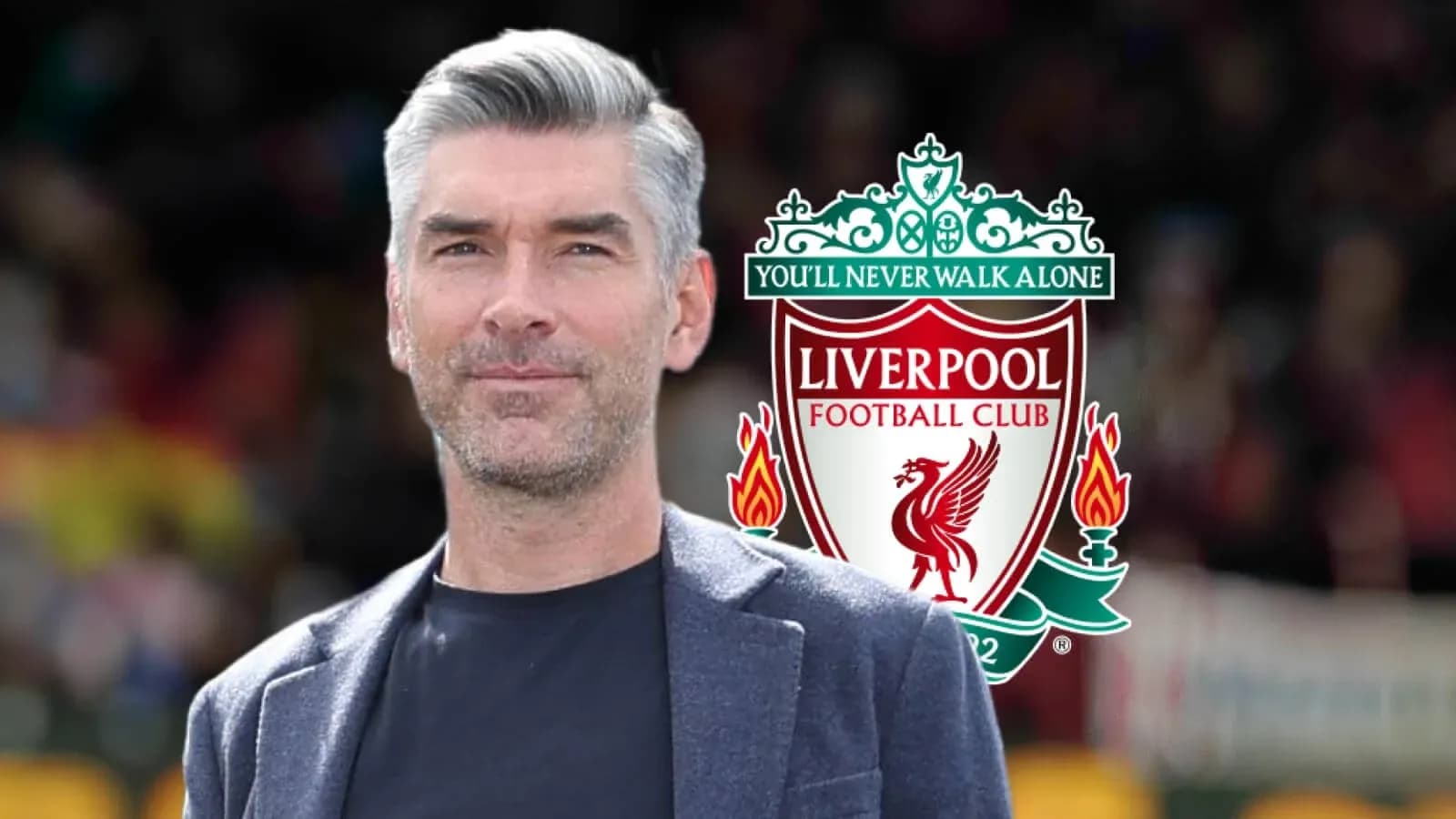
Liverpool’s summer, once sold as a reset, already feels like a reckoning. The champions have stumbled through a chaotic window, and supporters are no longer whispering their frustrations. They are naming names. Chief among them: sporting director Richard Hughes.
The club that swaggered to the Premier League title a season ago is now being accused by its own fans of behaving like “headless chickens” in the market. The mood has flipped, violently.
From statement signings to a sudden sell-off
The anger comes with context. Liverpool’s last window was a flex. Fresh from winning the league, the transfer committee detonated one of the most aggressive sprees Anfield has seen in a decade.
Florian Wirtz and Jeremy Frimpong arrived as Bundesliga champions. Hugo Ekitike was billed as a pointed message to Newcastle. Then came Alexander Isak, at the time widely viewed as the most complete centre-forward in the division. Rival fans talked about damage limitation before a ball was kicked. Liverpool were being handed the title in pre-season conversations.
Reality bit. The season never lived up to the noise.
Now the pendulum has swung violently the other way. This time, Liverpool are selling freely and, in the eyes of many supporters, without a plan. Even Stefan Bajcetic has been moved on. Behind the first-choice midfield three, fans are asking who is left. They see no replacement for Mohamed Salah, a generational forward whose departure was telegraphed months in advance. Six months to plan, they say, and nothing resembling a like-for-like heir.
The tactical shift under Andoni Iraola only deepens the anxiety. With full-backs who “attack like defenders and defend like attackers”, as one fan put it, the need for a proper holding midfielder feels glaring. Yet that position remains unfilled.
From eFootball obsessives to ex-players, from pundits to the current captain, the consensus is the same in the stands and on the sofa: Liverpool need a defensive midfielder and two wingers. They have none of them.
“Get out of our club”: anger at the top
So the frustration has a target. Hughes and the committee he fronts are being hammered for failing to cover what supporters see as the basics of squad building.
“Richard Hughes and co. would have been fired in any other equivalent jobs,” wrote one Liverpool fan from Mumbai, accusing the hierarchy of leaving the manager “handicapped” in the final days of the window. Another, a long-time reader from Limerick, admitted he is “worried even at this early stage” and struggling to recognise a club that once prided itself on smart, decisive work in the market.
The list of failed pursuits has become a running joke. Bradley Barcola. Yankuba Minteh. Ismaïla Sarr. Names linked, deals discussed, nothing done. One supporter painted a picture of Liverpool and Paris Saint-Germain executives engaged in a “steamy affair in Paris hotels” in the name of the Barcola talks, four months of “discussions” and “proposals” with nothing to show.
For some, the only comfort is in the profile of a quieter signing like Victor Muñoz – a player seen as a classic Liverpool punt: sensible fee, upside, low pressure. But that’s a subplot. The main story is an elite squad suddenly stripped of depth and edge.
The mood has shifted from title talk to damage limitation. Some supporters are already lowering expectations, vowing not to blame Iraola when teams “tear through our midfield” and instead directing their fury upstairs. The season, one fan fears, is heading for a “long Spurs-like, Wenger-Arsenal like” drift unless the manager conjures something close to a miracle.
Villa fans question the Chelsea pipeline
The unease is not confined to Merseyside. At Aston Villa, there is a different kind of dread – the sense of a project being quietly hollowed out while a rival grows stronger.
Villa’s dealings with Chelsea this summer have left some supporters baffled. Out the door has gone Morgan Rogers, a player still raw but regarded as a genuine game-changer on his day. The fee was huge and inflated by the “English premium”, but he had time left on his deal and, crucially, room to grow.
More worrying to those in claret and blue is the departure of set-piece coach Austin MacPhee. Inside Villa Park, his value was no secret. Under his guidance, Villa became a menace from dead balls. Youri Tielemans’ opener in the Europa League final was held up as a textbook example of his work, with players often sprinting to celebrate with him after rehearsed routines came off.
Then there is the spectre of Emi Martínez. The Argentina goalkeeper has not left, but the signing of Zion Suzuki and Chelsea’s current issues in goal have supporters bracing themselves. Martínez, twice named the world’s best by FIFA, remains at his peak at 33. If Chelsea do move, it would be a transformative signing for them and a brutal loss for Villa.
Coming the other way? Names that do not convince everyone. Alejandro Garnacho is being viewed by at least one fan as another Jadon Sancho – a winger with talent but no guarantee of end product. Nicolas Jackson, signed by Chelsea for £32m, is now being valued at around double that. Some Villa supporters are struggling to see the logic.
In trying to smash through the glass ceiling and become a regular Champions League club, Villa are, in the eyes of their own, selling their best assets to direct rivals while paying big money for players those rivals are willing to discard. “The maths ain’t mathing,” as one West Brom-based Villa fan put it, even as he stressed his full backing for Unai Emery.
The warning is stark: if Villa truly want to sit at the top table every year, they cannot keep strengthening the very clubs they are trying to chase down.
Emery, United and the managerial carousel
Emery’s name is now circulating beyond Villa Park. With questions already being asked about Manchester United’s long-term direction under Michael Carrick, some observers see the Spaniard as the obvious answer if the current experiment fails.
His track record is clear: he builds collective strength greater than the sum of the parts, something United have conspicuously lacked since Sir Alex Ferguson retired. He wins trophies. He structures chaos. And if Villa continue to sell key players, some wonder how long his patience will last.
For United fans, though, there is a split-screen reality. One section of the support is raging at recent performances. Another is quietly content with the direction of travel.
United’s mixed mood
The 3-0 defeat to Hull bruised optimism, but it also offered a dose of realism. United have finally ripped up and rebuilt their midfield. That’s exciting. It is also destabilising.
The new-look engine room needs time. The players must learn each other’s movements, and Carrick must work out how to use them. One fan, writing in, highlighted a simple tweak: don’t use Tielemans in a double pivot – he doesn’t have the legs – but as a rotation option for Bruno Fernandes to keep both sharp.
United still need a left-back and a back-up striker before the window shuts to feel complete. Even then, trophies may be a stretch this season. But there is a sense, among some, that the club is at least pointing in the right direction. The squad feels more likeable. Marcus Rashford is back and, they hope, can be rebuilt into a force again.
Elsewhere in the fanbase, the conversation has turned more existential. One supporter, responding to a fellow Red dreading his 40th birthday, framed football as an emotional crutch that has stopped working. The team no longer offers the “moments that make us feel alive”. The advice? Go back to the gym. Pick up an old sport. If United can’t deliver joy, find it elsewhere.
Money, Saudi and the cost of chasing the dream
Beyond club politics, there is a wider debate simmering about money, morality and the toll of professional sport.
Saudi Arabia’s growing pull remains a fault line. Some fans refuse to blame players for taking life-changing money, especially those who grew up with nothing. But they also point out that, for many of these footballers, the first Premier League contract already transformed their lives. The extra millions are marginal gains in Wilmslow, life-altering in the favelas.
There is admiration for players like N’Golo Kanté, who drive modest cars and pour huge chunks of their wealth into helping others. There is less patience for those seen as cashing in with little thought beyond their own comfort.
And then there is the darker side of the sporting machine. The recent crash involving Raheem Sterling and the NFL’s stark report on brain damage – affecting one in four former players – have forced some to confront the human cost of our obsession with elite sport.
The numbers are brutal. Only a tiny fraction of those who chase the dream make it. One in tens of thousands, by some estimates. Many who fall short rebuild their lives. Many do not. The closer you get, the harder the fall if it doesn’t happen.
To reach the top demands more than talent and work. It demands luck – the right coach, the right moment, the right body at the right time. For every Sterling living large and crashing a Lamborghini, there are countless anonymous players who gave everything, got chewed up by the system and spat out into a world that has already moved on.
The game rolls on, transfer windows open and close, sporting directors rise and fall. The question, for Liverpool, Villa, United and everyone else right now, is simple: who is really in control of the chaos – and how long will supporters keep accepting the cost of getting it wrong?