Leeds United's Revival: From Relegation Fears to Premier League Contenders
Leeds United, back near the top of the Premier League, feels like a name pulled from another era. Third place after four games, Elland Road humming, and the table offering a glimpse of the early 2000s, when Leeds routinely lived among the elite.
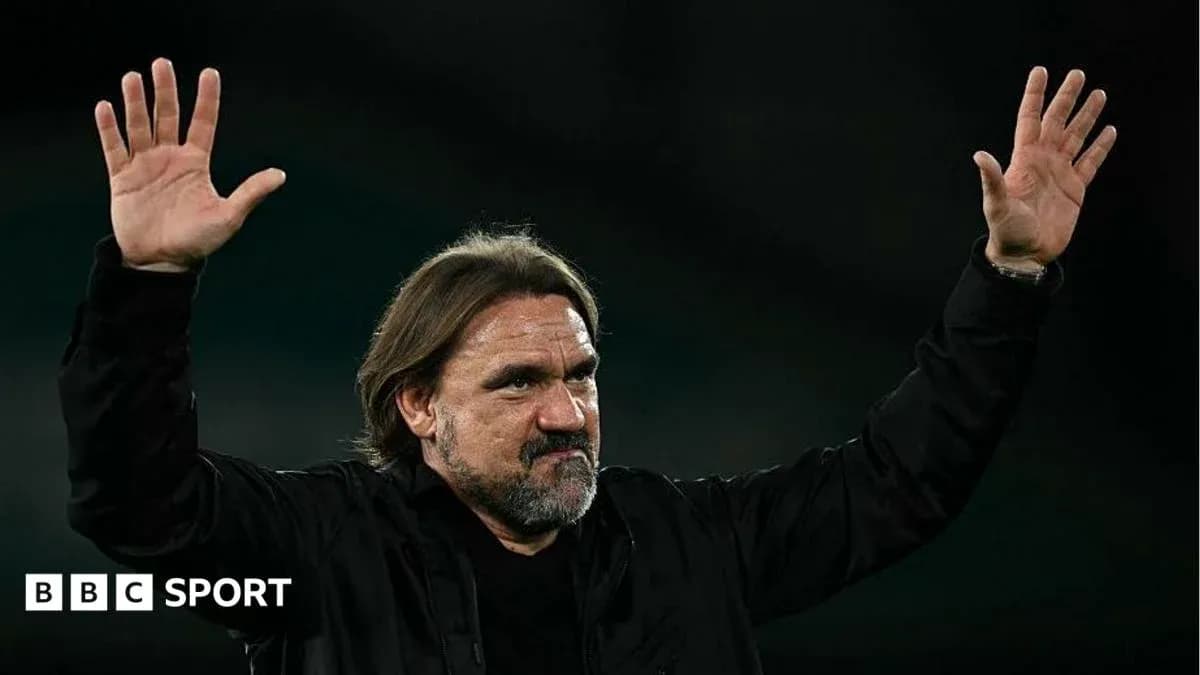
Monday night’s 4-1 dismantling of Newcastle United did more than stretch Daniel Farke’s unbeaten start. It confirmed this is Leeds’ best opening to a top-flight campaign since David O’Leary’s side in 2001-02. Eight points from four games tell one story. The real tale started nine months ago.
The night everything flipped
On 29 November at Etihad Stadium, Leeds trailed Manchester City 2-0 at half-time and looked exactly like what they were: a newly promoted side in danger of being overwhelmed. Farke ripped up the plan.
Out went the back four. In came a back three.
The response was instant. Leeds fought back to 2-2, dragged City into a contest, and only succumbed in stoppage time. The result stung. The performance changed their season.
From the very next league game – a home win over Chelsea on 3 December – Leeds have lost just five of 29 league fixtures. Stretch that run into a hypothetical table and they sit fifth over that period. This is not a flash in the pan. It’s a sustained climb built on a tactical gamble that stuck.
Building a taller, tougher Leeds
Farke and new sporting director Adam Underwood went into the 2025 summer window with a clear brief: Leeds had to grow up, and they had to grow taller.
They targeted size and presence for the Premier League’s aerial battleground. Of the 10 permanent signings, eight stand over 6ft: Jaka Bijol, Sebastiaan Bornauw, Dominic Calvert-Lewin, James Justin, Lukas Nmecha, Noah Okafor, Lucas Perri and Anton Stach. Not a coincidence, as Farke openly admitted in July 2025.
Joining a league where Leeds had one of the smallest squads physically, he wanted a side that could survive and win in both penalty areas. Defend crosses. Attack them. Turn set-pieces from a weakness into a weapon.
This summer, after losing centre-back Pascal Struijk to Brighton, Farke doubled down. In came World Cup defenders Tarik Muharemovic of Bosnia-Herzegovina and Switzerland’s Nico Elvedi to reinforce the back line.
Muharemovic did blot his copybook with the mistake that allowed Bazoumana Toure a late consolation for Newcastle, but that moment sits against an otherwise composed start. He has played every league minute so far, shielded by and in turn protecting 6ft 5in England international James Trafford, who became the most expensive British goalkeeper in history for the second time when he arrived from Manchester City for an initial £40m.
Add Harry Wilson, signed smartly on a free from Fulham after standing out last season, and Leeds’ recruitment looks less like a gamble and more like a coherent plan.
From relegation fears to resilience
It is easy to forget how close this project came to cracking.
Leeds lost eight of their first 13 league games in 2025-26. They sat 18th, staring at a relegation fight they were supposed to have left behind. Reports swirled that Farke, who had edged Burnley to the Championship title the previous year, was on the brink.
The shift to a back three steadied the defence first. Among clubs who have been ever-present in the division since the change, only Arsenal, Manchester City and Nottingham Forest have conceded fewer goals. That’s the platform. But the real transformation has been at the other end of the pitch.
Calvert-Lewin, unshackled
No player has embodied Leeds’ evolution better than Dominic Calvert-Lewin.
As a lone striker in Farke’s earlier 4-3-3, he often looked isolated, feeding on scraps with wide players too far away to help. Since the switch to a system that regularly gives him a strike partner, he has looked like a centre-forward reborn.
Since last December, only Erling Haaland, Ollie Watkins and Joao Pedro have scored more Premier League goals than Calvert-Lewin’s 14. That is elite company, and it hasn’t happened by accident.
Farke alternates between 3-4-3 and 3-5-2, but the principle stays the same: bodies close to the No. 9. Calvert-Lewin has linked superbly with Lukas Nmecha and Noah Okafor, the latter on a rich run of seven goals and one assist in his last 11 league outings.
“I enjoy having bodies around me,” Calvert-Lewin has admitted. It shows. His movement is sharper, his hold-up play cleaner, his penalty-box instincts back in focus with runners buzzing off him instead of leaving him marooned.
Europe on the horizon?
Crystal Palace arrive at Elland Road on Saturday, and Calvert-Lewin has history in his sights. Score again, and he becomes the first Leeds player to net in six consecutive home league games since Arthur Hydes in 1932. That is the scale of what he is doing in a white shirt.
He missed out on England’s World Cup squad, but with three goals in all competitions already this season, his timing for an international push could not be better. Thomas Tuchel names his squad for a Nations League quadruple-header on Friday. Calvert-Lewin has done everything he can to force his way back into that conversation.
Leeds, meanwhile, sit third, tougher, taller and far more streetwise than the side that flirted with the drop less than a year ago. The back three has given them structure, the recruitment has given them muscle, and their centre-forward has given them a cutting edge.
They have not played European football for 24 years. With the table starting to take shape and the momentum unmistakable, the question now is simple: can this Leeds side turn a throwback into a new era?