
Klopp Dismisses Germany Coaching Talk After World Cup Exit
Germany’s World Cup ended in the cold silence of a penalty shootout in Boston. What followed was the familiar noise of a nation searching for answers – and a new name for the dugout.
Jurgen Klopp wants no part of that conversation. Not now.
The four-time world champions crashed out in the round of 32, beaten 4-3 on penalties by Paraguay after a tense 1-1 draw that stretched through extra time and into sudden death. It was Germany’s first shootout defeat at a World Cup, a brutal new line in a tournament record that once radiated certainty.
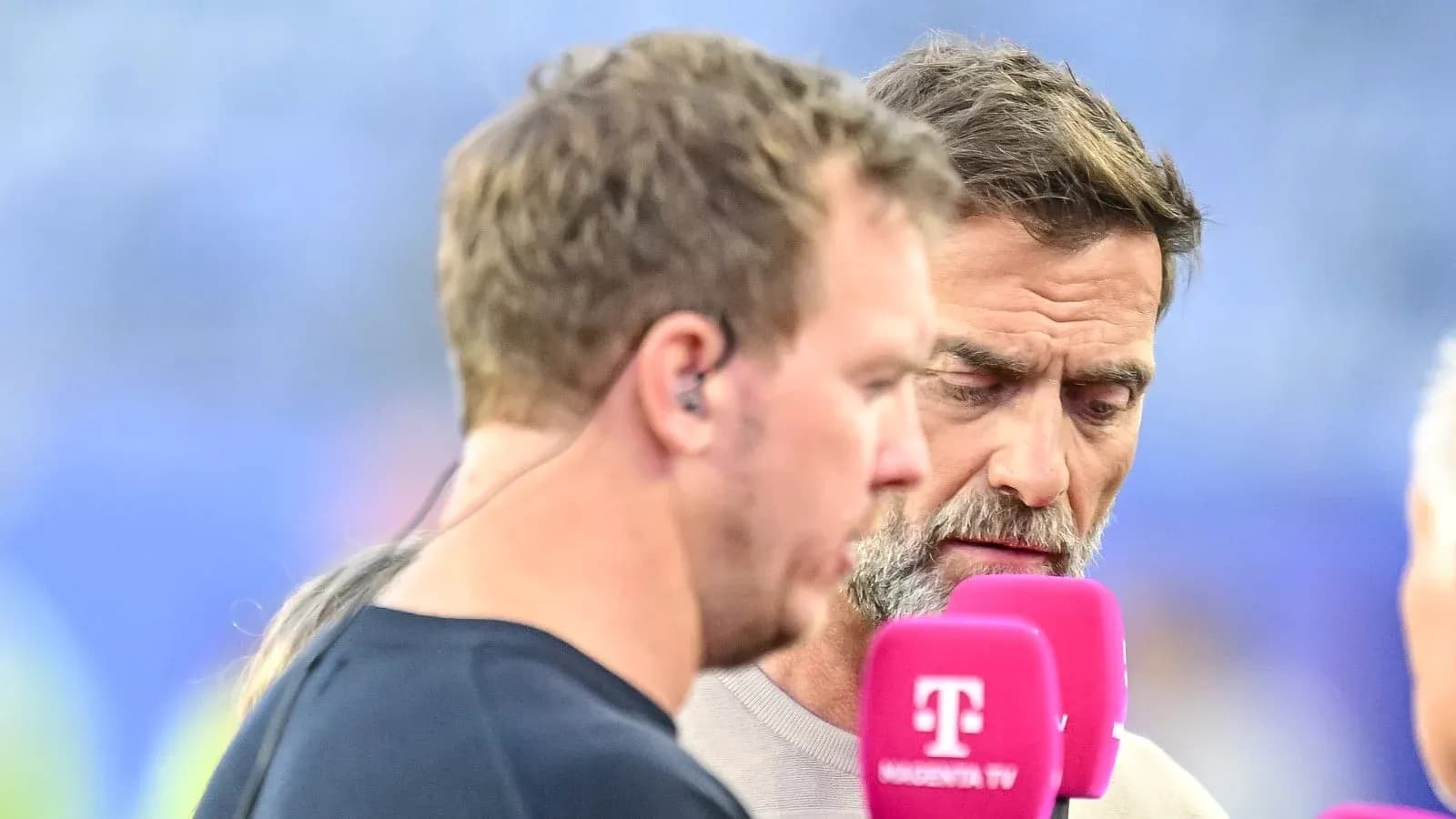
With the inquest already under way and pressure tightening around Julian Nagelsmann, Klopp’s name surfaced instantly, as it always does when German football looks lost. But the former Liverpool manager, now Red Bull’s head of global soccer, batted it away on MagentaTV.
“I haven’t thought about that yet,” he said, in comments reported by Bild. He spoke like a man who has stood in the wreckage of nights like this, and remembers the sting. “I’ve often been in that situation myself as a coach, where a big dream has been shattered.
“I understand that when people talk about the national coach, my name is mentioned. But it’s not the right moment to talk about it, especially not with me.
“I have a job that I really enjoy. And as far as I know, it’s not a part-time job. The fact is, Germany was eliminated today, and this is not the moment for me to think about Jurgen Klopp’s future.”
For now, at least, the door stays closed.
Germany fall apart from 12 yards
Germany had arrived in the knockouts top of Group E, their 2-1 defeat to Ecuador in the final group game written off as a stumble rather than a warning. Against Paraguay, the pattern felt familiar: plenty of the ball, long spells of control, and then the sudden, punishing twist.
Julio Enciso struck first, putting Paraguay ahead and tightening German shoulders. Kai Havertz, so often the man for the big stage, dragged his side back into it with the equaliser as the game stretched and frayed.
In extra time, Germany thought they had found their escape. Jonathan Tah rose to head in what looked like the winner, only for VAR to intervene and strip the goal away. The chance vanished. The tension didn’t.
The shootout turned into a chaotic test of nerve. Havertz, usually so sure-footed from the spot, missed. Nick Woltemade followed him in failure. Paraguay flinched too: Antonio Sanabria and Fabian Balbuena both squandered match-winning kicks, each miss dragging the drama out a little longer.
Then came the final swing. Tah, already denied once by technology, sent his effort off target. Jose Canale stepped up and buried his, sealing Paraguay’s 3-2 win on penalties and sending Germany home.
The shock rippled instantly through the squad.
“I’m a little lost for words,” Havertz admitted, speaking to FIFA’s channels. “This is my second World Cup and both times it came to nothing.
“All I can do is apologise. I thought we didn’t play bad football at the last few tournaments, but something was always missing. And it was the same today.
“We have to take a hard look at ourselves, especially the players, and I’m leaving the coach out of that.”
Nagelsmann stands his ground
If Havertz shielded his coach, Nagelsmann didn’t hide from the storm either.
Facing the media after another tournament collapse, the Germany boss made it clear he would not walk away on his own.
“I’m not one to run away,” he said. “It’s not the first time, but it’s been happening for a while now that we’ve been delivering tournaments like this and yes, there are certainly a few basic things that I don’t want to go into now.
“I’m not one of those people who sits here and says, ‘I’m resigning now, just because we’ve been eliminated’. If the DFB wants me to continue then I’ll continue and if they don’t want me to, then they can tell me that.”
The message was blunt: if change is coming, it will have to be forced from above. The German FA now faces a familiar decision, with a familiar name in the background and a man in Klopp who insists this is not his moment.
For a country that once treated the latter stages of major tournaments as a birthright, the question now is harsher: how many more of these “tournaments like this” can German football afford?
Gakpo’s grief and a goal through tears
On another field, in another kind of pain, Cody Gakpo showed a different face of this World Cup.
The Netherlands forward, playing just days after he and partner Noa van der Bij announced the loss of their baby son Elijah during pregnancy, scored what looked like a storybook winner against Morocco in Guadalupe.
Slipped through by Crysencio Summerville, Gakpo reacted on instinct. He seized on the ball, drove into the box and smashed a low finish into the net. Then the adrenaline gave way.
He dropped into a crouch, overcome, before his team-mates rushed in and wrapped themselves around him. The celebration turned into a huddle of protection.
Van der Bij had laid bare their heartbreak on Instagram: “With broken hearts, we share the devastating news that our baby boy passed away during pregnancy. Thank you for your love and support. Elijah Raphael Gakpo, forever loved, forever our son.”
Gakpo echoed that pain in his own post. “This is an incredibly difficult time for our family. We kindly ask for our privacy and space. Thank you for your understanding.”
For a while, his goal seemed destined to carry the Dutch through. Then the script tore again.
Issa Diop levelled for Morocco one minute into stoppage time, dragging the tie to penalties. The North Africans held their nerve from the spot, winning 3-2 in the shootout and flipping the result on its head.
In Boston and in Guadalupe, the margins were thin, the emotions anything but. Germany must now decide what – and who – comes next. The Netherlands, and Gakpo in particular, leave with a different kind of weight.
The World Cup moves on. The scars it leaves behind will take much longer to fade.





