Kendry Paez's Journey: From Prodigy to Chelsea Academy
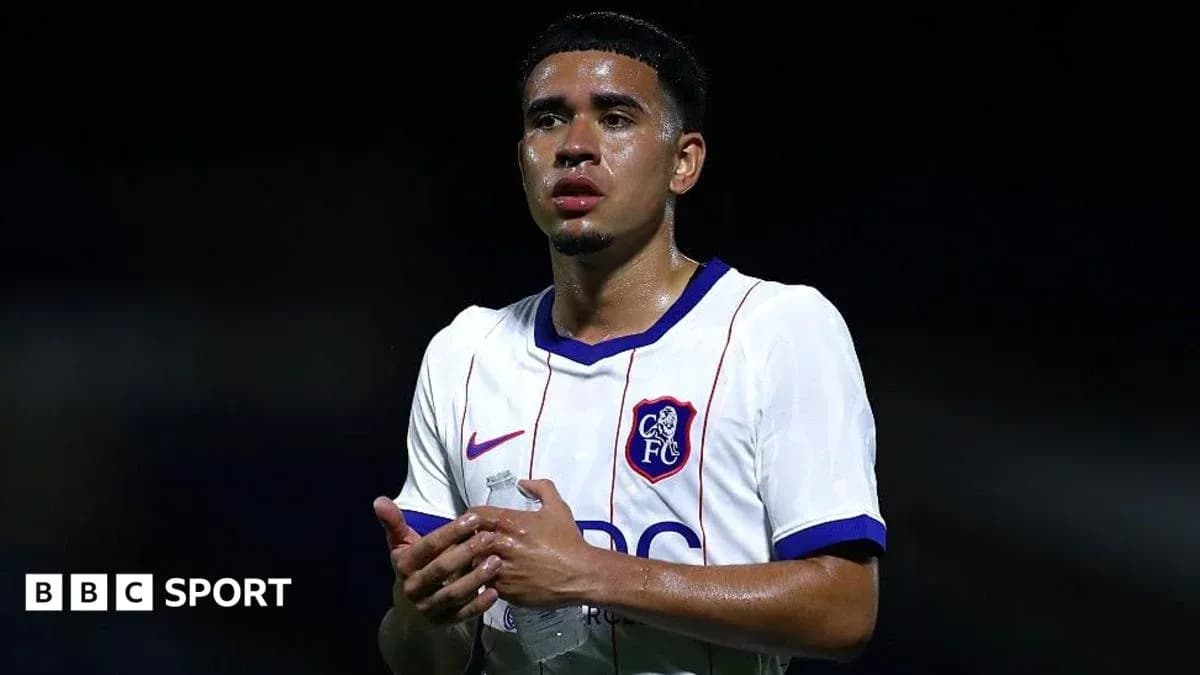
Kendry Paez finally pulled on a Chelsea shirt at the weekend. Not under the lights at Stamford Bridge. Not in the Premier League. For Cobham Next Gen, away at Arsenal, as a 12th-minute substitute in an Under-21 game.
Three years after Chelsea agreed a £17.27m deal for the Ecuadorian prodigy, the story is not where many thought it would be.
From record breaker to reality check
Paez arrived in Europe with a highlight reel and a list of “youngest ever” tags that clubs usually fight over.
At 15, he became the youngest debutant and goalscorer in Ecuador’s top flight with Independiente del Valle. That same season he stepped into the Copa Libertadores, South America’s answer to the Champions League, and looked like he belonged.
Internationally, the milestones came just as fast. At 16 years and 131 days, he made his second appearance for Ecuador and became the second-youngest South American to play in a World Cup qualifier, behind only Diego Maradona. A month later, he scored in a 2-1 win away to Bolivia and became the youngest South American to find the net in World Cup qualifying.
By the time Chelsea struck the deal in 2023, he already had 18 caps and two international goals. The club were convinced they were buying one of the continent’s next great attacking talents, a player bracketed alongside Estevao Willian as part of a new South American core.
Chelsea invested more than money. They brought Paez into first-team training long before he was eligible to join officially at 18. When violence erupted in Ecuador in early 2024, the club helped provide security for him, his family and the family of Moises Caicedo.
The path looked clear. The talent seemed obvious. Then the complications began.
Loans, criticism and a stalled rise
The first major bump came off the pitch. A few months after that security was arranged, Paez was filmed in a New York strip club while away on international duty. It did not derail his career on its own, but it added noise around a teenager already under intense scrutiny.
On the pitch, his first European loan started well. At Strasbourg, Chelsea’s sister club, he won Ligue 1’s Young Player of the Month for September. It looked like the perfect launchpad.
The momentum faded. Former Strasbourg manager Liam Rosenior went public with his frustration.
“We expect more, clearly,” he said later in the season. “I’m tired of using the excuse of the player’s youth.”
The numbers told their own story: one goal in 21 appearances. Despite the shared ownership links between Strasbourg and Chelsea, the loan was cut short.
River Plate came next, on a two-year deal that was supposed to reset his trajectory at one of South America’s giants. Instead, familiar concerns followed him to Buenos Aires.
Sources in Argentina questioned his attitude and pointed to a flat display in April’s Superclasico, a 1-0 defeat to Boca Juniors at the Monumental, as emblematic of the problem. Shortly afterwards, club president Stefano Di Carlo named Paez among 15 players training away from the first team. Others inside the club felt he could have been given more chances, but the tone around him had shifted.
The numbers again were modest: one goal in 14 appearances, 461 minutes in total. His loan ended by mutual consent.
Back home, the mood darkened. Ecuador had built him up as the country’s next great attacking hope. Now there was open concern.
Michel Deller, owner of Independiente, summed up the mood in an interview with Hincha Amarillo.
“He’s like a son to us. We care about him deeply,” Deller said. “He’s a good kid who’s had a tough time and has made decisions that have complicated his life.
“We are always hopeful he’ll show his exceptional talent once again but right now, it’s up to him to decide what to do with his life.”
Alonso’s verdict and a reset at Cobham
When Xabi Alonso arrived at Chelsea, the message was blunt. Paez, now 19, was “not in my plans”. The club’s website listed him as an academy player.
Chelsea tried to find him a loan in English football, a fresh environment closer to their own staff. They hit a wall. Fifa regulations meant the Blues had already used all six of their international loan slots and could not send him abroad again.
So Paez returned to Cobham, not as a first-team wildcard but as part of the rebranded Cobham Next Gen squad.
His first minutes in Chelsea blue came in a 4-1 win away to Arsenal’s Under-21s on Saturday. It was a low-key setting for a player with 27 Ecuador caps and a World Cup appearance on his CV, but it was something concrete: a start point.
There were flashes three days later in the EFL Trophy against Wycombe Wanderers. For most of the night, he drifted on the fringes, operating as a right-sided No 10 in a system mirroring Alonso’s back-three. He came on in the 62nd minute, looked isolated at times, and Chelsea lost.
Then, in stoppage time, the old quality flickered. From a short corner, Paez whipped an outswinging cross that Harrison Bettoni tapped in. Moments later he delivered another ball that caused chaos as Chelsea chased an equaliser in front of just 778 fans.
It was a small moment, but an important one. A reminder, to anyone watching closely, of the left foot that once made him the most coveted teenager in Ecuador.
Between concern and belief
Around him, the picture is complicated. Those close to Paez and figures inside Chelsea do not dismiss the concerns raised in Ecuador and Argentina. They know the decisions that have “complicated his life”, as Deller put it.
They also insist the narrative has run ahead of the reality.
The view at Cobham is that he needs time – as a player and as a person. Chelsea are encouraged by his attitude since returning. He is back in a stable, elite environment, training regularly, with his family present at recent matches, including the trip to Wycombe.
He may not be the youngest player in the building, but he carries a senior’s workload in terms of experience: 70 games for Independiente and more than 100 senior appearances overall before his 20th birthday. That bank of football is seen as a foundation, not a burden.
Being in the academy setup also brings practical benefits. Scouts from across the English Football League and beyond regularly watch Cobham Next Gen. Every outing is an audition.
Inside his camp, there is optimism that he can do enough over the coming months to earn a first loan move in England in January. If that does not materialise, Chelsea hope one of their six international loan slots will open up, giving him another chance abroad under closer control.
A career at a crossroads, not a dead end
For now, the reality is stark. Paez is not a first-team wild card, not a breakout Premier League story, not yet the star Ecuador imagined.
He is an academy-listed attacker, fighting for rhythm in front of a few hundred people, trying to force his way back into a conversation that once revolved around him.
But this is not a lost cause. The situation, as those at Chelsea see it, is more than salvageable.
The talent that made him a record breaker at 15 has not vanished. It has been buried under expectation, missteps and uneven loans. The next few months at Cobham will show whether he can dig it out again.
If he does, the story of Kendry Paez at Chelsea will stop being about what went wrong – and start to ask a sharper question: how far, and how fast, can he climb from here?