
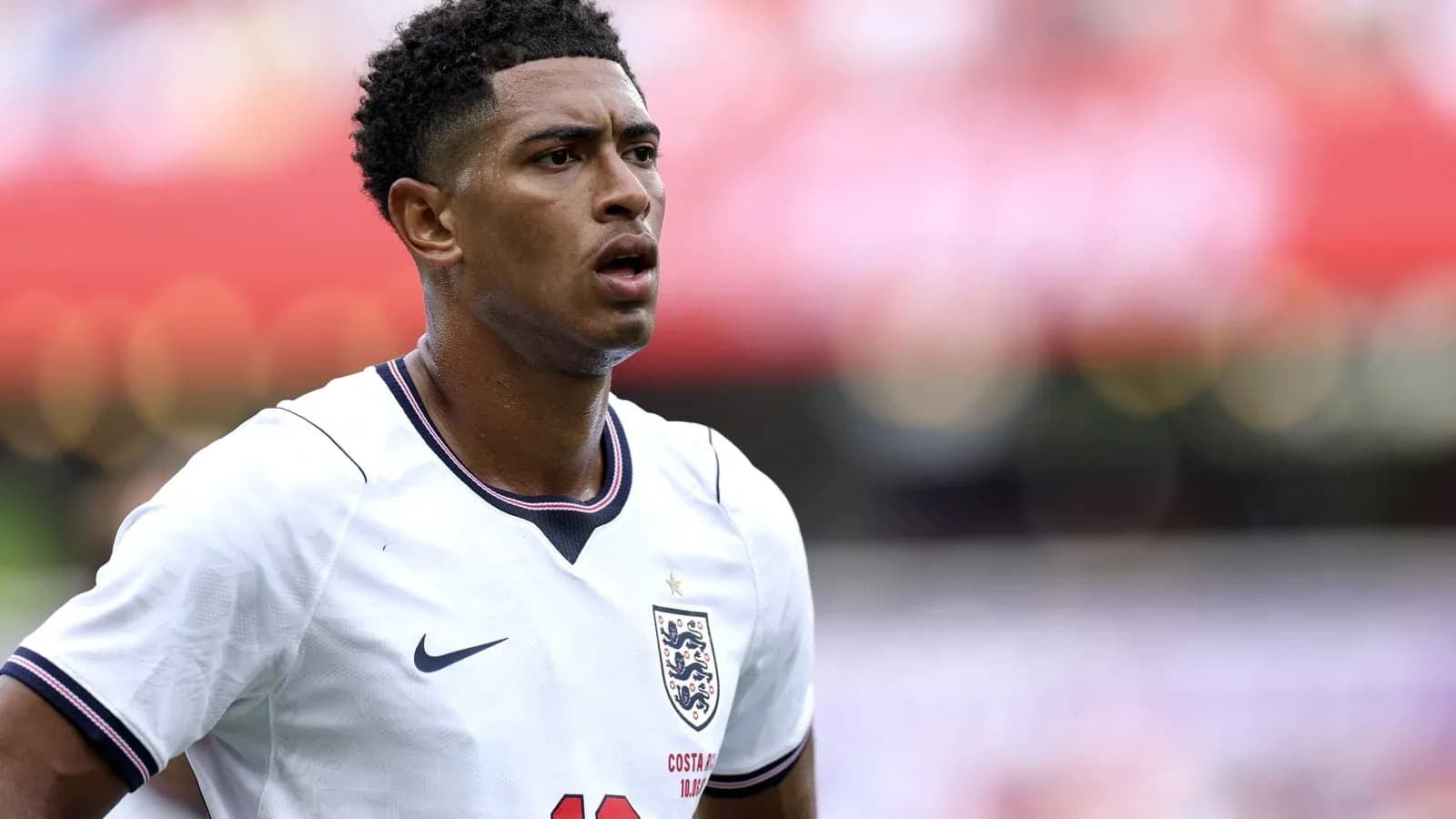
Jude Bellingham on England's Euro 2024 Experience
Jude Bellingham does not dress it up. England reached the Euro 2024 final, came within one game of ending decades of hurt, and yet, for him, something fundamental was broken long before Spain picked them apart in Berlin.
From the safety of a World Cup training base in the United States, with a new manager and a new mood, he has finally put words to what many suspected.
“It wasn’t right off the pitch.”
Euro run built on sand
On paper, England’s Euro 2024 campaign looked like progress. Another final. Another near miss. In reality, it felt like a team walking a tightrope with no rhythm and no joy.
Gareth Southgate’s side staggered through Germany. They needed Bellingham’s last-gasp overhead kick just to drag Slovakia into extra time in the last 16. They required penalties to scrape past Switzerland in the quarter-finals. Then a late winner to edge the Netherlands in the semi-finals.
Drama? Absolutely. Convincing? Not remotely.
Bellingham, now the heartbeat of Real Madrid’s midfield and the face of this England generation, admits the atmosphere behind the scenes never matched the scale of the occasion.
“At the Euros I think we got a few things wrong off the pitch, I don’t feel the group connected as well as it could have for a number of reasons,” he said. “We weren’t playing well, which doesn’t help, so even when we were winning, we didn’t get the feeling that we were as happy as we should be.”
The pressure was immense. England arrived in Germany as one of the favourites, one of “two or three teams that could win it”, as Bellingham put it. Yet the football rarely reflected that billing, and the dressing room, he suggests, never fully knitted together.
A miracle goal that still stings
The overhead kick against Slovakia should be the sort of moment a player dines out on for the rest of his life. Last minute. England on the brink of another early exit. One swing of Bellingham’s right boot and the entire tournament is jolted back to life.
Instead, when he rewinds it in his mind, there is discomfort rather than delight.
“I still remember how I was feeling at the time. It always makes me feel a bit uncomfortable because it was such a bad situation,” he said. “We weren’t playing well.”
For a boy who grew up watching England implode at major tournaments, the feeling was eerily familiar.
“I remember as a kid watching World Cups and Euros where we crashed out against teams we shouldn’t have gone out to and I remember thinking, ‘Wow, I’m about to be a part of one of those moments’. It shakes up the whole of English football.”
The overhead kick stopped England from becoming another cautionary tale. It did not, in his eyes, erase how close they came to disaster or how fragile the campaign felt from the inside.
Tuchel’s ‘brotherhood’ and a reset in America
Two years on, the language around England has changed. So has the man in charge.
Thomas Tuchel has spoken openly about building a “brotherhood” within the squad as he chases the World Cup this summer. The word is not accidental. It is a direct response to what Bellingham describes: a group that never truly clicked, even as it marched to a final.
From inside England’s camp in the United States, Bellingham is now part of a reset. The football looks sharper. The mood, by his account, feels lighter. The scars of Euro 2024 have not gone, but they appear to be driving standards rather than dragging them down.
If the last tournament was about surviving moments, this one, Tuchel hopes, will be about owning them.
A fight for the No 10 – with a childhood friend
For all his status and star power, Bellingham is not guaranteed a starting spot when England open their World Cup campaign against Croatia on Wednesday. Tuchel has effectively thrown down a challenge: Bellingham versus Morgan Rogers for the No 10 role.
On the surface, it is a straight shootout. Underneath, it is more nuanced.
The two know each other as well as anyone in the squad. They grew up in the same area in the West Midlands, played junior football together, and have carried that bond into the national team.
Bellingham strengthened his case with a commanding display in the final warm-up win over Costa Rica, dictating the game in the pockets where Tuchel wants his playmaker to live. Even so, he insists there is no tension with Rogers.
“As a person, he is a top guy, he can get along with anyone, can have conversations with anyone,” Bellingham said. “He can be a bit loud. We have debates that turn into arguments a lot. But we get on like brothers, to be fair.”
The competition is real. The resentment is not.
“The manager has made it very clear in a lot of the times where he has spoken that we are playing for the same position,” Bellingham added. “I know that has eased up a bit more now that he sees me playing more positions and Morgs playing more positions, but I honestly have no ill feelings when he is playing and I’m not playing.”
It is exactly the sort of dynamic Tuchel wants: edge without ego, rivalry without rupture.
Two years ago, England reached a final with a squad that, by Bellingham’s own admission, never fully came together. Now, under a new manager and with old wounds still visible, they are trying to build something stronger than a run of results.
They have the talent. They have the scars. The question, as Croatia loom, is whether that promised “brotherhood” will hold when the next crisis moment arrives.





