
Joshua Brenet's Journey from Curaçao to World Cup Stage
The road from Curaçao’s sun‑bleached streets to a World Cup stage runs, improbably, through Hoffenheim’s video room, a Dutch courtroom and the fourth tier of German football. No one embodies that jagged route quite like Joshua Brenet.
An island’s distant backbone
Curaçao still sits inside the Kingdom of the Netherlands, but in footballing terms it has long since exported its talent. Generations of Curaçaoan families moved to Dutch cities; their children and grandchildren now form the spine of a national team only recognised by FIFA in 2010.
Of the 26 players in Curaçao’s current World Cup squad, just one was actually born on the island. That lone native is Tahith Chong, once the bright‑haired prospect at Manchester United, now at Sheffield United after a stop‑start journey that included a flat six‑month spell at Werder Bremen in 2021.
He is far from the only one with Bundesliga ink on his CV. This squad carries a distinctly German footprint: Gervane Kastaneer at 1. FC Kaiserslautern, Riechedly Bazoer at VfL Wolfsburg, Roshon van Eijma at Preußen Münster, and attacking pair Jürgen Locadia and Joshua Brenet at TSG Hoffenheim. Different careers, different paths, but all part of the same Curaçaoan diaspora now circling back to a shared flag.
Nagelsmann’s gamble that backfired
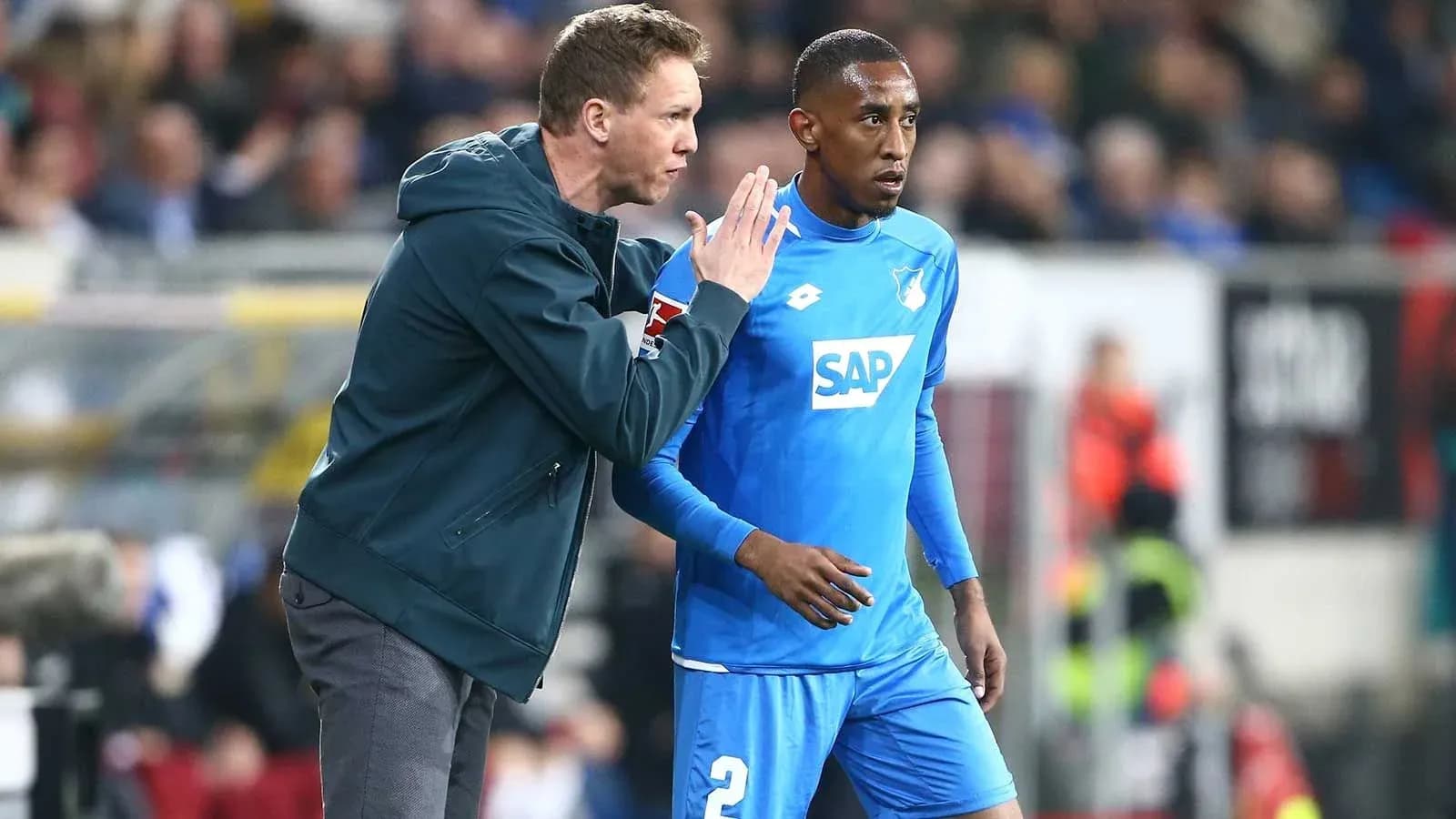
Brenet’s story stands out. In 2018, Hoffenheim paid €3.5 million to prise him from PSV Eindhoven, a three‑time Eredivisie champion and a full Netherlands international with two Oranje caps. Julian Nagelsmann, now in charge of Germany, pushed hard for the deal. He thought he was buying a modern right‑back ready for the Champions League.
What he got was a headache.
Brenet began life in Germany on the bench, watching the first Bundesliga games after his transfer from the sidelines. Then came the turning point. On the eve of Hoffenheim’s first‑ever Champions League match against Shakhtar Donetsk, he skipped a video session. Nagelsmann’s response was swift: Brenet was dropped from the squad.
The coach later brought him back, but the damage lingered. Brenet featured only in flashes for the rest of the campaign, a peripheral figure in a side he was supposed to energise. When Nagelsmann left, any remaining goodwill vanished. Successor Alfred Schreuder, now part of Nagelsmann’s Germany staff, barely looked his way. Under Sebastian Hoeneß, the fall became complete: Brenet was sent down to the reserves in Regionalliga Südwest, the fourth tier.
The demotion told its own story. So did the whispers: repeated lateness, recurring disciplinary problems, a player who couldn’t or wouldn’t fall into line. Hoffenheim tried to move him on. No one bit. Only in 2022, when his contract ran down, did he finally walk away, joining Twente Enschede on a free.
Rebuilding on the pitch, unraveling off it
Back in the Netherlands, Brenet began to repair his footballing reputation. At Twente he reminded people why big clubs once chased him. Strong runs, goals from deep, the old energy down the right. On the pitch, at least, he looked reborn.
Off it, he sabotaged himself.
In January 2023, Dutch police caught him driving without a licence. Twice. In two weeks. He had already lost that licence in 2020 after a drink‑driving offence.
By the time the case reached court, his record was laid bare. The presiding judge did not mince words: “He clearly has no regard for authority. It seems to me as though he is continuing to play football after receiving a red card.” The verdict in 2024 was a one‑month prison sentence.
It wasn’t his first brush with the law. In 2021, Brenet had received a suspended sentence that included a fine and community service for domestic violence. On appeal, the prison term for driving without a licence was later converted to community service, but Twente’s patience had already snapped. The club tore up his contract.
A restless tour: Qatar, Scotland, Turkey
What followed looked less like a career plan and more like a survival route.
Brenet resurfaced at Al‑Rayyan in Qatar, where he managed only six appearances in the 2024/25 season. From there he moved to Livingston FC in Scotland last autumn, a brief, low‑key stint before another switch, this time to Kayserispor in Turkey for the second half of the campaign.
The clubs changed, the leagues changed, but the pattern remained the same: short stays, fleeting cameos, a player still searching for a stable home.
And yet, even as his club career scattered across continents, a new constant emerged — the blue of Curaçao.
A new flag, a new stage
Despite his history with the Netherlands at youth level and his senior debut for Oranje during the 2016 World Cup qualifiers, Brenet chose a different allegiance. FIFA granted him permission to represent Curaçao, the country of his parents, and he pulled on the shirt for the first time in 2024.
He has not treated it lightly. Since that debut, Brenet has scored six goals in 17 appearances, an impressive return for a right‑back. In Curaçao’s final warm‑up match against Aruba, he started in his usual slot on the right side of defence and found the net again, a reminder of the attacking threat that once dazzled scouts across Europe.
Now comes the real test.
On Sunday at 7 pm, the 32‑year‑old will walk out to open Curaçao’s World Cup campaign against Germany. On the opposite bench: Julian Nagelsmann and Alfred Schreuder, the coaches who once froze him out at Hoffenheim and helped send his career into a tailspin.
An island that exports its talent, a defender who refused to obey the lines drawn for him, a reunion with the men who gave up on him — all converging on one night. For Brenet, there could hardly be a sharper stage on which to prove that, this time, he knows what to do after the red card.





