Japan's Adaptability Shines Ahead of Sweden Clash
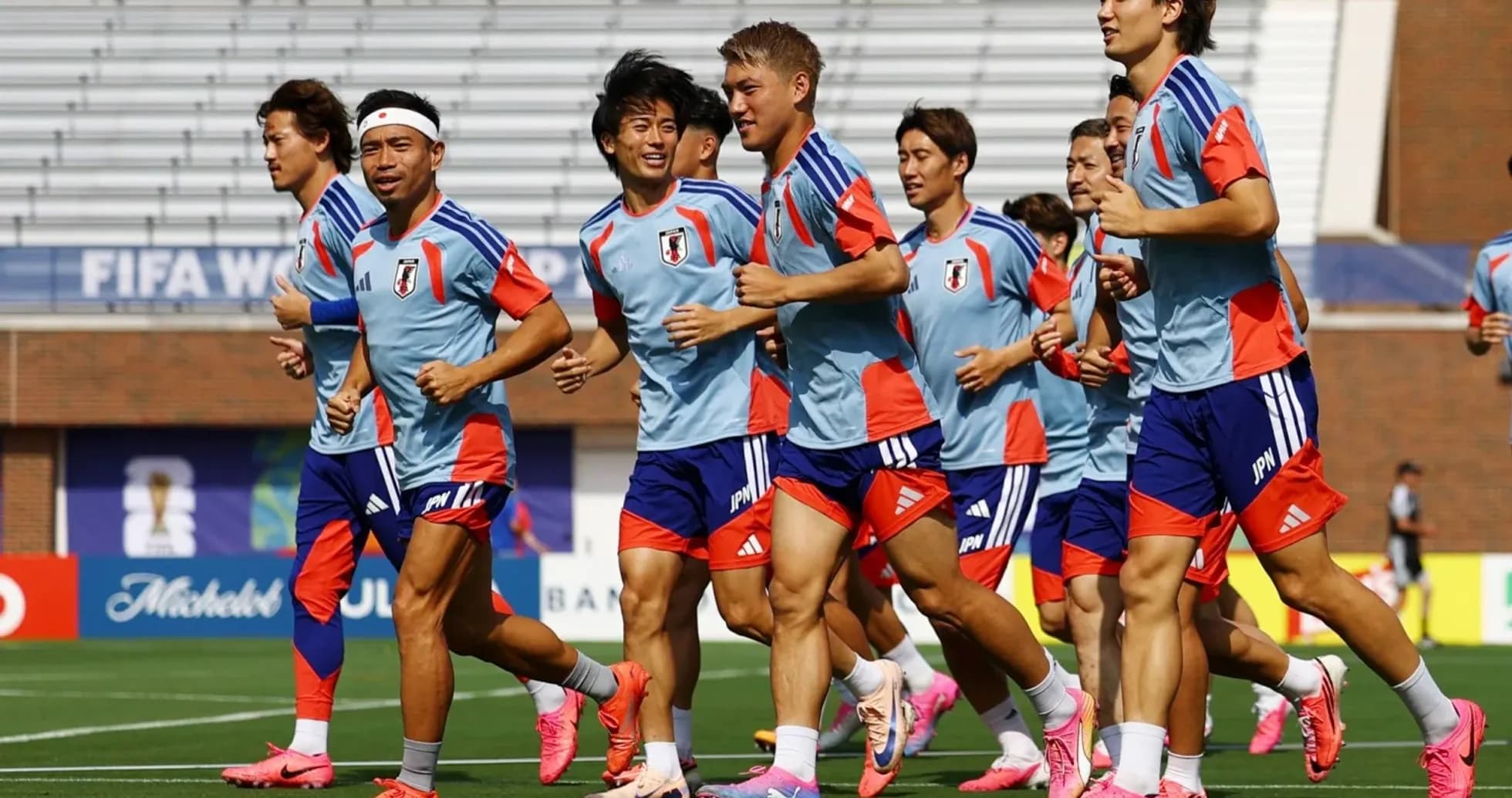
Hajime Moriyasu has seen World Cups from every angle – as a player, as a coach, as the man in the technical area when Japan stunned giants and when they fell short by inches. This time, with key names missing and a group that looked unforgiving on paper, his team have dragged themselves to the brink of the knockout rounds by leaning on something far less glamorous than star power.
Adaptability. And a dressing room that refuses to fracture.
Japan arrive at their final Group F game against Sweden on Thursday with four points, a 2-2 comeback draw against the Netherlands and a ruthless 4-0 dismantling of Tunisia behind them, and a last‑32 place almost in their grasp. They have done it without a string of first-choice players, and without complaint.
Takefusa Kubo, the creative spark who limped off against the Dutch with a knee problem, is expected to miss the Sweden clash. Wataru Endo, the former captain and heartbeat in midfield, never made it to the tournament. Kaoru Mitoma, the winger who usually changes the tempo in an instant, is also out. So is Takumi Minamino, the playmaker who links everything together between the lines.
Most teams would feel stripped bare. Moriyasu has treated it as a test of everything he has tried to build.
“Anyone can play with anyone else, that’s the readiness we wanted to ensure,” he said, underlining the core principle that has carried Japan through the first two matches. It sounds simple. It rarely is.
“That’s easier said than done,” he added. “When there’s a change over in the team, it’s not that simple or easy to play with different players and achieve good results or be successful.”
Yet that is exactly what Japan have done. Against the Netherlands, they twice fell behind and twice found a way back, refusing to let the game drift away from them. Against Tunisia, they did not just win. They dominated, controlled the tempo, and punished every mistake in a 4-0 statement that shifted the mood of the entire group.
Moriyasu did not hide his appreciation for the work done away from the spotlight.
“I’m very grateful that the other coaches and the players have been developing themselves towards such a great achievement,” he said. “In the last two matches the team has functioned tactically and with the teamwork they are developing and increasing their readiness.”
That word again: readiness. Japan have not looked like a side scrambling to cover absences. They have looked like a squad drilled to plug gaps without losing their identity.
With four points on the board, the mathematics lean heavily in Japan’s favour. They are likely to reach the last 32 even if they lose to Sweden. That safety net has not softened Moriyasu’s stance.
“We are basically thinking of winning, that’s what’s in our mind,” he said. The aim is not just progress. It is top spot. “If possible we would like to advance on top of the group by scoring as many goals, but distorting the balance of the team is more of a risk. We will see.”
That line reveals the tightrope he is walking. Push too hard for goals and first place, and the structure that has underpinned Japan’s surge could wobble. Sit back, and they risk inviting pressure from a Sweden side that has already shown how wild their swings can be.
Sweden opened with a 5-1 demolition of Tunisia, then collapsed by the same scoreline against the Dutch. It is a team capable of tearing opponents apart or unravelling themselves within 90 minutes. What remains constant is the threat up front.
Alexander Isak and Viktor Gyokeres bring power, movement and a ruthless edge in the box. Many coaches would talk first about containing them. Moriyasu chose a different tone.
“They’re world class, wonderful strikers so I would like us to enjoy facing these players,” he said. For him, this is not a danger to fear but a test to embrace. “It’s going to be a good opportunity for our players to develop themselves further.”
He knows what awaits in the knockout rounds: stronger midfields, sharper forwards, tighter margins. Japan cannot control who comes next. They can control how ready they are when that whistle blows.
“We don’t know what kind of team we will come up against in the next round,” Moriyasu admitted. “But what’s important is that we are solid and that we play against a team that we are able to deal with no matter what appears.”
That is the lens through which he views Sweden. Not as a distraction from the bigger picture, but as the perfect dress rehearsal.
“First we want to think about ourselves and how we play tomorrow,” he said. “In terms of our target we would like to win and qualify for the knockout stage on top of the table.”
No Kubo. No Endo. No Mitoma. No Minamino. Yet Japan stand a game away from topping a group that was supposed to test their depth and nerve. Now comes Sweden, with chaos in their recent results and elite strikers leading the line.
If Moriyasu’s belief in adaptability and unity holds firm one more time, Japan will not just be in the last 32. They will arrive there looking like a team nobody will want to deal with.