Inter Miami II vs Chattanooga: A Clash of Contrasting Trajectories
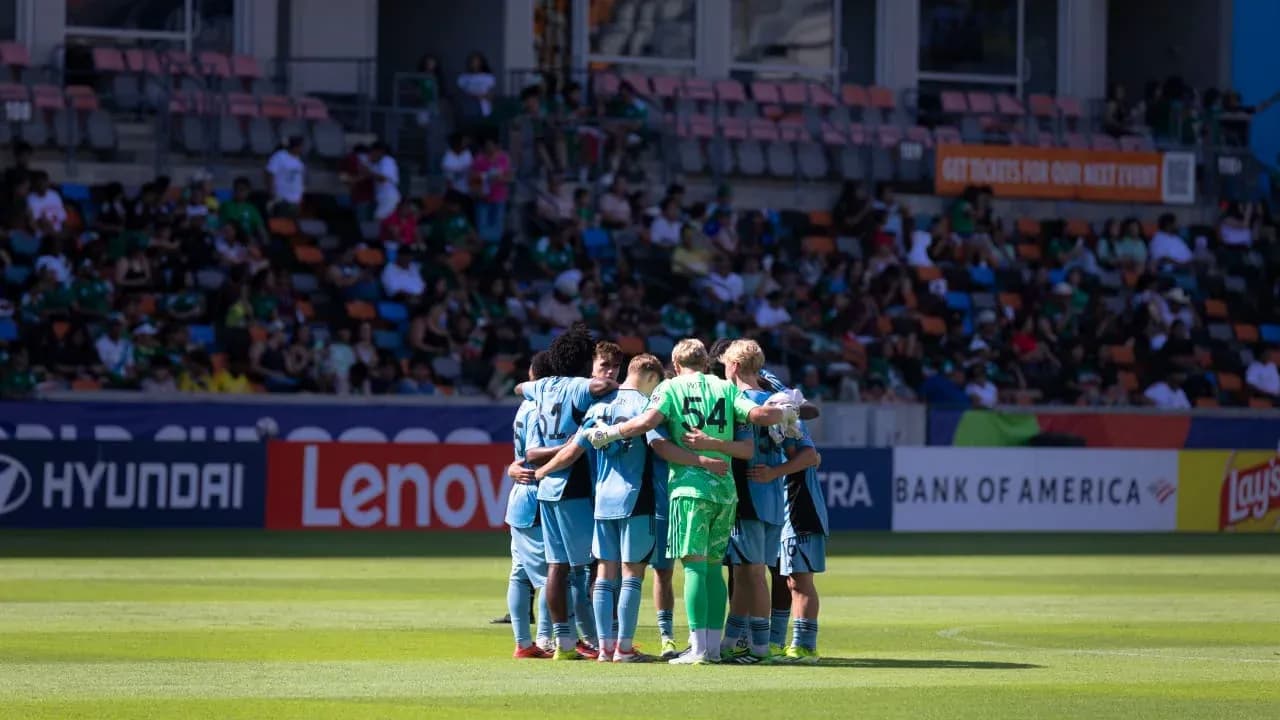
Under the lights at Chase Stadium, this MLS Next Pro group-stage meeting unfolded as a study in contrasting trajectories. Inter Miami II, bottom of the Central Division heading into this game with 4 points from 9 matches and a goal difference of -13, faced a Chattanooga side pushing toward the upper tier, sitting 4th in the Central and 8th in the Eastern Conference with 13 points and a goal difference of 0. On paper it was a clash between a side trying to stop the bleeding and another trying to prove it belongs in the play-off conversation. The 2-1 away win for Chattanooga followed that script: a fragile home team, a more seasoned visitor, and a match decided in the details rather than the spectacle.
Inter Miami II’s seasonal DNA has been clear: they are open, adventurous, and defensively vulnerable. Overall this campaign they have scored 11 goals and conceded 25, an average of 1.2 goals for and 2.8 against per match. At home, the pattern tightens but doesn’t fundamentally change: 4 goals scored and 10 conceded across 4 fixtures, averaging 1.0 for and 2.5 against. Their form line of “LLLLWLLLL” tells its own story – short bursts of promise drowned out by long runs of defeats. Chattanooga, by contrast, arrive as a streaky but more balanced side: 15 goals for and 16 against overall, averaging 1.7 scored and 1.8 conceded per game, with a form of “LWLLWWLLW” that suggests volatility but also a higher ceiling.
The lineups underlined those identities. Raul Ledesma Cristian sent out a young Inter Miami II XI built on energy and technical ambition: M. Marin, T. Hall, D. Sumalla, N. Almeida, C. Abadia-Reda, T. Vorenkamp, I. Urkidi, J. Convers, I. Zeltzer-Zubida, M. Saja, and S. Morales. It is a group that leans into development and ball progression, but one that has struggled to manage games over 90 minutes. On the bench, L. Barker, S. Basabe, L. Garcia, N. Dearmin, D. Rey, R. White, M. Perez, N. Jena, and S. Morrison offered fresh legs rather than established problem-solvers.
Chattanooga’s XI, anchored by the experience of E. Jakupovic in goal, had a different feel. In front of him, T. Robertson, F. Sar-Sar, M. Hanchard, and A. Sorenson formed a back line tasked with absorbing periods of pressure before springing forward. The midfield and attack – L. Husakiwsky, I. Jones, D. Barker, D. Mangarov, A. Gordon, and A. Krehl – blended physical presence with direct running. The bench of G. Huff, A. Arrua, Y. Cohen, A. Garcia, N. Koehler, Y. Tcheuyap, and F. Amoateng gave the visitors the option to adjust tempo and shape as the match wore on.
Tactically, the voids for Inter Miami II are structural rather than personnel-based. This campaign they have yet to keep a clean sheet, at home or away, and have already failed to score in 3 of their 9 fixtures. Their defensive issues are systemic: 10 home goals conceded from 4 matches, 15 on their travels, and a total goals-against profile that points to a side that can be stretched vertically and horizontally. Their disciplinary pattern reinforces the picture of a team chasing games. Overall this season, 26.09% of their yellow cards arrive between 46-60 minutes and another 26.09% between 76-90, with an additional 17.39% from 61-75. They also carry a red-card spike late: 100.00% of their reds have come in the 76-90 minute window. This is a side that grows increasingly desperate as the clock ticks, and against a counter-punching opponent that desperation is costly.
Chattanooga’s disciplinary profile is more nuanced but still aggressive. Their yellow cards peak in the 31-45 and 76-90 ranges, each with 26.32% of their bookings, and they add another 21.05% between 61-75. They have also seen red in the 61-75 and 76-90 windows, one each, suggesting that their high-intensity approach can boil over late. Yet that same edge underpins their ability to turn tight games: they have scored 15 goals from 9 matches despite failing to score only twice, and their penalty record – 4 taken, 4 scored, 100.00% – hints at composure in decisive moments that Inter Miami II currently lack.
Within the match itself, the key tactical confrontation was the “Hunter vs Shield” dynamic between Chattanooga’s attack and Inter Miami II’s fragile defensive unit. Chattanooga, averaging 1.3 goals on their travels and 1.7 overall, faced a home defence conceding 2.5 per match. That imbalance tilted the field even before kick-off. Players like D. Barker and D. Mangarov, supported by the width and work-rate of A. Gordon and A. Krehl, repeatedly tested the channels around Inter Miami II’s back line of T. Hall, D. Sumalla, N. Almeida, and C. Abadia-Reda. Once the visitors found their rhythm, Inter Miami II’s tendency to lose compactness between lines resurfaced, and the 2-1 scoreline felt like a logical expression of those season-long trends.
In the “Engine Room” battle, I. Urkidi and T. Vorenkamp were asked to control tempo and protect the spaces in front of their defence. Opposite them, L. Husakiwsky and I. Jones gave Chattanooga a more balanced two-way platform. That central duel shaped the match’s flow: when Inter Miami II managed to connect Urkidi and Vorenkamp with J. Convers, I. Zeltzer-Zubida, and M. Saja, they could threaten and did find the net once. But over 90 minutes, Chattanooga’s midfield line was better at breaking play, drawing fouls in the very periods where Inter Miami II’s card profile spikes, and launching transitions that exposed Miami’s structural weaknesses.
From a statistical prognosis perspective, this result sits perfectly within the expected pattern. Inter Miami II’s overall goal difference heading into this game was -14 by raw goals (11 scored, 25 conceded), while their official table figure of -13 underlines a season of narrow defeats stacked on top of heavier ones. Chattanooga, with 15 goals scored and 16 conceded overall, are almost perfectly balanced, and their away record – 5 goals for, 6 against – suggests that they rarely get blown away, even when they lose.
Following this result, the xG story one would anticipate is straightforward: Chattanooga’s more efficient attack, their perfect penalty record, and Inter Miami II’s porous defence converge on a narrow but deserved away win. Inter Miami II’s late-game disciplinary volatility and inability to close out halves without conceding pressure leave them constantly walking a tightrope. Chattanooga, for all their own card issues, have the tools and mentality to profit from that chaos.
The 2-1 scoreline at Chase Stadium therefore reads less like an upset and more like a confirmation. Inter Miami II remain a project in search of defensive structure and emotional control, while Chattanooga continue to play the role of opportunistic hunter – not flawless, but sharp enough in both boxes to turn the season’s underlying numbers into tangible points.