Huntsville City Dominates Carolina Core in 3–0 Victory
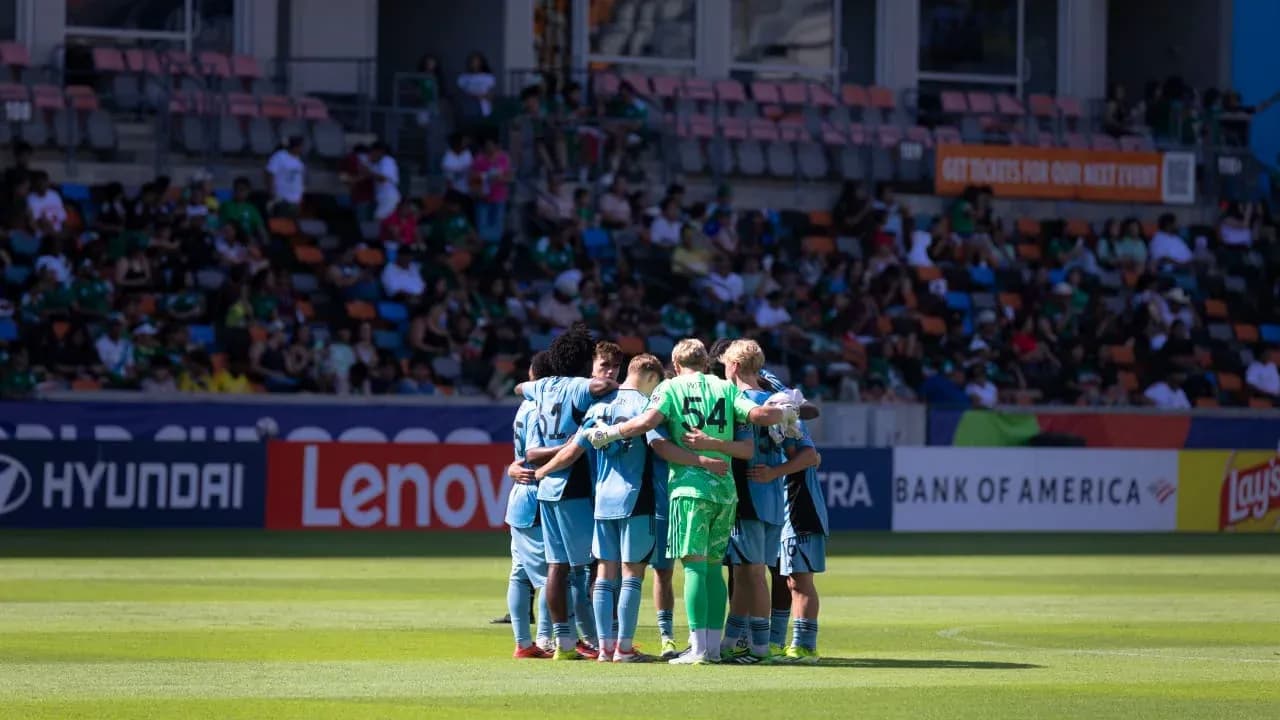
Under the lights at Joe W. Davis Stadium, Huntsville City turned what on paper looked like a dangerous banana skin into a statement 3–0 home win over Carolina Core, a result that neatly mirrors the broader trajectories of both clubs in the 2026 MLS Next Pro season.
Heading into this game, Huntsville’s seasonal DNA was clear: high-event football, heavy on goals at both ends. Overall they had scored 18 and conceded 17 in 8 matches, an aggressive profile reflected in an average of 2.3 goals scored and 2.1 conceded per match in total. At home, the numbers sharpened: 2.0 goals scored on average, only 1.0 conceded, suggesting that when the pitch and crowd tilt in their favor, Chris O’Neal’s side can compress the chaos into control.
Carolina Core arrived in Huntsville as a team in survival mode. Overall they had taken just 5 points from 9 matches, scoring 11 and conceding 22, for a total average of 1.2 goals scored and 2.4 conceded per game. Away from home the picture was even bleaker: 0 wins, 5 losses, 4 goals scored and 13 conceded, an away average of only 0.8 goals for and 2.6 against. The 3–0 scoreline fit that pattern with painful precision.
Within the broader Eastern Conference context, Huntsville’s 15 points and +1 goal difference overall had them positioned as a credible playoff contender, while Carolina’s 5 points and -9 goal difference left them clinging to the bottom rungs. This match, officially logged as a Group Stage fixture, played out like a one-sided 1/8 final rehearsal: one side sharpening knockout habits, the other struggling to survive the tempo.
II. Tactical Voids and Discipline
With no formal injury or suspension list provided, both coaches appeared to lean heavily on continuity. O’Neal’s XI was built around a flexible, mobile core: W. Mackay in goal; a defensive line anchored by J. Gaines, N. Prince, L. Christiano and M. Molina; and a midfield spine featuring M. Yoshizawa and N. Pariano, with M. Veliz and M. Ekk knitting play to the front line of L. Eke and J. Van Deventer.
On the other bench, Donovan Ricketts trusted N. Holliday in goal behind a back line of N. Martinez, S. Yepes Valle, N. Evers and J. Caiza. Ahead of them, T. Zeegers and M. Diakite provided central ballast, while R. Aguirre, T. Raimbault, A. Tattevin and D. Diaz offered the attacking outlets.
Discipline has been a quiet but decisive storyline for both teams this season. Huntsville’s yellow-card distribution reveals a side that tends to heat up after the break: 27.78% of their yellows arrive between 46–60', with a further 22.22% in 76–90' and another 22.22% between 91–105'. That pattern suggests a team that presses aggressively and occasionally late, especially when protecting or chasing a result, but crucially they have avoided red cards entirely so far.
Carolina’s profile is more volatile. Overall, 23.33% of their yellows come between 46–60' and 20.00% in 76–90', with another 20.00% between 16–30'. They have already seen a red card in the 46–60' window (100.00% of their reds in that period), pointing to a recurring problem: as matches open up after half-time, their defensive structure and discipline both fray. In a fixture where they were likely to be under sustained pressure, that fragility was always going to be a critical void.
III. Key Matchups
Without explicit top-scorer data, the “Hunter vs Shield” duel here is best understood as unit vs unit. Huntsville’s attack, averaging 2.0 goals at home, went up against a Carolina away defense conceding 2.6 per game. The 3–0 outcome suggests Huntsville not only met but exceeded their offensive baseline, while Carolina once again underperformed defensively.
The front trio of L. Eke, M. Ekk and J. Van Deventer were central to this storyline. Eke’s presence as a central reference point allowed Huntsville to pin Carolina’s center-backs, especially N. Evers and S. Yepes Valle, while Ekk’s movement between lines forced M. Diakite and T. Zeegers into uncomfortable decisions: step out and leave space behind, or sit off and allow Huntsville’s creators to turn.
For Carolina, the “shield” was supposed to be a compact block with Zeegers and Diakite screening the back four. Yet the season-long pattern of conceding 22 goals in 9 matches overall, and 13 in 5 away games, hinted that this shield was more porous than solid. Huntsville’s ability to score once before half-time and twice after underlined that Carolina’s defensive issues are structural, not situational.
In midfield, the battle between Huntsville’s controllers and Carolina’s stabilizers set the tempo. M. Yoshizawa and N. Pariano formed the home side’s engine, tasked with recycling possession and initiating the press. Their job was to keep Carolina’s transitions—often the only reliable attacking route for a struggling side—firmly in check.
Opposite them, Zeegers and Diakite had to manage both defensive screening and progression. But Carolina’s overall attacking output—only 0.8 goals on their travels—suggests that this pivot has been more reactive than creative. In Huntsville, that pattern likely repeated: Carolina struggled to build through the thirds, forced instead into longer, lower-percentage passes towards A. Tattevin and D. Diaz, which Huntsville’s back line could read and attack.
The benches also told a tactical story. O’Neal had options to alter the game’s rhythm and verticality, with players like A. Delic, F. Reynolds, K. Coulibaly and J. Swanzy available to either stretch a tiring defense or lock down a lead. Ricketts, meanwhile, could call on T. Jackson, K. Balogun and R. Montenegro, but given Carolina’s fragile collective structure, individual injections of energy were unlikely to fix systemic cracks.
IV. Statistical Prognosis and What It Tells Us
Even without explicit xG numbers, the statistical context frames this 3–0 as a logical extension of underlying trends. Huntsville, with 18 goals for and 17 against overall before this match, are a side whose games tend to be open but whose home defensive record—only 3 conceded in 3 home fixtures overall—suggests they can lock things down when they control territory.
Carolina, conversely, came in with 11 goals scored and 22 conceded overall. Their away profile—4 scored, 13 conceded—painted the picture of a team that struggles to create high-quality chances while repeatedly allowing them at the other end. In xG terms, you would expect Huntsville to generate the lion’s share of opportunities, particularly after the interval when Carolina’s disciplinary and structural issues historically spike.
Following this result, the narrative hardens. Huntsville look every inch an Eastern Conference playoff contender, capable of marrying a potent attack with increasingly reliable home defending. Carolina remain a project in search of foundations: no clean sheets, a leaky away defense, and an engine room that cannot consistently protect its back line or feed its forwards.
In tactical terms, this match felt less like an upset and more like a confirmation: Huntsville are trending toward knockout readiness, while Carolina must first solve their structural and disciplinary voids before they can think about climbing the table, let alone surviving a 1/8 final environment.