Haaland vs Kane: World Cup Quarterfinal Showdown in Miami
The sun will still be hanging heavy over Miami when England and Norway walk out, but the heat will not be the only thing suffocating. This is a World Cup quarterfinal loaded with storylines: a fairytale Viking run, an England side trying to dodge yet another last-eight exit, and two of the game’s most ruthless finishers colliding in the same penalty area.
This is where someone’s dream gets burned away.
Haaland vs Kane: Golden Boot and bragging rights
For the first time at this World Cup, the Golden Boot race becomes a head‑to‑head duel, not a scoreboard check on a big screen.
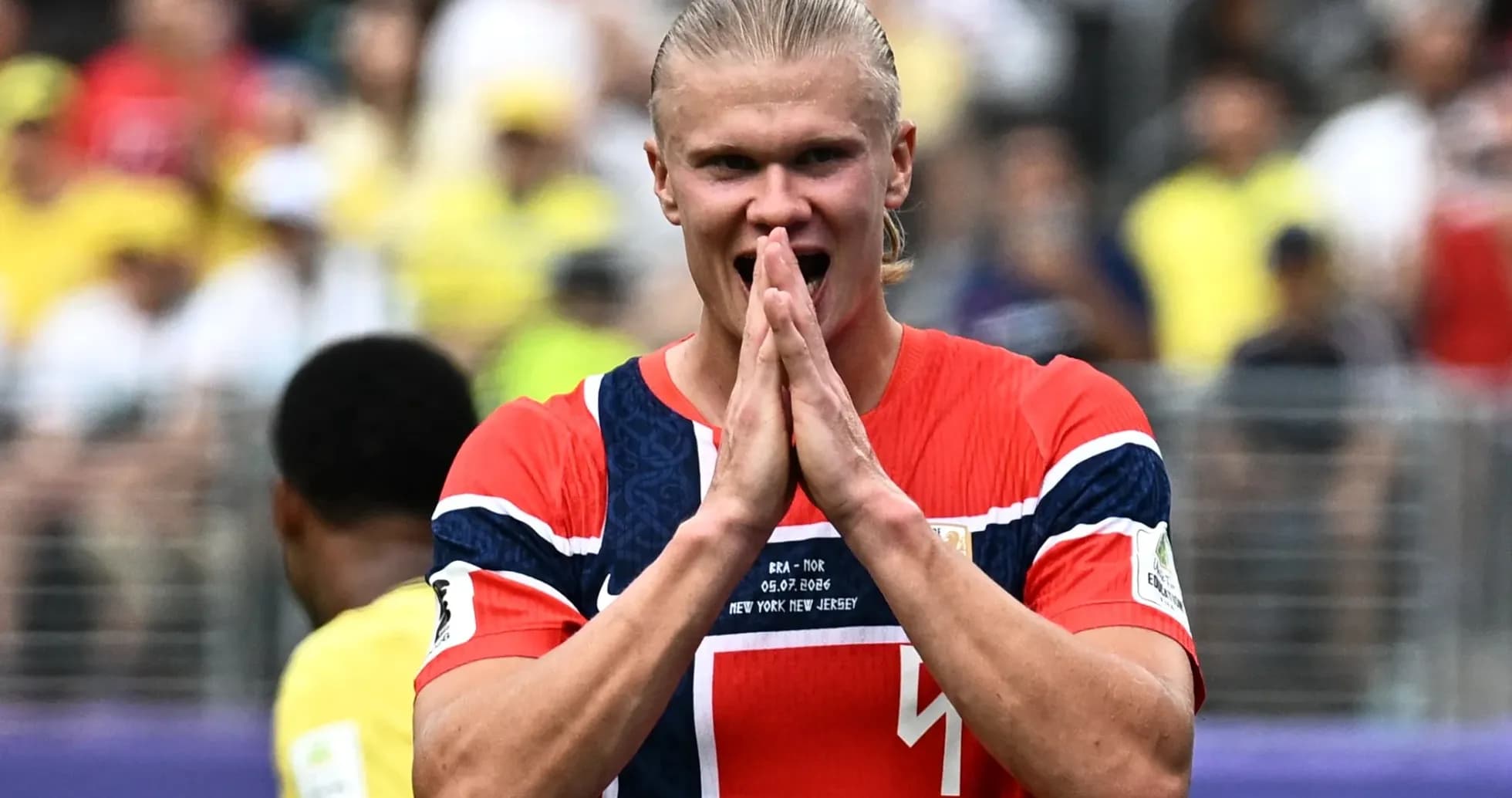
Erling Haaland arrives in Miami in full avalanche mode. He sat out Norway’s group defeat to France, rested by Stale Solbakken with qualification already secured, but he has been relentless whenever he has stepped on the pitch. The winner against Ivory Coast. Both goals in the 2-1 shock of Brazil. Seven goals in four appearances at this tournament, and a scarcely believable streak of scoring in 14 consecutive Norway games – 27 goals in that run, 62 in 54 caps overall.
He stands one behind Kylian Mbappe and Lionel Messi in the Golden Boot standings, one ahead of Harry Kane. One night in Florida could reorder that hierarchy.
Kane has been just as central to England’s progress. Two goals to open against Croatia, another in the win over Panama that locked up top spot in the group, then both strikes in the late turnaround against DR Congo in the Round of 32. He added a nerveless penalty – ultimately decisive – in the wild 3-2 victory over Mexico.
Both men are serial scorers with Premier League Golden Boots stacked on the shelf. Both have conquered Germany. Yet they have barely shared a pitch: only two meetings in 2022/23, when Tottenham and Manchester City traded wins and their star strikers traded goals.
Now the stage is bigger, the stakes sharper. This is not just about a trophy for top scorer. If either Haaland or Kane drags his nation into the semifinals with another decisive performance, the argument over who is currently the game’s most fearsome No 9 will tilt their way.
England’s Haaland problem: is it time for Dan Burn?
Stopping Haaland is the question that keeps coaches up at night. Thomas Tuchel might have stumbled upon an unfashionable answer.
Dan Burn was a surprise name on England’s squad list, a 6’7” late bloomer who only made his international debut just before turning 33. His four England starts came against Andorra and Albania in qualifying – not exactly the preparation for facing the most destructive striker in world football.
Yet against Mexico, with England down to 10 men and clinging to a 3-2 lead through a long, frantic finale, Burn turned into a human barricade. For 15 minutes plus 12 of added time, he headed everything, blocked everything, and turned Mexico’s aerial bombardment into a personal duel he refused to lose.
On paper, the matchup with Haaland looks brutal. Burn is nine years older, slower across the ground, less explosive. But he is also two inches taller, and their history in England is not on the Norwegian’s highlight reel.
Since Haaland arrived at Manchester City, he has faced Burn eight times – six in the Premier League, two in domestic cups. Across more than 10 hours together on the pitch, Haaland has scored just once against him, and that came in their very first encounter back in August 2022.
For a striker who averages a goal every 73 minutes at international level, that is not a coincidence England can ignore.
Ezri Konsa offers a similar pattern. Haaland has only one goal in 406 minutes against the Aston Villa defender, again scored in their first meeting. Compare that with the seven goals he plundered in five matches against Marc Guehi before the Crystal Palace man joined him at City, and the numbers start to sketch a clear picture of which profiles trouble him.
Haaland has 112 goals in 132 Premier League games and three Golden Boots in four seasons. Anyone who slows him, let alone blunts him, is doing something right. Tuchel must decide whether this is the night to lean into those awkward, uncomfortable matchups – Burn, Konsa, physical defenders who don’t mind a scrap – and accept the risk that comes with their lack of pace.
Odegaard vs Rice: a familiar fight in unfamiliar heat
If Haaland is the finisher, Martin Odegaard is the architect. Brazil discovered that the hard way.
Against the five-time world champions, Norway’s captain dragged his side up the pitch over and over, carrying the ball forward 61 times and completing 101 of 109 passes. Brazil’s entire squad managed only 331 passes, at a far worse completion rate. Norway starved them of the ball, holding them to just 33.6 percent possession – Brazil’s lowest share ever in a World Cup match.
Yet even that is more than England saw against Mexico. Reduced to 10 men and pushed deep, Tuchel’s side posted their lowest possession figures since records began. They survived, but they cannot afford to spend another quarterfinal camped on their own six-yard line.
To change that, they must disrupt Odegaard’s rhythm. Few players know his habits better than Declan Rice.
For three seasons at Arsenal, Rice and Odegaard have shared a midfield 117 times, guiding the club to a long-awaited Premier League title and a Champions League final. Rice has seen, at close range, how Odegaard dictates tempo, how he finds pockets of space, how he picks apart teams who sit off.
But Rice is not at full tilt. Neural pain has dogged him for months, affecting his lower back and hamstring. He still ground out 3,094 Premier League minutes this season, with England partner Elliot Anderson playing even more. Odegaard, by contrast, logged just 1,369 league minutes and looks fresher for it.
That freshness matters in Miami’s humidity. If Rice cannot cover ground as he normally would, if he cannot get tight and stay tight, Odegaard will turn this quarterfinal into his personal passing drill.
England’s hopes of seeing more of the ball rest heavily on a midfielder who may be running on fumes.
The Miami factor: who survives the furnace?
This is not a neutral setting. Miami in early evening will feel like a sauna with floodlights.
Norway have already been living in the heat. They opened in Boston against Iraq, then moved to New York/New Jersey to beat Senegal. They went back to Boston for the defeat to France, when Solbakken rotated heavily, changing 10 players. Their only game in enclosed conditions came in Dallas against Ivory Coast, before another hot, humid outing back in New York/New Jersey to stun Brazil.
England’s path has been gentler. They began under the roof in Dallas against Croatia, then played in Boston and New York/New Jersey against Ghana and Panama, both in the rain. Atlanta’s air-conditioned comfort hosted the win over DR Congo. Even Mexico City, where they edged past Mexico, offered cooler temperatures despite a thunderstorm that delayed kickoff by an hour.
Now comes the real test. Miami has already staged the two hottest games of the group phase, with Uruguay drawing 2-2 with Cape Verde and 1-1 with Saudi Arabia. Forecasts point to around 33C (91F) and 58 percent humidity at the 5pm local kickoff, with thunderstorms lurking.
Tactics will matter. So will substitutions. But this may be a night where the team that manages its lungs and its legs better, that keeps clarity in the final 20 minutes when the air feels like soup, walks off the pitch with a semifinal place.
Norway’s left vs England’s right: a fault line waiting to crack
There is another problem brewing for Tuchel, and it sits on England’s right flank.
Reece James, the only recognised right-back in the squad, has missed the last three games after a hamstring injury against Ghana. With Tino Livramento ruled out on the eve of the tournament, England have been improvising ever since.
Djed Spence, Ezri Konsa, John Stones and Jarell Quansah have all been asked to plug the gap at various points. Rice even finished the DR Congo match on the right of defence. Quansah’s red card against Mexico now takes him out of the equation for this tie.
James is pushing to be fit, and if he makes it, Tuchel gets a huge slice of balance back. If he does not, Konsa is the likeliest stand-in after his disciplined display in the rearguard action against Mexico.
Whoever starts will be staring straight at one of Norway’s most dangerous zones.
Antonio Nusa offers direct pace and trickery from the left, drifting inside onto his right foot. His curling strike into the top corner against Ivory Coast lit up the Round of 32 and showcased exactly how quickly he can punish a full-back who shows him half a yard.
Yet it was his replacement against Brazil, Andreas Schjelderup, who truly tilted Norway’s last-16 tie. Introduced at half-time, the Benfica winger delivered his best performance of the tournament. First he whipped in the cross that Haaland buried for the opener. Then he slipped the pass that allowed Haaland to step onto the ball and lash in the second from the edge of the box.
Nusa and Schjelderup give Solbakken options: raw pace to start, finesse and final ball to finish, or vice versa. England’s right-back, whether a half-fit James or a makeshift Konsa, will have no margin for error.
England are chasing a fourth World Cup semifinal, Norway their first. One side carries the weight of history, the other the freedom of a team that has already ripped up the script by knocking out Brazil.
In the furnace of Miami, something has to give: Haaland’s streak, Kane’s campaign, Odegaard’s control, Rice’s resilience, the patched-up England right flank, or Norway’s improbable run.
By Wednesday night, only one of these stories will still be alive.