Guardiola's Emotional Confrontation with Walker After Liverpool Defeat
The façade finally cracked at Anfield.
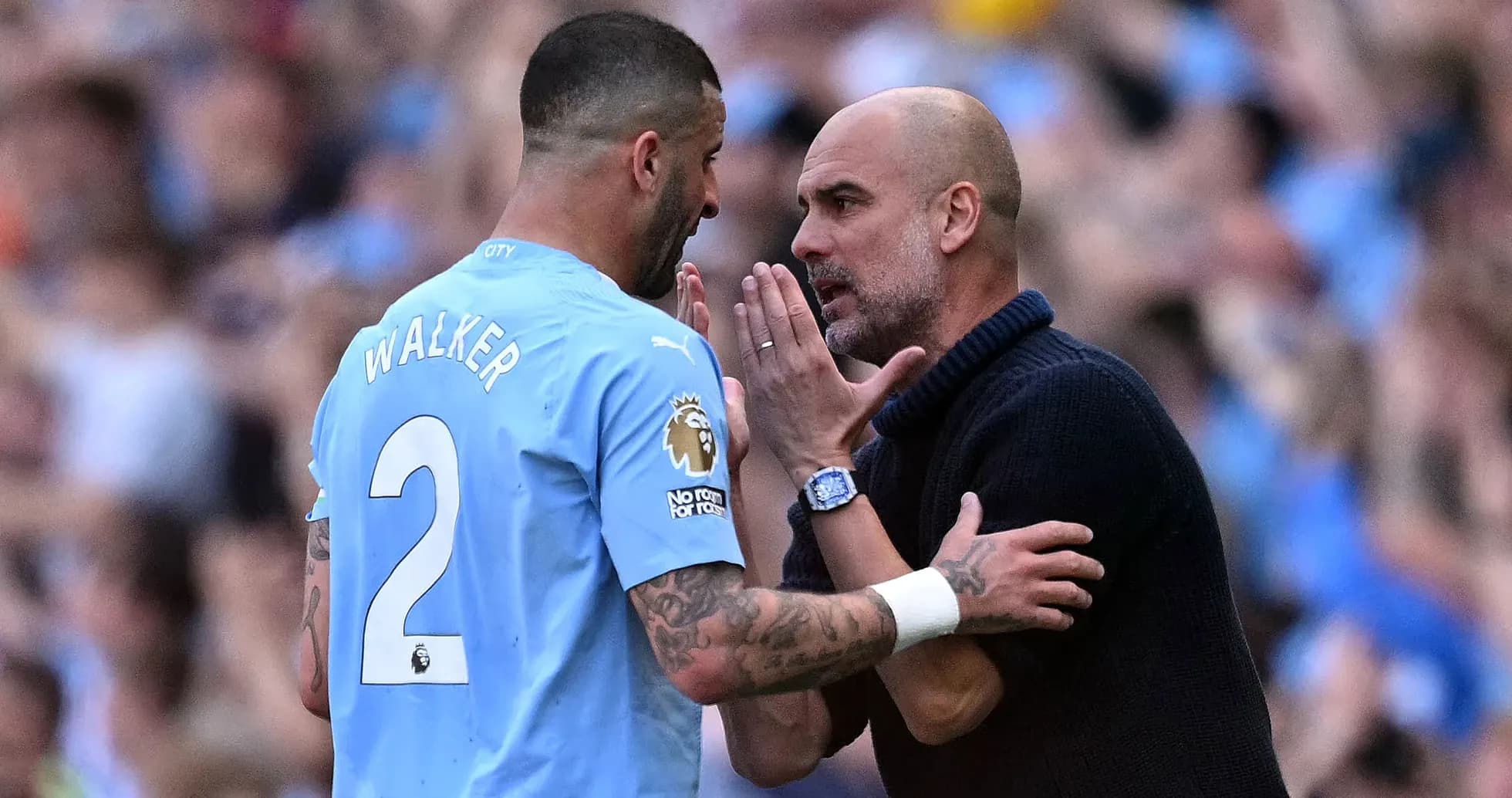
In the bowels of the stadium, after a bruising 2-0 defeat to Liverpool in December 2024, Manchester City’s era of calm, controlled dominance gave way to something far rawer. The cameras of Amazon Prime Video’s documentary A Beautiful Obsession were rolling when Kyle Walker snapped.
The England defender, a senior captain and one of Pep Guardiola’s most trusted lieutenants over City’s title-laden years, turned his frustration directly on his manager. No coded messages. No half-measures.
"You keep saying my name, every meeting," Walker raged in the dressing room. "Every f***ing meeting it’s my name."
This wasn’t a one-off bad result. The loss at Anfield plunged City into a run of seven games without a win, six of them defeats. For a side that had just made history with four consecutive Premier League titles, the collapse felt jarring, almost surreal. The mood darkened. The pressure sharpened.
And right in the middle of it stood Guardiola, only recently committed to a new contract, supposedly the steady hand guiding another cycle. Instead, he found himself accused of turning one of his captains into a lightning rod.
Guardiola tried to explain. Walker’s name, he said, surfaced so often because of his role in the leadership group, not because he was being singled out. The armband, in the manager’s eyes, meant responsibility, scrutiny, visibility.
The words did not land.
Walker shot straight back, challenging the very premise of that explanation. "You didn’t want me to be a captain," he replied, cutting through the room. For him, this was about more than a few meetings. It was about feeling exposed, blamed, left carrying the weight for failures he believed were collective.
"I’ve reacted to someone else, I’ve lost the ball, you somehow bring my name into it," he argued, making it clear he felt scapegoated for wider tactical breakdowns on the pitch. One mistake, and the finger, he felt, always seemed to point his way.
What followed was even more striking than the confrontation itself.
Guardiola, famed for his relentless tactical obsession and ferocious standards, suddenly looked vulnerable in front of his entire first-team squad. The documentary footage shows a coach fighting back tears, his voice cracking as he addressed not just Walker, but the entire dressing room.
"If I am a problem, you have to tell me," he said, visibly emotional. "I won’t stay here for the money or just for the fact of staying. I extended the contract because I want to be with you, I want to fight in that position."
This wasn’t the speech of a detached super-coach. It was a manager questioning his own presence, his own impact, in the middle of a crisis. Guardiola insisted he had not signed on again to walk away when the cycle turned, to abandon a group he had built.
"I don’t want you to feel like I’m leaving and running away from you. I don’t want to have the feeling that the pieces fall down. And I feel 'No, I want to help you.'
He turned to his leaders first, then the rest of the squad, and laid it bare: if he had become the issue, they needed to say it.
"But if you feel, captains first and then the other ones, that there is a problem? Tell me. It’s not going to change the love I have for all of you. Not one second. But I want to fight. That’s all. I’m sorry."
In a few minutes of raw, unfiltered dressing-room footage, City’s iron grip on English football looked human, fragile, even fractured. The titles and trophies were still fresh. The contract extension ink barely dry. Yet inside that room, amid anger, accusation and tears, the question hung in the air: how long can even a dynasty hold together when the strain finally shows?