Guardiola's Manchester City Legacy: 11 Players Who Defined a Decade
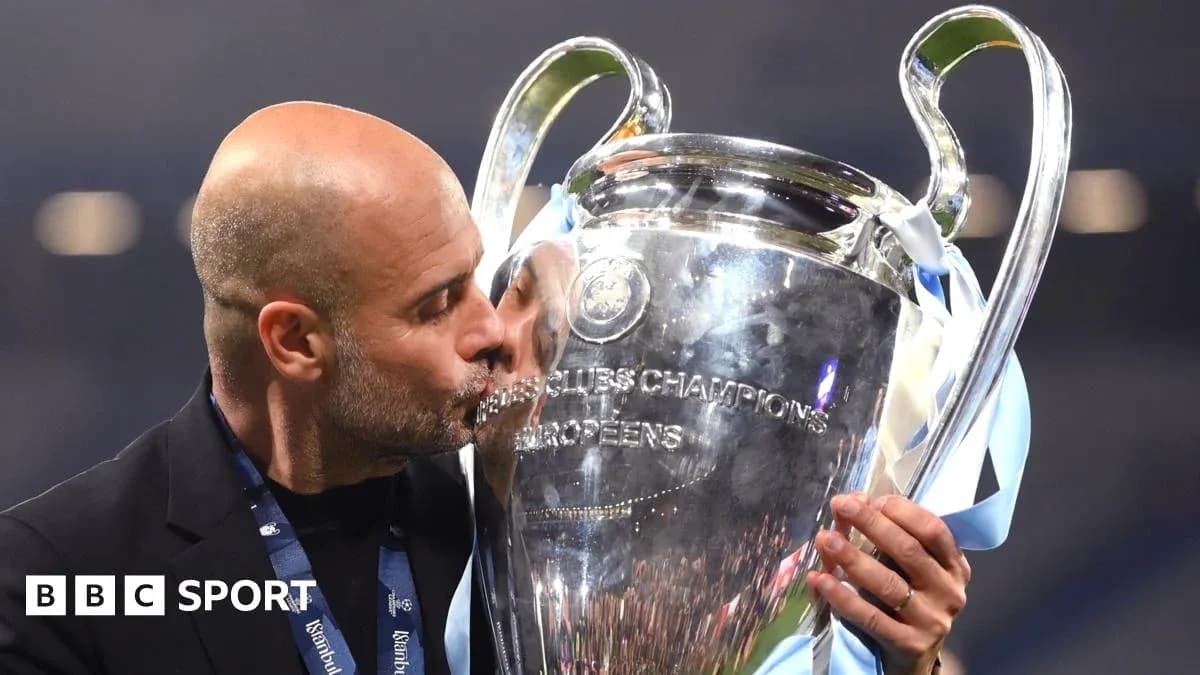
Pep Guardiola’s Manchester City decade is almost over. Ten years that bent English football out of shape, rewrote the record books and turned a rich club into a relentless machine. Nineteen trophies, six Premier League titles, a Champions League – but the true legacy walks on two legs.
He didn’t just collect players. He reshaped them. Careers were redirected, reputations rebuilt, potential turned into superstardom. From academy hopefuls to Ballon d’Or winners, this was the era when Guardiola didn’t simply pick a team – he engineered it.
Here are 11 footballers who defined his reign.
Raheem Sterling – From raw talent to ruthless finisher
- Appearances under Guardiola: 292
- Goals: 120
- Assists: 77
- Trophies under Guardiola: Premier League (4), FA Cup (1), EFL Cup (5)
- Individual honours: PFA Young Player of the Year (2018-19), FWA Footballer of the Year (2018-19), MBE 2021
When Raheem Sterling arrived from Liverpool in 2015 for £49m, the fee screamed expectation, but the numbers didn’t. He was a gifted winger, unpredictable and electric, yet constantly questioned over his finishing.
Guardiola changed the conversation.
Sterling became the face of City’s high-speed, penalty-box avalanche. The Catalan drilled him on movement, timing and angles. The winger who once drifted wide started arriving, late and lethal, at the back post. Three consecutive seasons of 20-plus goals followed, part of a total 131 strikes in seven years at the Etihad.
Under Guardiola, Sterling stopped being a promise and became a guarantee.
Ilkay Gundogan – The quiet conductor who chose the big moments
- Appearances: 358
- Goals: 65
- Assists: 48
- Trophies under Guardiola: Premier League (5), Champions League (1), FA Cup (2), EFL Cup (4), Uefa Super Cup (1), Club World Cup (1)
- Individual honours: PFA Team of the Year x1
Ilkay Gundogan was Guardiola’s first signing in 2016, and in many ways, the most revealing. He didn’t arrive with fireworks. He arrived with control.
Gundogan knitted City’s football together. He played as a six, an eight, a late-arriving ten. He rarely dominated headlines, yet the team’s rhythm often pulsed to his tempo. When City needed calm, he slowed it. When they needed urgency, he slipped through the lines.
Then came the goals. The midfielder suddenly turned poacher, producing title-defining runs from deep and, as captain in 2023, leading City to the Treble. His stunning volley against Manchester United in the FA Cup final summed him up: technique, timing, and total composure on the biggest stage, before he lifted the Champions League trophy as Guardiola’s on-field general.
Kyle Walker – The sprinting safeguard
- Appearances: 319
- Goals: 6
- Assists: 23
- Trophies under Guardiola: Premier League (6), Champions League (1), FA Cup (2), EFL Cup (4), Uefa Super Cup (1), Club World Cup (1)
- Individual honours: PFA Team of the Year x4
When City paid £45m for Kyle Walker in 2017, plenty scoffed at the price for a full-back. Guardiola saw something else: the platform to play on the edge.
Walker became the security system that allowed City to squeeze the pitch. His surges from right-back stretched opponents, but it was his recovery pace that truly changed the balance. City could defend one-on-one across the halfway line because Walker could erase mistakes with a 40-yard sprint.
He grew into a leader too. For all six Premier League titles under Guardiola, he was a constant presence in the dressing room. In 2024, he wore the armband as City claimed an unprecedented fourth straight league crown. A signing questioned at the start, a cornerstone by the end.
David Silva – The magician who bridged eras
- Appearances under Guardiola: 175
- Goals: 34
- Assists: 51
- Trophies under Guardiola: Premier League (2), FA Cup (1), EFL Cup (3)
- Individual honours: PFA Team of the Year x2, Statue at Etihad Stadium
David Silva arrived long before Guardiola, fresh from winning the 2010 World Cup, but he left as one of the purest embodiments of Pep’s footballing ideals.
Under Mancini and Pellegrini he was already a star. Under Guardiola, in his final four seasons, he became the creative heartbeat of a fully realised possession machine. Operating between the lines, drifting into half-spaces, he picked locks for fun. Across his Premier League stay he recorded 93 assists – more than anyone else in that period – ranking seventh all-time.
Guardiola called him “one of the greats”. Supporters went further. ‘El Mago’ earned a statue outside the Etihad, one of three modern icons immortalised in bronze. His touch, vision and subtle authority set the standard for what a City playmaker should be.
Ederson – The risk-taker who redrew goalkeeping
- Appearances: 372
- Assists: 8
- Trophies under Guardiola: Premier League (6), Champions League (1), FA Cup (2), EFL Cup (4), Uefa Super Cup (1), Club World Cup (1)
- Individual honours: Premier League Golden Glove x3, PFA Team of the Year x2, Fifa Best men's goalkeeper 2023
Guardiola’s early decision to replace Joe Hart with Claudio Bravo caused uproar. The logic was clear: he wanted a goalkeeper who could play. Bravo didn’t work. The second attempt changed the sport.
Ederson arrived from Benfica and instantly altered how City – and everyone else – thought about the position. He invited the press, demanded the ball, and fired passes like a deep-lying playmaker. Long diagonals, clipped chips through the lines, disguised passes into midfield – all from his own box.
Seven Premier League assists told part of the story. The rest was seen in how opponents reacted, often pressing high and leaving space for City’s forwards to exploit. His high-risk, high-reward style became a template adopted around the world. With his gloves and his boots, he helped usher in the era of the modern, ball-playing goalkeeper.
Rodri – The metronome who became a Ballon d’Or winner
- Appearances: 298
- Goals: 28
- Assists: 32
- Trophies under Guardiola: Premier League (4), Champions League (1), FA Cup (2), EFL Cup (3), Uefa Super Cup (1), Club World Cup (1)
- Individual honours: Ballon d'Or 2024
When Rodri joined in 2019, he was billed as Fernandinho’s heir. At first, the Premier League’s tempo seemed to rush past him. Guardiola persisted.
Step by step, Rodri grew into the axis of the side. He dictated games with his positioning and passing, screening the defence while launching attacks with simple, ruthless efficiency. City’s dominance often looked serene because he made chaos feel distant.
Then came Istanbul. In the 2023 Champions League final, Rodri scored the winner that sealed the Treble and etched his name into club folklore. By 2024, the evolution was complete: he became the first Manchester City player to win the Ballon d’Or, and the first Premier League-based winner since 2008. From understudy to the best in the world in his role – a Guardiola blueprint, executed perfectly.
Erling Haaland – The goalscoring phenomenon
- Appearances: 198
- Goals: 162
- Assists: 35
- Trophies under Guardiola: Premier League (2), Champions League (1), FA Cup (2), EFL Cup (1), Uefa Super Cup (1)
- Individual honours: 2022-23 Uefa Men's Player of the Year, Ballon d'Or runner-up (2023), Gerd Muller Trophy (2023), European Golden Shoe (2022-23), FWA Men's Footballer of the Year (2022-23), PFA Player of the Year (2022-23), Premier League Player of the Season (2022-23)
City had been a collective force long before Erling Haaland arrived in 2022. Then they added a wrecking ball.
The Norway striker scored 36 league goals – 52 in all competitions – in his first season, smashing records and simplifying games. Give him chances, and he would finish the argument. That campaign ended with a Treble and the club’s first Champions League title, with Haaland at the sharp end of everything.
He followed it with 38 goals the next season, 27 of them in the league, as City claimed a fourth consecutive Premier League crown. Another 34 goals in 2024-25 underlined the relentlessness. Guardiola had built a machine; Haaland was the brutal, inevitable conclusion in the penalty area.
Phil Foden – The local prodigy who stayed home
- Appearances under Guardiola: 368
- Goals: 110
- Assists: 68
- Trophies under Guardiola: Premier League (6), Champions League (1), FA Cup (2), EFL Cup (5), Uefa Super Cup (1), Club World Cup (1)
- Individual honours: PFA Young Player of the Year (2021 and 2022), PFA Player of the Year (2023-24), FWA Footballer of the Year (2023-24), Premier League Player of the Season (2023-24)
Phil Foden was the gamble Guardiola refused to make. Loan offers piled up; the manager turned them all down. The Stockport-born midfielder would learn in-house, or not at all.
Handed his debut at 17, Foden grew season by season, filling multiple roles across the front line and midfield. The turning point came in 2023-24. With Ballon d’Or winner Rodri injured for long stretches, Foden stepped into the void, delivering his best campaign yet: 19 goals, eight assists, and the authority of a player ready to carry a champion side.
He drove City to that record-breaking fourth straight league title and swept the individual awards – PFA Player of the Year, FWA Footballer of the Year, Premier League Player of the Season. The boyhood blue had become the face of a new generation, rewarded with a new four-year contract in May. Even as his form fluctuated afterwards, his place in Guardiola’s story stayed secure.
John Stones – The defender who became a midfielder in disguise
- Appearances: 294
- Goals: 19
- Assists: 9
- Trophies under Guardiola: Premier League (6), Champions League (1), FA Cup (2), EFL Cup (3), Uefa Super Cup (1), Club World Cup (1)
- Individual honours: PFA Team of the Year x2
Guardiola never stopped tinkering with his back line. Four centre-backs, inverted full-backs, shifting shapes mid-game – the defensive structure was a constant experiment. John Stones was the one fixed idea.
Signed for his ball-playing ability, Stones grew into the archetype of a Guardiola defender: composed under pressure, technically sharp, brave enough to take the ball in tight spaces. He read danger, but he also read passing lanes.
Then came the twist. In 2023, Stones stepped into midfield, inverting from defence to become an extra controller in the Champions League final. Guardiola later called him the “best player by far” that night. It was the purest expression of what the manager wanted from his defenders: not just to stop attacks, but to start them.
Guardiola’s time at Manchester City will be measured in trophies and titles, but the deeper imprint lies with players like these. They arrived as prospects, specialists, stars with questions. They leave as champions, leaders, and in some cases, history-makers.
The manager is going. His ideas, embedded in the careers he transformed, are not.