
Germany's World Cup Collapse: A Historic Loss in Boston
Germany’s World Cup collapse in Boston will be remembered for the history it rewrote and the questions it unleashed. A nation that once treated penalty shootouts as a birthright walked into one against Paraguay and walked out stunned, beaten 4-3 from the spot and dumped out in the round of 32.
At the centre of the inquest: Florian Wirtz.
A giant falls in Boston
Paraguay, ranked 41st in the world, were supposed to be a hurdle, not a wall. Yet from the moment Julio Enciso struck in the first half, Germany looked trapped in a game they thought they’d already won on paper.
Wirtz did produce one moment that belonged on a highlight reel. His whipped cross from the right begged to be finished, and Kai Havertz obliged, glancing in the equaliser to drag Germany level. It was the kind of delivery Liverpool believed they were paying £116 million for.
But those flashes were rare. As the tension rose, Wirtz faded.
Jonathan Tah thought he had rescued the night and perhaps the narrative. His late finish looked set to send the 2014 champions through, only for VAR to rip it away. Officials judged that goalkeeper Orlando Gill had been fouled in the build-up, a decision that left German players raging and Paraguay clinging to life.
Extra-time came and went. Nerves took over. The shootout would decide it.
Penalties, history, and a broken aura
Germany do not lose penalty shootouts at World Cups. They simply don’t. At least, they didn’t.
Havertz stepped up first among the big names and saw his effort saved by Gill, who was already writing his own chapter in Paraguayan football history. Newcastle forward Nick Woltemade followed and met the same fate. Two German penalties, two Gill saves.
Paraguay had their chances to slam the door. Antonio Sanabria missed. Fabian Balbuena missed. Germany were handed reprieve after reprieve, the kind of lifelines that used to be enough for their old, ruthless selves.
Then came the twist no one saw coming. With yet another chance to keep Germany alive, Tah blazed over. Jose Canale did what Germany’s stars could not: he kept his composure, scored, and sent Paraguay into delirium with a 4-3 shootout win.
For Germany, it was unprecedented. Their first ever penalty shootout defeat at a World Cup. Their first shootout loss at international level since 1976. A superpower stripped of its most reliable weapon.
Wirtz in the firing line
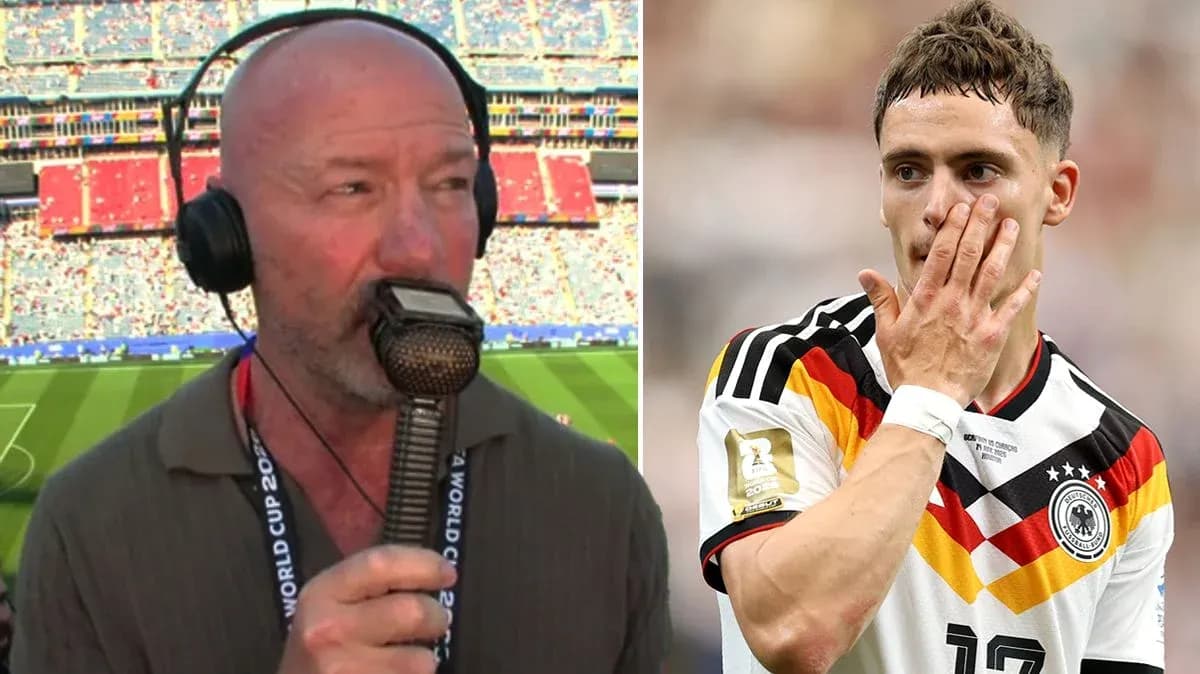
The fallout was immediate and unforgiving. On Netflix show The Rest is Football, Alan Shearer zeroed in on Wirtz, whose Liverpool season and World Cup campaign have both been placed under the microscope.
“They've got the quality in names and on paper, but they just didn't deliver,” Shearer said, lumping Wirtz in with a group of underperforming German attackers. Leroy Sane’s poor season, Denis Undav’s late call to inject life into the penalty area, and Wirtz’s struggles were all cited as symptoms of a team that looked far better in theory than in reality.
“Wirtz has had a terrible season at Liverpool, he hasn't performed again at this World Cup,” Shearer added, cutting through the debate with a blunt assessment.
When Micah Richards pointed to that £116m move to Liverpool as proof of Wirtz’s underlying quality, Shearer’s retort was simple: “What's he done this season?” Richards pushed back, calling Wirtz “a superstar” and insisting the world had not yet seen the best of him, but even he accepted that Germany’s key men failed when it mattered.
The names on the teamsheet still carry weight. Havertz, a Champions League final goalscorer in 2021 and 2026 and fresh from a Premier League title. Tah, now at Bayern Munich. Antonio Rudiger, a pillar at Real Madrid. Young Nathaniel Brown, impressing on the rise. The pedigree is not in doubt.
The performance was.
“We've seen them put seven past Curacao, well that's alright – but when it really mattered, the quality wasn't there at all,” Shearer said, and that line will sting in Germany for some time.
Nagelsmann stands firm as critics circle
The defeat capped a deeply troubling pattern. Germany have now failed to reach the last 16 in three consecutive World Cup finals appearances, a run that would have been unthinkable a decade ago. This time, it comes in an expanded tournament where the margin for error is supposed to be larger, not fatal.
Nagelsmann, though, refused to walk away.
“When you exit the World Cup after you play Paraguay it is very bitter. It is very hurtful,” he admitted. “This is the third elimination in a row, so we are not part of the first-class teams any more.”
He knows the mood back home. “If we're going to do a survey today in Germany, people are not going to speak about me positively obviously,” he said. He felt the backing inside the stadium, praised the German fans for their support and their reaction even after the defeat, and then drew his line in the sand.
“I'm not going to step back only because we are eliminated. If the DFB want me to continue, I am going to continue. I know how the industry works and a lot of people now want me to leave. I want to continue if the German FA wants me to.”
Defiant words. But they landed in a country already debating his future.
Former internationals Thomas Hitzlsperger and Arne Friedrich did not hide their scepticism. Hitzlsperger, on BBC One, called the situation “unacceptable” and said “it doesn't look good for Nagelsmann,” arguing that he had not handled recent months well and that an early exit in an expanded World Cup is a damning verdict for any major nation.
Friedrich, speaking on BBC Radio 5 Live, was just as blunt. “If you consider the whole tournament, the way we played, it is a deserved loss. Nagelsmann has to face the consequences,” he said. Then came the line that will echo around the DFB offices: “I would definitely say the journey continues without Nagelsmann.”
A golden shirt, searching for a golden era
Germany arrived at this World Cup talking about a reset. They leave with old scars reopened and new ones added. A 7-1 demolition of Curacao in the opener hinted at swagger. A tight 2-1 win over Ivory Coast suggested resilience. A 2-1 defeat to Ecuador raised the first real alarm.
Paraguay turned that alarm into a siren.
For Wirtz, the scrutiny will not fade quickly. A record transfer fee, a flat season at Liverpool, and a World Cup where one assist is buried under the weight of expectation and criticism. For Nagelsmann, the question is simple and brutal: does the DFB still believe he is the man to lead a team that has forgotten how to be feared?
Germany used to own moments like Boston. Now they are the ones being written out of their own mythology.
The aura has gone. The talent, on paper, remains. The next decision – on the coach, on the core of this team, on how much patience to extend to players like Wirtz – will decide whether this is a blip in a great footballing story, or the new normal for a fallen giant.





