Gattuso Reflects on Italy's World Cup Failure and Supports Mancini's Return
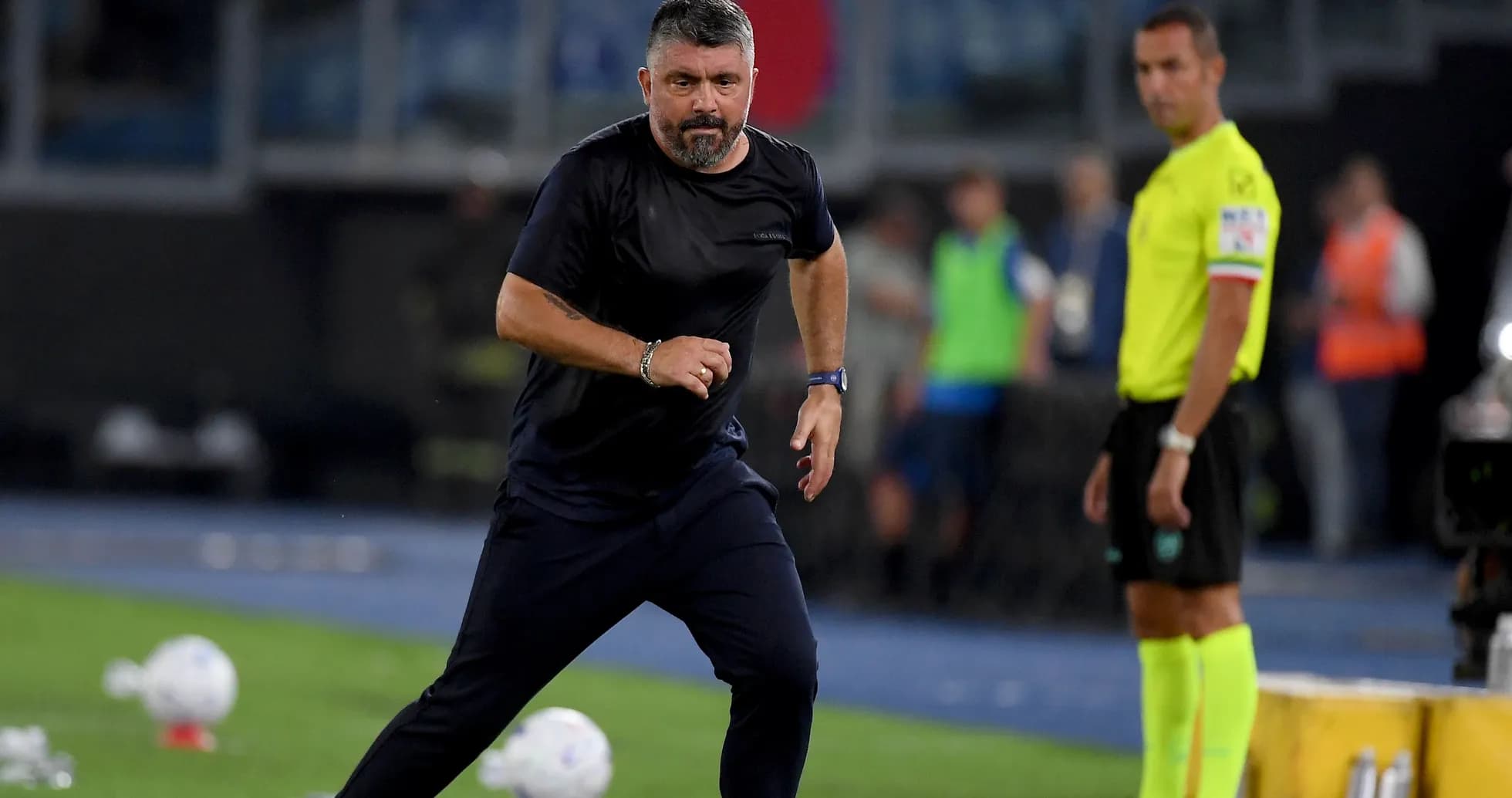
Gennaro Gattuso did not try to hide. He rarely has.
Standing in Bologna after opening his Lazio reign with a hard-fought 1-0 win, the 2006 World Cup winner spoke less like a victorious club coach and more like a man still carrying the weight of a nation’s disappointment.
A wound that will remain
Failing to take Italy to the 2026 World Cup, he admitted, has left a mark that will not fade.
“I had 10 wonderful months,” Gattuso said, reflecting on his brief spell in charge of the Azzurri. “The lads I coached gave me their all. And it's a wound that will remain for as long as I live, because it was a deep wound.”
That wound was opened in brutal fashion. A playoff defeat to Bosnia-Herzegovina ended Italy’s hopes and confirmed a third straight absence from the men’s World Cup. Days later, in April, Gattuso walked away from the job.
He has not tried to rewrite the story. No excuses, no revision. Just regret and a clear sense that, for all he has achieved as a player, this failure sits in its own painful category.
Mancini returns to the hot seat
The Italian Football Federation moved back to a familiar face. In July, Roberto Mancini was reappointed as head coach, returning after his first five-year spell from 2018 to 2023.
That first tenure brought the high of Euro 2020 glory and the low of missing the 2022 World Cup. Now he steps back into a role that has become a pressure cooker for anyone who dares to take it on.
Gattuso, though, had no hesitation in backing his successor.
“I'd say he is a great coach with a wealth of experience,” he said. “He's a great manager; he's someone who has already won with the national team, and I obviously wish him all the best from the bottom of my heart.”
The message was clear: no bitterness, no distance. Just a former coach urging the country to get behind the man now in charge.
A carousel of names – and one deal that collapsed
Mancini’s return was far from inevitable. When Gattuso stepped down, the federation cast its net wide.
Andrea Pirlo initially emerged as the leading candidate. Before that, high-profile approaches went out to Carlo Ancelotti and Pep Guardiola, both ultimately turning the job down.
Pirlo, elegant on the pitch and increasingly in demand off it, looked set to take over. Then the talks hit a wall. Complications linked to an existing sponsorship agreement with a betting firm derailed the move and killed the deal before it could be signed.
At the same time, there was another powerful voice in the background. Lega Serie A president Ezio Maria Simonelli revealed that the league strongly pushed for Antonio Conte to return for a second spell. Conte, with his intensity and iron grip on dressing rooms, would have brought a very different energy.
The federation chose another route. Mancini, proven in the role and familiar with the environment, got the call.
Gattuso moves on, Italy cannot afford to
Gattuso has already thrown himself into his next challenge. He signed with Lazio in June and has wasted no time imprinting his methods on a squad that will demand both results and personality.
The club game gives him a new rhythm, a different kind of pressure. But the scar he spoke about in Bologna belongs to the international stage, and that is where Italian football now has to heal.
Simonelli has called for unity around Mancini as the Azzurri try to drag themselves out of this cycle of missed tournaments and fractured confidence. The message from the league chief is simple: stop debating the appointment and start backing it.
There is no long runway. The next test is already on the calendar.
On September 25, in the UEFA Nations League, Mancini’s Italy will face Belgium. It is not a World Cup qualifier, not a major tournament knockout, but it carries weight. For a team stripped of its old aura, every competitive night now feels like a referendum on the future.
Mancini’s task is stark: restore pride, restore belief, restore Italy to the summit of the international game.
The scar Gattuso carries is a reminder of what happens when that mission fails.