
France's World Cup Aspirations: Key Players and Challenges Ahead
France do not just arrive in North America; they loom over the tournament. World champions in 2018, beaten finalists in 2022, they carry the weight and swagger of a team that expects to still be standing when the final whistle blows in New Jersey.
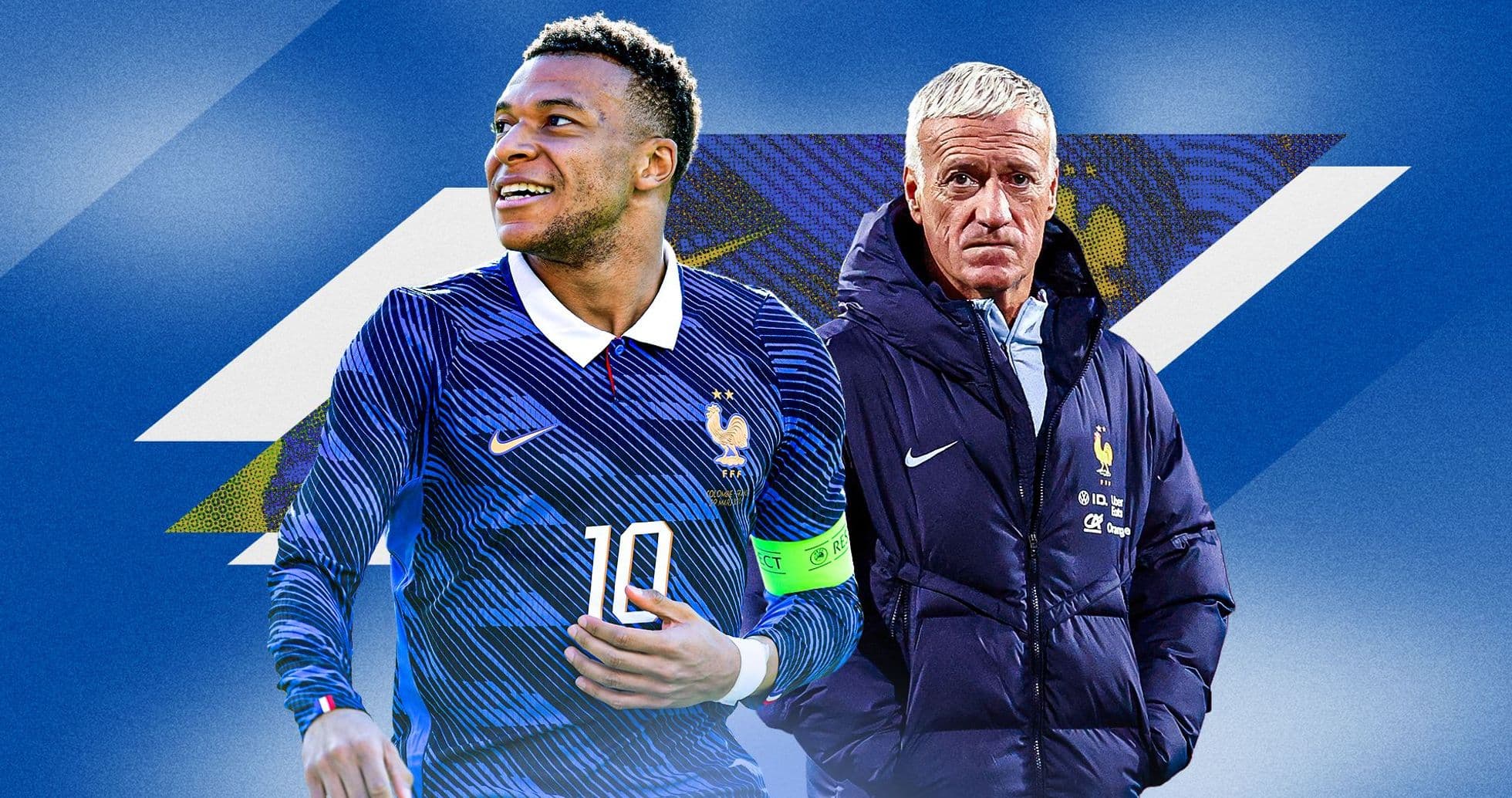
Look at the front line and it is obvious why. Kylian Mbappe remains the headline act, the captain, the number 10, the reference point for everything this team does in the final third. Around him, though, Deschamps now has a supporting cast that would start for almost any national side on the planet.
Michael Olise has exploded at Bayern Munich, turning a promising talent into a ruthless difference-maker. Desire Doue and Ousmane Dembele, central to Luis Enrique’s high-octane Paris Saint-Germain, add pace, guile and chaos from wide areas. France do not just have options; they have layers of threat, each one capable of deciding a game on its own.
Stack that attack against the world’s elite and France’s depth is almost absurd. They can change the profile of their front line without any noticeable drop in quality. They can go direct, they can combine in tight spaces, they can counter at terrifying speed. The question is not whether they can score. It is whether they can keep enough out at the other end.
That is where the doubts creep in. The defence has looked exposed too often, the back line occasionally wobbling under pressure that the forwards usually relieve. The fitness of William Saliba has become a genuine concern, the kind of issue that can tilt a tournament. Lose a defender of that stature and suddenly the margins tighten, the room for error shrinks.
There is another challenge, one that has stalked France for decades: the dressing room. Managing egos, expectations and generations has never been straightforward with Les Bleus. This squad is no different. The talent is staggering, the personalities strong. Keeping harmony over a long, emotionally draining tournament may prove as important as any tactical tweak. If the group stays aligned, if the fractures stay beneath the surface, it will take something special to stop them reaching another final.
At the centre of it all stands Didier Deschamps, a man who has divided opinion but rewritten France’s modern history.
His critics have never been shy. They question his conservative streak, his game management, his aesthetics. Yet the record is brutal in its clarity. Since taking over in 2012, Deschamps has rebuilt a side that looked spent after Laurent Blanc’s era and turned it into a machine for late-stage football.
World Cup winners in 2018, dismantling Croatia in Moscow.
UEFA Nations League champions in 2021, edging Spain in Milan.
Finalists at Euro 2016 on home soil, undone in extra time by Eder’s strike for Portugal.
Back in the World Cup final in 2022, losing to Argentina on penalties after one of the greatest, wildest deciders the competition has ever seen.
This summer is his epilogue. Deschamps’ contract runs out in July and will not be renewed. Nearly 15 years on the touchline with France, countless cycles, countless storms. Whatever happens now, this is his last dance with Les Bleus. It gives every decision an extra edge, every substitution a sense of finality.
The spotlight, inevitably, will fall first on Mbappe. It always does. But the player most likely to tilt this tournament in France’s favour may be Olise.
The Bayern winger has stitched together back-to-back Bundesliga seasons with double figures for both goals and assists, a marker of consistency rather than a one-off surge. His Champions League numbers sit in the same elite bracket. When Bayern ripped Atalanta apart 6-1 in Bergamo, Olise ran the show: two goals, one assist, a performance that felt like a statement of status as much as form.
He brings a rare blend: creativity with end product, flair with repetition. The hat-trick he produced against Northern Ireland in France’s final warm-up game only underlined the point. At 24, he is no longer a prospect; he is a weapon. This summer could define his standing not only at Bayern but in the hierarchy of the national team, where he has the tools to step out from Mbappe’s shadow without ever needing to compete with it.
Behind the headline names, another story is quietly taking shape.
Maghnes Akliouche has eased his way into the senior setup but carries the kind of profile that can reshape a game from the bench. Deschamps brought him in during qualifying, and the response was immediate: a goal against Azerbaijan, an assist against Iceland, the sort of early impact that earns trust.
Formed in Monaco’s academy, one of Europe’s most reliable production lines, Akliouche finally broke through last season. Seven goals and twelve assists across Ligue 1 and the Champions League marked him out as more than just another hopeful graduate. He operates primarily as a right-sided attacking midfielder in a 4-2-3-1, but can slide inside as a central playmaker, drifting into pockets where defenders hate to turn.
He is not the classic lightweight technician. At 24, he combines a solid physical frame with sharp technical quality, a profile modern coaches crave. He can ride a challenge, then slip a pass. He can carry the ball through contact, then pick a corner. For France, that makes him an ideal impact option: someone who can come on against a tiring defence and change the rhythm of a match.
He may not hear his name when the starting XI is read out most nights. He may not dominate the billboards. But on the kind of tense, tactical evenings that define tournaments, Akliouche could be the player Deschamps turns to when the structure is not enough and France need a moment of invention.
This is what makes Les Bleus so dangerous: the star power up front, the depth behind it, the sense of one last charge under a coach who knows exactly how to navigate these stages. The doubts at the back are real, the chemistry in the dressing room fragile enough to watch closely.
If they hold, if the pieces stay aligned, the road to New Jersey will feel very familiar. The real intrigue lies in whether anyone can force France off it.





